Emerald
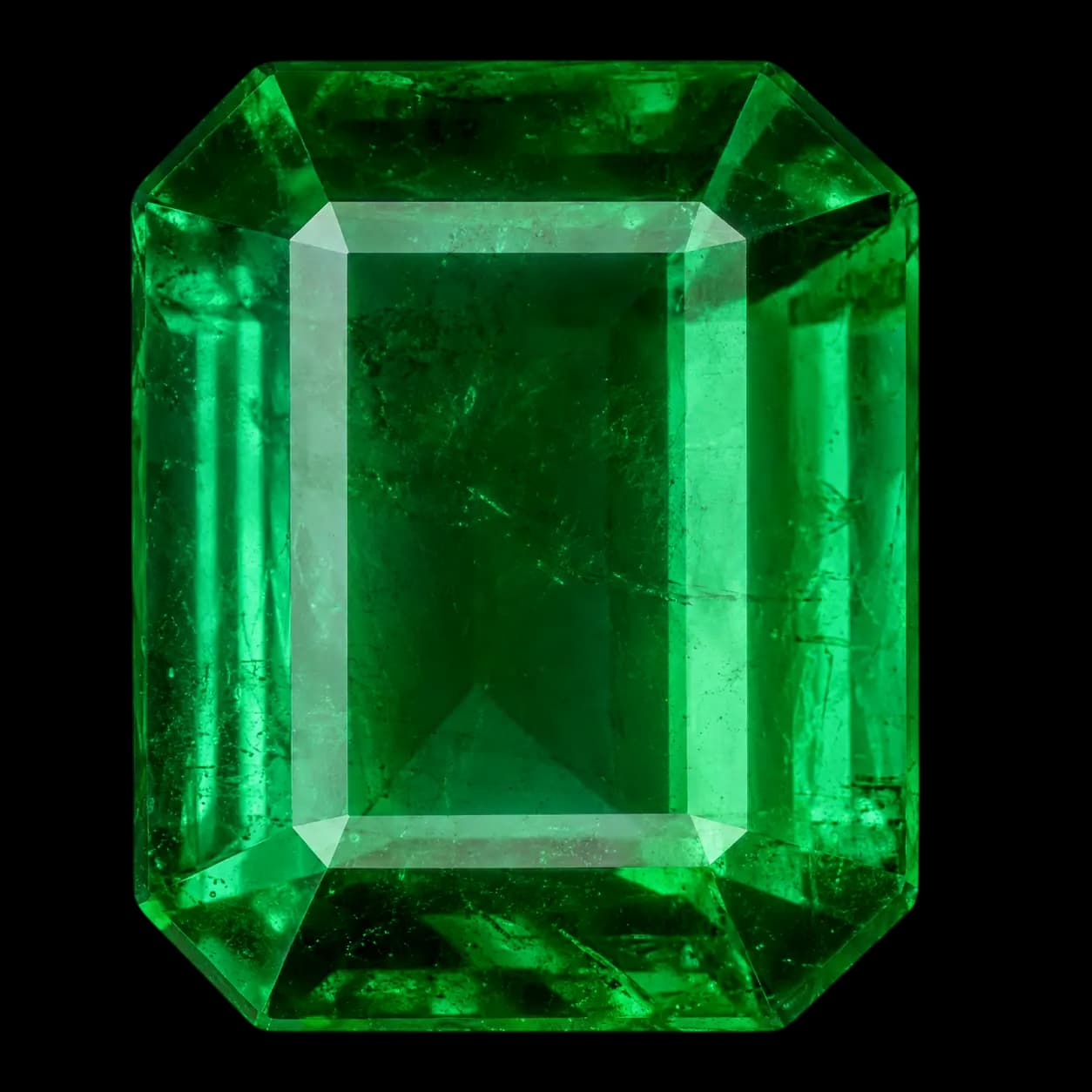
Emerald is a prestigious green gemstone admired for its vivid color, rarity, and timeless elegance. As a member of the beryl family, natural Emerald remains one of the world's most valued gems.
Emerald is one of the most recognizable precious gemstones, celebrated for its rich green color and luxurious appearance. It belongs to the beryl mineral family, alongside aquamarine and morganite. Its distinctive green color is created by trace amounts of chromium and sometimes vanadium within its crystal structure.
Natural Emerald forms deep within the Earth through geological processes involving beryllium-rich minerals, heat, pressure, and mineral-bearing fluids. Most emeralds develop in environments where geological conditions allow beryllium to combine with aluminum silicate minerals.
Emerald has the chemical formula Be3Al2(SiO3)6 and crystallizes in the hexagonal crystal system. It has a vitreous luster and a Mohs hardness of 7.5 to 8, making it suitable for many types of jewelry when handled with proper care. Unlike many other gemstones, emeralds commonly contain natural inclusions known as jardin, which are considered part of their character and formation history.
The most desirable Emerald gemstones display a balanced, vivid green color with strong saturation and good transparency. Color varieties range from pure green to slightly bluish-green shades depending on trace elements and origin.
Famous Emerald sources include Colombia, Zambia, Brazil, Afghanistan, Pakistan, and Ethiopia. Colombian Emeralds are renowned worldwide for their classic saturated green colors, while Zambian Emeralds are appreciated for their deep tones and attractive clarity. Historic emerald deposits in Egypt, including the ancient Cleopatra Mines, contributed to the gemstone's long cultural history.
For centuries, Emerald has been treasured by royalty, collectors, and jewelry designers. Today, Emerald jewelry including rings, necklaces, earrings, bracelets, and custom creations remains highly desirable among luxury jewelry buyers because of its unique color and natural beauty.
Buyers value natural Emerald because each gemstone has its own combination of color, inclusions, origin, and character, making every stone truly unique.
- Mineral Family
- Beryl
- Chemical Formula
- Be3Al2(SiO3)6
- Mohs Hardness
- 7.5 - 8
- Refractive Index
- 1.577 - 1.583
- Specific Gravity
- 2.67 - 2.78
- Cleavage
- None
- Crystal System
- Hexagonal
- Luster
- Vitreous
- Color Range
- Green
Choosing a high-quality Emerald gemstone requires understanding the main factors that influence beauty, rarity, and value.
Color: Color is the most important factor when evaluating Emerald. Premium stones usually display a vivid, evenly distributed green color with strong saturation. Extremely pale or overly dark stones generally have lower value compared with vibrant green Emeralds.
Clarity: Most natural Emeralds contain internal inclusions because of their formation process. These inclusions, often called jardin, are accepted characteristics of genuine Emeralds. Stones with excellent transparency and fewer visible inclusions are considered rarer and more valuable.
Cut: A well-executed cut improves Emerald's color display, brightness, and overall appearance. The classic emerald cut was developed specifically to protect the gemstone while highlighting its beauty.
Carat: Larger Emerald gemstones with attractive color and clarity are significantly rarer. As carat weight increases, premium-quality Emeralds can become considerably more valuable.
Origin: Origin can influence collector interest and market value. Colombian, Zambian, Brazilian, Afghan, Pakistani, and Ethiopian Emeralds each have distinctive characteristics appreciated by different buyers.
Treatments: Most Emeralds undergo clarity enhancement using colorless oils, which is an accepted industry practice. Heavily treated stones or those enhanced with resins should be disclosed clearly, as treatment affects value.
Natural vs Lab-Grown Emerald: Natural Emeralds are formed through geological processes and are valued for their rarity and unique inclusions. Lab-grown Emeralds are created under controlled conditions and can have similar visual properties but generally do not carry the same rarity as natural stones.
Certification and Authenticity: A reputable gemological certificate from laboratories such as GIA, IGI, or GRS can provide information about authenticity, treatments, and gemstone characteristics. Buyers should request certification and detailed gemstone information before purchasing.
Price Factors: Emerald prices depend on color quality, clarity, size, origin, cut, treatment level, and certification. Rare natural Emeralds with exceptional color and transparency command premium prices.
Emerald jewelry requires gentle care to preserve its beauty and maintain its condition.
Clean Emerald using lukewarm water, mild soap, and a soft brush. Gently remove dirt and avoid harsh cleaning methods.
Avoid ultrasonic and steam cleaners, especially for Emeralds with fractures or clarity treatments, as these methods may affect the stone.
Store Emerald jewelry separately in a soft pouch or lined jewelry box to prevent scratches from harder gemstones.
Remove Emerald rings and jewelry before activities involving strong impacts, chemicals, household cleaners, or extreme temperature changes.
Because many Emeralds are treated with oil to improve clarity, avoid exposure to solvents, strong detergents, and excessive heat that may affect the treatment. Professional inspection and cleaning by a jeweler can help maintain long-term beauty.
Emerald is one of the most recognizable precious gemstones, celebrated for its rich green color and luxurious appearance. It belongs to the beryl mineral family, alongside aquamarine and morganite. Its distinctive green color is created by trace amounts of chromium and sometimes vanadium within its crystal structure.
Natural Emerald forms deep within the Earth through geological processes involving beryllium-rich minerals, heat, pressure, and mineral-bearing fluids. Most emeralds develop in environments where geological conditions allow beryllium to combine with aluminum silicate minerals.
Emerald has the chemical formula Be3Al2(SiO3)6 and crystallizes in the hexagonal crystal system. It has a vitreous luster and a Mohs hardness of 7.5 to 8, making it suitable for many types of jewelry when handled with proper care. Unlike many other gemstones, emeralds commonly contain natural inclusions known as jardin, which are considered part of their character and formation history.
The most desirable Emerald gemstones display a balanced, vivid green color with strong saturation and good transparency. Color varieties range from pure green to slightly bluish-green shades depending on trace elements and origin.
Famous Emerald sources include Colombia, Zambia, Brazil, Afghanistan, Pakistan, and Ethiopia. Colombian Emeralds are renowned worldwide for their classic saturated green colors, while Zambian Emeralds are appreciated for their deep tones and attractive clarity. Historic emerald deposits in Egypt, including the ancient Cleopatra Mines, contributed to the gemstone's long cultural history.
For centuries, Emerald has been treasured by royalty, collectors, and jewelry designers. Today, Emerald jewelry including rings, necklaces, earrings, bracelets, and custom creations remains highly desirable among luxury jewelry buyers because of its unique color and natural beauty.
Buyers value natural Emerald because each gemstone has its own combination of color, inclusions, origin, and character, making every stone truly unique.
- Mineral Family
- Beryl
- Chemical Formula
- Be3Al2(SiO3)6
- Mohs Hardness
- 7.5 - 8
- Refractive Index
- 1.577 - 1.583
- Specific Gravity
- 2.67 - 2.78
- Cleavage
- None
- Crystal System
- Hexagonal
- Luster
- Vitreous
- Color Range
- Green
Choosing a high-quality Emerald gemstone requires understanding the main factors that influence beauty, rarity, and value.
Color: Color is the most important factor when evaluating Emerald. Premium stones usually display a vivid, evenly distributed green color with strong saturation. Extremely pale or overly dark stones generally have lower value compared with vibrant green Emeralds.
Clarity: Most natural Emeralds contain internal inclusions because of their formation process. These inclusions, often called jardin, are accepted characteristics of genuine Emeralds. Stones with excellent transparency and fewer visible inclusions are considered rarer and more valuable.
Cut: A well-executed cut improves Emerald's color display, brightness, and overall appearance. The classic emerald cut was developed specifically to protect the gemstone while highlighting its beauty.
Carat: Larger Emerald gemstones with attractive color and clarity are significantly rarer. As carat weight increases, premium-quality Emeralds can become considerably more valuable.
Origin: Origin can influence collector interest and market value. Colombian, Zambian, Brazilian, Afghan, Pakistani, and Ethiopian Emeralds each have distinctive characteristics appreciated by different buyers.
Treatments: Most Emeralds undergo clarity enhancement using colorless oils, which is an accepted industry practice. Heavily treated stones or those enhanced with resins should be disclosed clearly, as treatment affects value.
Natural vs Lab-Grown Emerald: Natural Emeralds are formed through geological processes and are valued for their rarity and unique inclusions. Lab-grown Emeralds are created under controlled conditions and can have similar visual properties but generally do not carry the same rarity as natural stones.
Certification and Authenticity: A reputable gemological certificate from laboratories such as GIA, IGI, or GRS can provide information about authenticity, treatments, and gemstone characteristics. Buyers should request certification and detailed gemstone information before purchasing.
Price Factors: Emerald prices depend on color quality, clarity, size, origin, cut, treatment level, and certification. Rare natural Emeralds with exceptional color and transparency command premium prices.
Emerald jewelry requires gentle care to preserve its beauty and maintain its condition.
Clean Emerald using lukewarm water, mild soap, and a soft brush. Gently remove dirt and avoid harsh cleaning methods.
Avoid ultrasonic and steam cleaners, especially for Emeralds with fractures or clarity treatments, as these methods may affect the stone.
Store Emerald jewelry separately in a soft pouch or lined jewelry box to prevent scratches from harder gemstones.
Remove Emerald rings and jewelry before activities involving strong impacts, chemicals, household cleaners, or extreme temperature changes.
Because many Emeralds are treated with oil to improve clarity, avoid exposure to solvents, strong detergents, and excessive heat that may affect the treatment. Professional inspection and cleaning by a jeweler can help maintain long-term beauty.
Emerald for Sale
No gems found
Try broadening your search or adjusting your filters.
Have a gem of your own? List it free - no fees