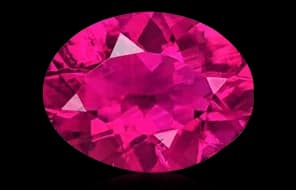
Bixbite
Bixbite, better known as Red Beryl, is an exceptionally rare red variety of beryl prized for its vivid color, scarcity, and distinctive mineral character.
Bixbite is the historical trade name for red beryl, an exceptionally rare member of the beryl mineral group. Because the name bixbite can be confused with the separate mineral bixbyite, gemological sources generally prefer the name Red Beryl. Its chemical formula is Be3Al2Si6O18, with manganese and other trace elements contributing to its characteristic red coloration. Bixbite crystallizes in the hexagonal system and typically has a vitreous luster, a Mohs hardness of 7.5-8, a refractive index of approximately 1.564-1.574, and a specific gravity around 2.66-2.70. The material is commonly transparent to translucent and may contain fractures and other inclusions. Red Beryl is especially associated with the Wah Wah Mountains of Beaver County, Utah, where gem-quality crystals have been recovered from rhyolitic volcanic rock. Its geological occurrence is unusual because it formed in fractures, cavities, and related spaces during the late stages of cooling of the rhyolite. The intense red to purplish-red and orange-red colors distinguish it from more familiar beryl varieties such as emerald, aquamarine, and morganite. Fine transparent crystals are extremely uncommon, and faceted stones are generally small because suitable rough is scarce. This rarity, combined with its saturated color and limited supply, makes natural Bixbite highly desirable among collectors and connoisseurs. In modern jewelry, Bixbite is most often fashioned as small faceted stones for rings, pendants, earrings, and collector pieces. Because of its rarity and limited availability, buyers should prioritize verified natural material and independent gemological documentation when purchasing Bixbite online.
- Mineral Family
- Beryl
- Chemical Formula
- Be3Al2Si6O18
- Mohs Hardness
- 7.5 - 8
- Refractive Index
- 1.564 - 1.574
- Specific Gravity
- 2.66 - 2.70
- Cleavage
- Indistinct
- Crystal System
- Hexagonal
- Luster
- Vitreous
- Color Range
- Red, Orange, Pink
When buying Bixbite gemstone, evaluate color, clarity, cut, carat weight, origin, treatments, and documentation together. Color is one of the most important value factors: vivid, strongly saturated red to purplish-red material is especially desirable, while orange-red and lighter tones can also occur. Clarity is important because natural Red Beryl frequently contains fractures and inclusions. Eye-clean stones are exceptionally scarce and can command a premium when the color and cut are also strong. Cut should maximize the stone's color and brilliance while retaining as much of the rare rough as possible. Well-proportioned faceted cuts are attractive, but unusual shapes may carry additional cutting costs. Carat weight has a major influence on value because gem-quality rough is scarce and larger clean stones are particularly difficult to obtain. Origin can be relevant because the Wah Wah Mountains of Utah are the best-known source of gem-quality Red Beryl, but origin should be supported by reliable laboratory evidence rather than assumed from appearance alone. Any claimed treatment should be disclosed and independently verified. Natural Bixbite should not be confused with synthetic red beryl, simulants, or other red beryl-group materials. Because red beryl is rare and can be difficult to identify by appearance alone, an independent gemological certificate is strongly recommended for significant purchases. Authenticity, provenance, laboratory identification, quality, color saturation, clarity, cutting quality, and carat weight can all affect the final price. For high-value natural Bixbite, compare laboratory documentation with the seller's description before buying Bixbite online.
Bixbite has a Mohs hardness of 7.5-8, making it reasonably durable for jewelry, although it should still be protected from hard impacts and abrasion. Clean Bixbite with lukewarm water, a small amount of mild soap, and a soft cloth or soft brush. Rinse thoroughly and dry with a lint-free cloth. Avoid harsh chemicals, abrasive cleaners, sudden temperature changes, and rough cleaning methods. Because natural Red Beryl may contain fractures or inclusions, avoid knocks against hard surfaces and remove Bixbite jewelry before strenuous activities, sports, heavy manual work, or situations where the stone may be struck. Store each piece separately in a soft-lined compartment or jewelry pouch to reduce scratching and contact with other jewelry. If the stone has undergone a treatment or has significant fractures, ask a qualified jeweler or gemologist for treatment-specific care advice. Periodic professional inspection of the setting is also useful for rings and other frequently worn Bixbite jewelry.
Bixbite is the historical trade name for red beryl, an exceptionally rare member of the beryl mineral group. Because the name bixbite can be confused with the separate mineral bixbyite, gemological sources generally prefer the name Red Beryl. Its chemical formula is Be3Al2Si6O18, with manganese and other trace elements contributing to its characteristic red coloration. Bixbite crystallizes in the hexagonal system and typically has a vitreous luster, a Mohs hardness of 7.5-8, a refractive index of approximately 1.564-1.574, and a specific gravity around 2.66-2.70. The material is commonly transparent to translucent and may contain fractures and other inclusions. Red Beryl is especially associated with the Wah Wah Mountains of Beaver County, Utah, where gem-quality crystals have been recovered from rhyolitic volcanic rock. Its geological occurrence is unusual because it formed in fractures, cavities, and related spaces during the late stages of cooling of the rhyolite. The intense red to purplish-red and orange-red colors distinguish it from more familiar beryl varieties such as emerald, aquamarine, and morganite. Fine transparent crystals are extremely uncommon, and faceted stones are generally small because suitable rough is scarce. This rarity, combined with its saturated color and limited supply, makes natural Bixbite highly desirable among collectors and connoisseurs. In modern jewelry, Bixbite is most often fashioned as small faceted stones for rings, pendants, earrings, and collector pieces. Because of its rarity and limited availability, buyers should prioritize verified natural material and independent gemological documentation when purchasing Bixbite online.
- Mineral Family
- Beryl
- Chemical Formula
- Be3Al2Si6O18
- Mohs Hardness
- 7.5 - 8
- Refractive Index
- 1.564 - 1.574
- Specific Gravity
- 2.66 - 2.70
- Cleavage
- Indistinct
- Crystal System
- Hexagonal
- Luster
- Vitreous
- Color Range
- Red, Orange, Pink
When buying Bixbite gemstone, evaluate color, clarity, cut, carat weight, origin, treatments, and documentation together. Color is one of the most important value factors: vivid, strongly saturated red to purplish-red material is especially desirable, while orange-red and lighter tones can also occur. Clarity is important because natural Red Beryl frequently contains fractures and inclusions. Eye-clean stones are exceptionally scarce and can command a premium when the color and cut are also strong. Cut should maximize the stone's color and brilliance while retaining as much of the rare rough as possible. Well-proportioned faceted cuts are attractive, but unusual shapes may carry additional cutting costs. Carat weight has a major influence on value because gem-quality rough is scarce and larger clean stones are particularly difficult to obtain. Origin can be relevant because the Wah Wah Mountains of Utah are the best-known source of gem-quality Red Beryl, but origin should be supported by reliable laboratory evidence rather than assumed from appearance alone. Any claimed treatment should be disclosed and independently verified. Natural Bixbite should not be confused with synthetic red beryl, simulants, or other red beryl-group materials. Because red beryl is rare and can be difficult to identify by appearance alone, an independent gemological certificate is strongly recommended for significant purchases. Authenticity, provenance, laboratory identification, quality, color saturation, clarity, cutting quality, and carat weight can all affect the final price. For high-value natural Bixbite, compare laboratory documentation with the seller's description before buying Bixbite online.
Bixbite has a Mohs hardness of 7.5-8, making it reasonably durable for jewelry, although it should still be protected from hard impacts and abrasion. Clean Bixbite with lukewarm water, a small amount of mild soap, and a soft cloth or soft brush. Rinse thoroughly and dry with a lint-free cloth. Avoid harsh chemicals, abrasive cleaners, sudden temperature changes, and rough cleaning methods. Because natural Red Beryl may contain fractures or inclusions, avoid knocks against hard surfaces and remove Bixbite jewelry before strenuous activities, sports, heavy manual work, or situations where the stone may be struck. Store each piece separately in a soft-lined compartment or jewelry pouch to reduce scratching and contact with other jewelry. If the stone has undergone a treatment or has significant fractures, ask a qualified jeweler or gemologist for treatment-specific care advice. Periodic professional inspection of the setting is also useful for rings and other frequently worn Bixbite jewelry.
Bixbite for Sale
No gems found
Try broadening your search or adjusting your filters.
Have a gem of your own? List it free - no fees