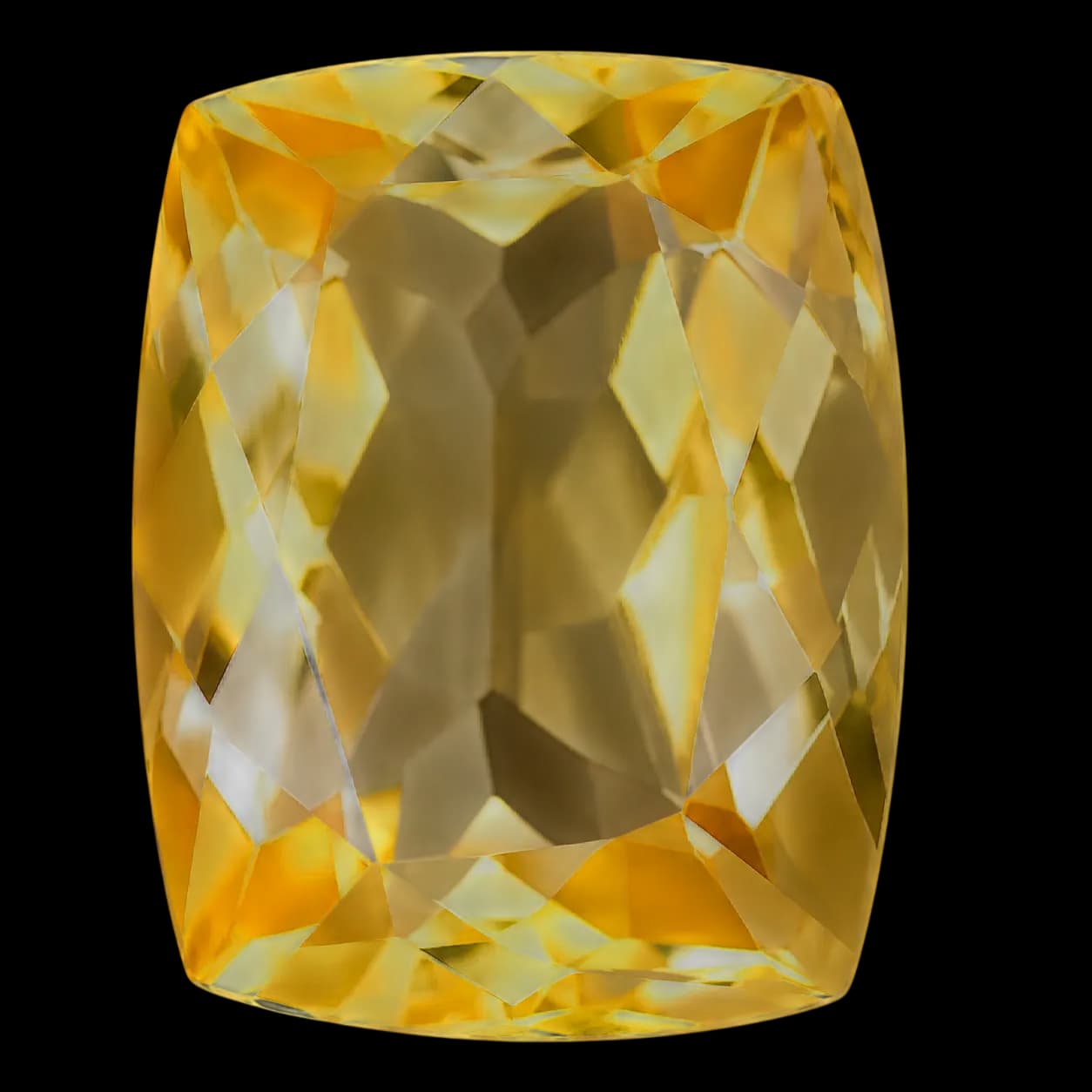
Topaz
Topaz is a captivating gemstone admired for its brilliant colors, excellent clarity, and lasting durability. From vibrant blue to rare Imperial orange, natural Topaz offers timeless beauty for fine jewelry.
Topaz is a precious gemstone from the silicate mineral family, valued for its exceptional transparency, brilliance, and wide range of natural colors. It is an aluminum fluorine silicate mineral with the chemical formula Al2SiO4(F,OH)2. Topaz forms in cavities of igneous rocks, particularly granite and rhyolite, where mineral-rich fluids allow crystals to develop over time.
Known for its impressive hardness of 8 on the Mohs scale, Topaz is suitable for many types of jewelry while requiring care due to its perfect cleavage. It has a vitreous luster and commonly appears in transparent to translucent crystals with excellent clarity.
Natural Topaz occurs in several colors, including colorless, yellow, orange, pink, brown, green, and blue. The rare Imperial Topaz variety, displaying rich golden-orange to reddish-orange hues, is among the most valuable forms. Blue Topaz is widely popular in jewelry and is commonly produced by treating colorless Topaz through irradiation and heat processes. Pink Topaz is also highly sought after due to its rarity.
Major Topaz sources include Brazil, Pakistan, Sri Lanka, Nigeria, Russia, and the United States. Brazil’s Minas Gerais region is especially famous for producing exceptional Imperial Topaz. Throughout history, Topaz has been appreciated by various cultures for its beauty and has remained a favorite gemstone in decorative arts and jewelry.
Today, Topaz jewelry is popular worldwide, appearing in rings, earrings, necklaces, bracelets, and custom designs. Buyers value Topaz for its attractive colors, durability, affordability, and ability to create elegant everyday and luxury jewelry pieces.
- Mineral Family
- Topaz
- Chemical Formula
- Al2SiO4(F,OH)2
- Mohs Hardness
- 8
- Refractive Index
- 1.606 - 1.644
- Specific Gravity
- 3.49 - 3.57
- Cleavage
- Perfect cleavage in one direction
- Crystal System
- Orthorhombic
- Luster
- Vitreous
- Color Range
- Yellow, Orange, Pink, Blue, White, Green
When buying a Topaz gemstone, several factors influence quality, appearance, and value.
Color: Color is one of the most important factors. Rich golden-yellow, vivid orange, pink, and rare Imperial Topaz colors generally command higher prices. Blue Topaz is popular for its attractive appearance and accessibility.
Clarity: High-quality Topaz is typically eye-clean with excellent transparency. Stones with fewer visible inclusions and strong brilliance are more desirable.
Cut: A precise cut enhances Topaz’s natural brilliance and color. Popular cuts include oval, cushion, emerald, pear, and round shapes depending on the jewelry design.
Carat: Larger Topaz gemstones are widely available, but premium colors and exceptional clarity become increasingly valuable in larger sizes.
Origin: Origin can influence collector interest and pricing. Brazilian Imperial Topaz is particularly recognized among fine gemstone collectors.
Treatments: Many blue Topaz gemstones available today are treated through irradiation and heat to achieve their color. Buyers should always ask for treatment disclosure before purchasing.
Natural vs Lab-Grown: Natural Topaz forms in the earth over geological periods, while laboratory-created alternatives are produced artificially. Always confirm whether a gemstone is natural and whether treatments are disclosed.
Certification: A reputable gemological certificate from recognized laboratories helps verify authenticity, gemstone variety, and treatment information.
Price Factors: Topaz gemstone price depends on color, clarity, size, origin, cut quality, and rarity. Rare natural colors such as Imperial orange and fine pink Topaz usually have higher market value.
Topaz jewelry can maintain its brilliance with proper care. Clean your Topaz gemstone using warm water, mild soap, and a soft brush. Avoid harsh chemicals, abrasive cleaners, and sudden temperature changes.
Because Topaz has perfect cleavage, protect it from strong impacts and avoid activities that may cause accidental knocks. Remove Topaz jewelry before heavy physical work or contact sports.
Store Topaz separately in a soft-lined jewelry box or pouch to prevent scratches from harder gemstones. Regularly check jewelry settings to ensure the gemstone remains secure.
With gentle cleaning, careful storage, and mindful wearing habits, Topaz jewelry can remain beautiful for generations.
Topaz is a precious gemstone from the silicate mineral family, valued for its exceptional transparency, brilliance, and wide range of natural colors. It is an aluminum fluorine silicate mineral with the chemical formula Al2SiO4(F,OH)2. Topaz forms in cavities of igneous rocks, particularly granite and rhyolite, where mineral-rich fluids allow crystals to develop over time.
Known for its impressive hardness of 8 on the Mohs scale, Topaz is suitable for many types of jewelry while requiring care due to its perfect cleavage. It has a vitreous luster and commonly appears in transparent to translucent crystals with excellent clarity.
Natural Topaz occurs in several colors, including colorless, yellow, orange, pink, brown, green, and blue. The rare Imperial Topaz variety, displaying rich golden-orange to reddish-orange hues, is among the most valuable forms. Blue Topaz is widely popular in jewelry and is commonly produced by treating colorless Topaz through irradiation and heat processes. Pink Topaz is also highly sought after due to its rarity.
Major Topaz sources include Brazil, Pakistan, Sri Lanka, Nigeria, Russia, and the United States. Brazil’s Minas Gerais region is especially famous for producing exceptional Imperial Topaz. Throughout history, Topaz has been appreciated by various cultures for its beauty and has remained a favorite gemstone in decorative arts and jewelry.
Today, Topaz jewelry is popular worldwide, appearing in rings, earrings, necklaces, bracelets, and custom designs. Buyers value Topaz for its attractive colors, durability, affordability, and ability to create elegant everyday and luxury jewelry pieces.
- Mineral Family
- Topaz
- Chemical Formula
- Al2SiO4(F,OH)2
- Mohs Hardness
- 8
- Refractive Index
- 1.606 - 1.644
- Specific Gravity
- 3.49 - 3.57
- Cleavage
- Perfect cleavage in one direction
- Crystal System
- Orthorhombic
- Luster
- Vitreous
- Color Range
- Yellow, Orange, Pink, Blue, White, Green
When buying a Topaz gemstone, several factors influence quality, appearance, and value.
Color: Color is one of the most important factors. Rich golden-yellow, vivid orange, pink, and rare Imperial Topaz colors generally command higher prices. Blue Topaz is popular for its attractive appearance and accessibility.
Clarity: High-quality Topaz is typically eye-clean with excellent transparency. Stones with fewer visible inclusions and strong brilliance are more desirable.
Cut: A precise cut enhances Topaz’s natural brilliance and color. Popular cuts include oval, cushion, emerald, pear, and round shapes depending on the jewelry design.
Carat: Larger Topaz gemstones are widely available, but premium colors and exceptional clarity become increasingly valuable in larger sizes.
Origin: Origin can influence collector interest and pricing. Brazilian Imperial Topaz is particularly recognized among fine gemstone collectors.
Treatments: Many blue Topaz gemstones available today are treated through irradiation and heat to achieve their color. Buyers should always ask for treatment disclosure before purchasing.
Natural vs Lab-Grown: Natural Topaz forms in the earth over geological periods, while laboratory-created alternatives are produced artificially. Always confirm whether a gemstone is natural and whether treatments are disclosed.
Certification: A reputable gemological certificate from recognized laboratories helps verify authenticity, gemstone variety, and treatment information.
Price Factors: Topaz gemstone price depends on color, clarity, size, origin, cut quality, and rarity. Rare natural colors such as Imperial orange and fine pink Topaz usually have higher market value.
Topaz jewelry can maintain its brilliance with proper care. Clean your Topaz gemstone using warm water, mild soap, and a soft brush. Avoid harsh chemicals, abrasive cleaners, and sudden temperature changes.
Because Topaz has perfect cleavage, protect it from strong impacts and avoid activities that may cause accidental knocks. Remove Topaz jewelry before heavy physical work or contact sports.
Store Topaz separately in a soft-lined jewelry box or pouch to prevent scratches from harder gemstones. Regularly check jewelry settings to ensure the gemstone remains secure.
With gentle cleaning, careful storage, and mindful wearing habits, Topaz jewelry can remain beautiful for generations.
Topaz for Sale
No gems found
Try broadening your search or adjusting your filters.
Have a gem of your own? List it free - no fees