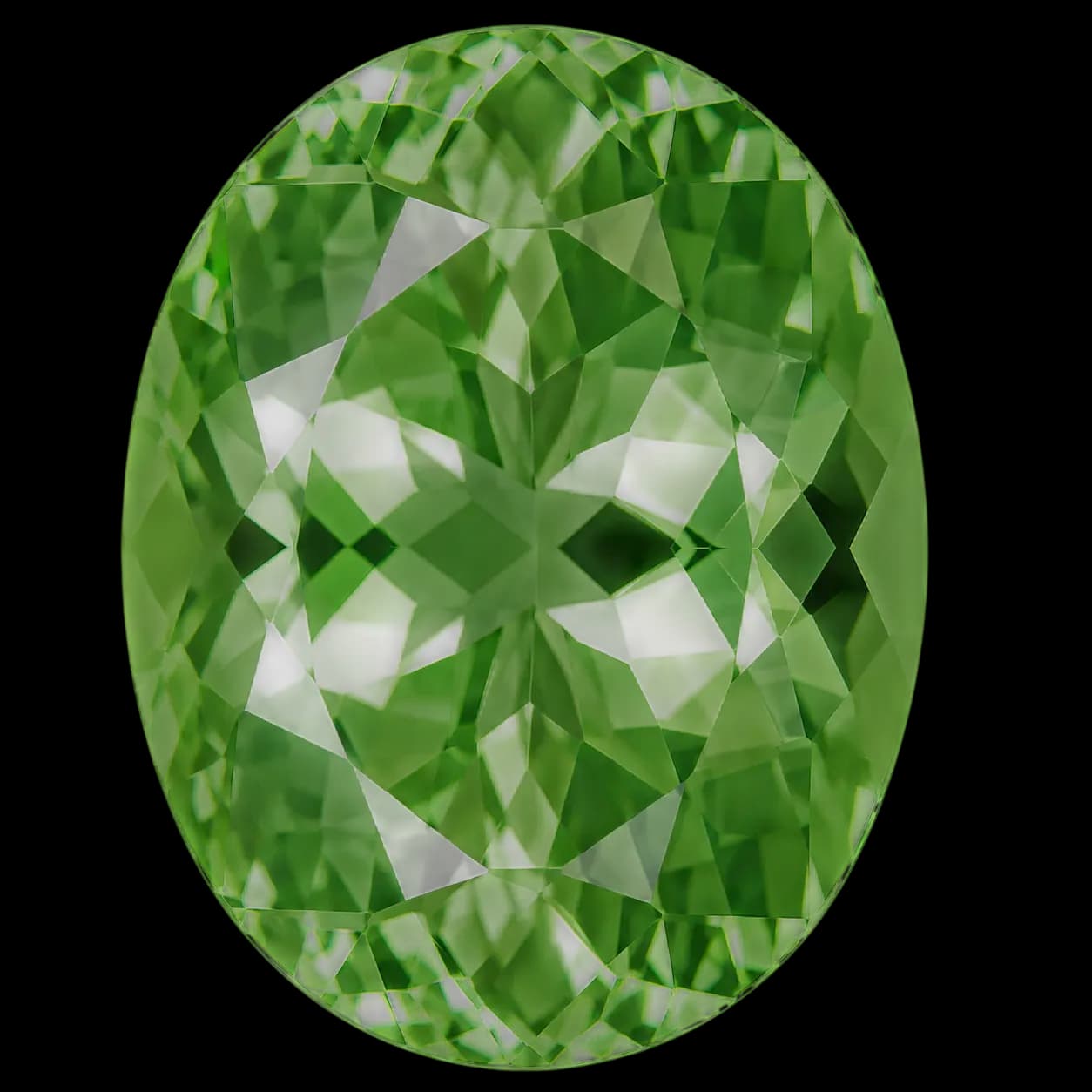
Beryl
Beryl is a fascinating gemstone family known for its exceptional colors, durability, and famous varieties including Emerald, Aquamarine, Morganite, and Heliodor.
Beryl is a naturally occurring beryllium aluminium silicate mineral and one of the most recognized gemstone groups in the world. Its crystal structure belongs to the hexagonal system, producing elegant prismatic crystals with a glass-like luster.
The Beryl family includes several highly valued gemstones. Emerald is the famous green variety colored mainly by chromium or vanadium, while Aquamarine receives its blue to blue-green hues from iron. Morganite is admired for its soft pink to peach tones, Heliodor displays golden-yellow shades, and Red Beryl is one of the rarest members of the group.
Beryl forms in pegmatite deposits and other geological environments where beryllium-rich fluids interact with aluminium and silica-bearing minerals. Gem-quality crystals are found in countries including Brazil, Colombia, Zambia, Madagascar, Afghanistan, Pakistan, Mozambique, the United States, and Russia.
With a Mohs hardness of 7.5 to 8, Beryl offers good durability for many jewelry applications. However, individual varieties may differ in toughness depending on internal inclusions and fractures. Emerald, for example, commonly contains natural inclusions that require careful handling.
Beryl gemstones are valued worldwide for their attractive colors, transparency, crystal size, and connection to some of the most important gemstone names in the jewelry industry. Natural Beryl jewelry remains popular among collectors and buyers seeking unique colored gemstones with geological significance.
- Mineral Family
- Beryl
- Chemical Formula
- Be3Al2(Si6O18)
- Mohs Hardness
- 7.5 - 8
- Refractive Index
- 1.56 - 1.60
- Specific Gravity
- 2.63 - 2.92
- Cleavage
- Poor to indistinct
- Crystal System
- Hexagonal
- Luster
- Vitreous
- Color Range
- Green, Blue, Pink, Yellow, White, Red
When buying a Beryl gemstone, buyers should evaluate several important quality factors including color, clarity, cut, carat weight, origin, treatments, and certification.
Color: Color is one of the most important value factors. Rich, evenly distributed colors are generally more desirable. Emerald is valued for vivid green tones, Aquamarine for strong blue shades, Morganite for attractive pink hues, and Heliodor for bright golden-yellow colors.
Clarity: Clarity requirements vary between Beryl varieties. Aquamarine and Morganite are often expected to have high transparency with fewer visible inclusions. Emerald commonly contains natural inclusions, which are accepted as part of its identity but can affect value.
Cut: A skilled cut enhances brilliance, color, and overall appearance. Beryl can be shaped into popular cuts such as oval, emerald cut, cushion, pear, round, and other custom designs.
Carat: Larger Beryl crystals are available, but size alone does not determine value. Fine color, clarity, rarity, and overall quality strongly influence pricing.
Origin: Some origins are historically recognized for producing exceptional material. Colombian Emeralds, Brazilian Aquamarines, and fine Morganite from Madagascar are examples of notable varieties.
Treatments: Some Beryl varieties may undergo treatments. Aquamarine is commonly heat treated to enhance blue color, Morganite may be heated to improve pink tones, and Emerald is frequently treated with oils or resins to reduce the appearance of fractures. Buyers should always request treatment disclosure.
Natural vs lab-grown: Natural Beryl forms through geological processes over millions of years. Lab-grown varieties may exist and should be clearly identified by sellers.
Certification: A reputable gemstone laboratory report helps verify authenticity, variety, treatments, and important characteristics. Certification is recommended when purchasing valuable natural Beryl gemstones.
Beryl gemstones should be cleaned using warm water, mild soap, and a soft brush. Avoid harsh chemicals, sudden temperature changes, and abrasive materials.
Store Beryl jewelry separately from harder gemstones to prevent scratches. Although Beryl has good hardness, varieties with internal fractures, especially Emerald, should be handled carefully.
Avoid ultrasonic and steam cleaning unless recommended by a professional, particularly for treated Emeralds or gemstones with significant inclusions. Remove Beryl jewelry before activities that may expose it to strong impact or chemicals.
Beryl is a naturally occurring beryllium aluminium silicate mineral and one of the most recognized gemstone groups in the world. Its crystal structure belongs to the hexagonal system, producing elegant prismatic crystals with a glass-like luster.
The Beryl family includes several highly valued gemstones. Emerald is the famous green variety colored mainly by chromium or vanadium, while Aquamarine receives its blue to blue-green hues from iron. Morganite is admired for its soft pink to peach tones, Heliodor displays golden-yellow shades, and Red Beryl is one of the rarest members of the group.
Beryl forms in pegmatite deposits and other geological environments where beryllium-rich fluids interact with aluminium and silica-bearing minerals. Gem-quality crystals are found in countries including Brazil, Colombia, Zambia, Madagascar, Afghanistan, Pakistan, Mozambique, the United States, and Russia.
With a Mohs hardness of 7.5 to 8, Beryl offers good durability for many jewelry applications. However, individual varieties may differ in toughness depending on internal inclusions and fractures. Emerald, for example, commonly contains natural inclusions that require careful handling.
Beryl gemstones are valued worldwide for their attractive colors, transparency, crystal size, and connection to some of the most important gemstone names in the jewelry industry. Natural Beryl jewelry remains popular among collectors and buyers seeking unique colored gemstones with geological significance.
- Mineral Family
- Beryl
- Chemical Formula
- Be3Al2(Si6O18)
- Mohs Hardness
- 7.5 - 8
- Refractive Index
- 1.56 - 1.60
- Specific Gravity
- 2.63 - 2.92
- Cleavage
- Poor to indistinct
- Crystal System
- Hexagonal
- Luster
- Vitreous
- Color Range
- Green, Blue, Pink, Yellow, White, Red
When buying a Beryl gemstone, buyers should evaluate several important quality factors including color, clarity, cut, carat weight, origin, treatments, and certification.
Color: Color is one of the most important value factors. Rich, evenly distributed colors are generally more desirable. Emerald is valued for vivid green tones, Aquamarine for strong blue shades, Morganite for attractive pink hues, and Heliodor for bright golden-yellow colors.
Clarity: Clarity requirements vary between Beryl varieties. Aquamarine and Morganite are often expected to have high transparency with fewer visible inclusions. Emerald commonly contains natural inclusions, which are accepted as part of its identity but can affect value.
Cut: A skilled cut enhances brilliance, color, and overall appearance. Beryl can be shaped into popular cuts such as oval, emerald cut, cushion, pear, round, and other custom designs.
Carat: Larger Beryl crystals are available, but size alone does not determine value. Fine color, clarity, rarity, and overall quality strongly influence pricing.
Origin: Some origins are historically recognized for producing exceptional material. Colombian Emeralds, Brazilian Aquamarines, and fine Morganite from Madagascar are examples of notable varieties.
Treatments: Some Beryl varieties may undergo treatments. Aquamarine is commonly heat treated to enhance blue color, Morganite may be heated to improve pink tones, and Emerald is frequently treated with oils or resins to reduce the appearance of fractures. Buyers should always request treatment disclosure.
Natural vs lab-grown: Natural Beryl forms through geological processes over millions of years. Lab-grown varieties may exist and should be clearly identified by sellers.
Certification: A reputable gemstone laboratory report helps verify authenticity, variety, treatments, and important characteristics. Certification is recommended when purchasing valuable natural Beryl gemstones.
Beryl gemstones should be cleaned using warm water, mild soap, and a soft brush. Avoid harsh chemicals, sudden temperature changes, and abrasive materials.
Store Beryl jewelry separately from harder gemstones to prevent scratches. Although Beryl has good hardness, varieties with internal fractures, especially Emerald, should be handled carefully.
Avoid ultrasonic and steam cleaning unless recommended by a professional, particularly for treated Emeralds or gemstones with significant inclusions. Remove Beryl jewelry before activities that may expose it to strong impact or chemicals.
Beryl for Sale
No gems found
Try broadening your search or adjusting your filters.
Have a gem of your own? List it free - no fees