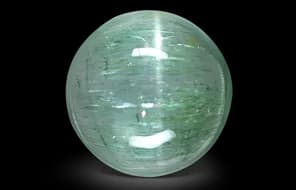
Beryl Cats Eye
Beryl Cats Eye is a rare chatoyant form of beryl, valued for its silky moving band of light, distinctive colors, and intriguing natural character.
Beryl Cats Eye is a chatoyant form of the beryl mineral family, recognized by the narrow band of light that moves across its surface when the stone is rotated. This optical phenomenon, known as chatoyancy, develops when parallel internal inclusions, tubes, or fibrous structures reflect light in a concentrated line. Beryl has the chemical formula Be3Al2Si6O18 and crystallizes in the hexagonal system. It typically has a Mohs hardness of 7.5 to 8, making it reasonably durable for jewelry when properly protected. Beryl generally has a vitreous luster, indistinct cleavage, and a refractive index in the approximate range of 1.56 to 1.59. Beryl can occur in several colors depending on trace elements, and chatoyant material may appear yellow, golden, green, blue, brown, gray, or near colorless. Cat's-eye varieties are especially associated with translucent beryl because the inclusions responsible for chatoyancy need to interact with light. Aquamarine, golden beryl, and green beryl can occasionally display the effect. Chatoyant beryl has been documented from localities including Madagascar and other beryl-producing regions. Madagascar is particularly known for examples of cat's-eye heliodor and aquamarine. Unlike chrysoberyl cat's eye, which is a separate mineral species, Beryl Cats Eye should be described specifically as chatoyant beryl. The stone is usually fashioned as a cabochon, commonly oval or round, because a smooth curved surface allows the moving eye to become visible. A well-oriented cabochon can display a thin, centered, continuous band with strong movement, while poorly oriented material may show a weak or broken effect. Today, Beryl Cats Eye is used in rings, pendants, earrings, bracelets, and collector pieces, although translucent cabochons and statement jewelry are particularly effective for displaying its optical phenomenon. Buyers value natural Beryl Cats Eye for its combination of genuine beryl composition, unusual chatoyancy, attractive body color, and rarity compared with ordinary beryl. Because the visual effect depends heavily on natural inclusions and precise orientation, each stone can have a distinctive appearance.
- Mineral Family
- Beryl
- Chemical Formula
- Be3Al2Si6O18
- Mohs Hardness
- 7.5 - 8
- Refractive Index
- 1.56 - 1.59
- Specific Gravity
- 2.63 - 2.80
- Cleavage
- Indistinct
- Crystal System
- Hexagonal
- Luster
- Vitreous
- Color Range
- Yellow, Green, Blue, White, Gray
When buying Beryl Cats Eye online, evaluate the stone as both a beryl gemstone and a phenomenal gem. Color is important: attractive golden yellow, yellow-green, green, blue, brown, gray, and near-colorless material can be desirable depending on saturation and overall appearance. A strong, narrow, straight, centered eye is generally more valuable than a diffuse or broken band. Clarity should be judged differently from transparent faceted gems because the inclusions that create chatoyancy are part of the stone's defining optical character. Carat weight matters, but size alone does not determine value; a smaller stone with a vivid, well-centered eye can be more appealing than a larger stone with weak chatoyancy. Cut is critical. Beryl Cats Eye is normally cut as a cabochon, and the cutter must orient the material correctly to maximize the moving band of light. Poor orientation can significantly reduce the visible effect. Origin can influence collector interest and pricing, but it should not be treated as a guarantee of quality. Ask for reliable documentation when a particular origin is claimed. Treatment disclosure is also important. Buyers should ask whether the stone has undergone any color, clarity, surface, or other enhancement and whether the reported treatment is permanent and stable. Natural Beryl Cats Eye should be distinguished from laboratory-created or imitation materials. Synthetic beryl varieties exist, particularly synthetic emerald, but a seller should not assume that a cat's-eye appearance proves natural origin. A reputable gemological laboratory can help establish whether the material is natural and identify treatments or imitations. Certification is especially worthwhile for expensive or unusually fine specimens. A report should identify the gemstone material and, where applicable, disclose detectable treatments. Authenticity should be confirmed through independent testing rather than relying only on photographs, seller descriptions, or price. Price factors include natural origin, body color, transparency, strength and sharpness of chatoyancy, eye centering, continuity of the band, cut quality, carat weight, treatment status, origin documentation, and laboratory certification. For buyers comparing Beryl Cats Eye prices, the strongest emphasis should be placed on the quality of the actual optical effect rather than unsupported claims about spiritual or astrological value.
Beryl Cats Eye is relatively durable, but proper care helps preserve its polished surface and chatoyancy. Clean the gemstone with lukewarm water, a small amount of mild soap, and a soft cloth or soft brush. Rinse thoroughly and dry with a lint-free cloth. Avoid harsh chemicals, abrasive cleaners, and rough materials that can scratch or damage the polish. For valuable or heavily included stones, conservative hand cleaning is preferable to aggressive cleaning equipment. Store Beryl Cats Eye separately in a soft pouch or fabric-lined compartment so it does not rub against harder gemstones or jewelry components. Although its hardness is suitable for many jewelry applications, repeated impacts can still chip or damage a cabochon, particularly around edges. Remove Beryl Cats Eye jewelry before heavy manual work, sports, gardening, or activities involving impact. It is also sensible to remove gemstone jewelry before applying perfumes, cosmetics, or household chemicals. If the stone is mounted in jewelry, inspect the setting periodically to ensure the cabochon remains secure. For valuable natural Beryl Cats Eye, professional inspection and cleaning by a qualified jeweler or gemologist can be appropriate.
Beryl Cats Eye is a chatoyant form of the beryl mineral family, recognized by the narrow band of light that moves across its surface when the stone is rotated. This optical phenomenon, known as chatoyancy, develops when parallel internal inclusions, tubes, or fibrous structures reflect light in a concentrated line. Beryl has the chemical formula Be3Al2Si6O18 and crystallizes in the hexagonal system. It typically has a Mohs hardness of 7.5 to 8, making it reasonably durable for jewelry when properly protected. Beryl generally has a vitreous luster, indistinct cleavage, and a refractive index in the approximate range of 1.56 to 1.59. Beryl can occur in several colors depending on trace elements, and chatoyant material may appear yellow, golden, green, blue, brown, gray, or near colorless. Cat's-eye varieties are especially associated with translucent beryl because the inclusions responsible for chatoyancy need to interact with light. Aquamarine, golden beryl, and green beryl can occasionally display the effect. Chatoyant beryl has been documented from localities including Madagascar and other beryl-producing regions. Madagascar is particularly known for examples of cat's-eye heliodor and aquamarine. Unlike chrysoberyl cat's eye, which is a separate mineral species, Beryl Cats Eye should be described specifically as chatoyant beryl. The stone is usually fashioned as a cabochon, commonly oval or round, because a smooth curved surface allows the moving eye to become visible. A well-oriented cabochon can display a thin, centered, continuous band with strong movement, while poorly oriented material may show a weak or broken effect. Today, Beryl Cats Eye is used in rings, pendants, earrings, bracelets, and collector pieces, although translucent cabochons and statement jewelry are particularly effective for displaying its optical phenomenon. Buyers value natural Beryl Cats Eye for its combination of genuine beryl composition, unusual chatoyancy, attractive body color, and rarity compared with ordinary beryl. Because the visual effect depends heavily on natural inclusions and precise orientation, each stone can have a distinctive appearance.
- Mineral Family
- Beryl
- Chemical Formula
- Be3Al2Si6O18
- Mohs Hardness
- 7.5 - 8
- Refractive Index
- 1.56 - 1.59
- Specific Gravity
- 2.63 - 2.80
- Cleavage
- Indistinct
- Crystal System
- Hexagonal
- Luster
- Vitreous
- Color Range
- Yellow, Green, Blue, White, Gray
When buying Beryl Cats Eye online, evaluate the stone as both a beryl gemstone and a phenomenal gem. Color is important: attractive golden yellow, yellow-green, green, blue, brown, gray, and near-colorless material can be desirable depending on saturation and overall appearance. A strong, narrow, straight, centered eye is generally more valuable than a diffuse or broken band. Clarity should be judged differently from transparent faceted gems because the inclusions that create chatoyancy are part of the stone's defining optical character. Carat weight matters, but size alone does not determine value; a smaller stone with a vivid, well-centered eye can be more appealing than a larger stone with weak chatoyancy. Cut is critical. Beryl Cats Eye is normally cut as a cabochon, and the cutter must orient the material correctly to maximize the moving band of light. Poor orientation can significantly reduce the visible effect. Origin can influence collector interest and pricing, but it should not be treated as a guarantee of quality. Ask for reliable documentation when a particular origin is claimed. Treatment disclosure is also important. Buyers should ask whether the stone has undergone any color, clarity, surface, or other enhancement and whether the reported treatment is permanent and stable. Natural Beryl Cats Eye should be distinguished from laboratory-created or imitation materials. Synthetic beryl varieties exist, particularly synthetic emerald, but a seller should not assume that a cat's-eye appearance proves natural origin. A reputable gemological laboratory can help establish whether the material is natural and identify treatments or imitations. Certification is especially worthwhile for expensive or unusually fine specimens. A report should identify the gemstone material and, where applicable, disclose detectable treatments. Authenticity should be confirmed through independent testing rather than relying only on photographs, seller descriptions, or price. Price factors include natural origin, body color, transparency, strength and sharpness of chatoyancy, eye centering, continuity of the band, cut quality, carat weight, treatment status, origin documentation, and laboratory certification. For buyers comparing Beryl Cats Eye prices, the strongest emphasis should be placed on the quality of the actual optical effect rather than unsupported claims about spiritual or astrological value.
Beryl Cats Eye is relatively durable, but proper care helps preserve its polished surface and chatoyancy. Clean the gemstone with lukewarm water, a small amount of mild soap, and a soft cloth or soft brush. Rinse thoroughly and dry with a lint-free cloth. Avoid harsh chemicals, abrasive cleaners, and rough materials that can scratch or damage the polish. For valuable or heavily included stones, conservative hand cleaning is preferable to aggressive cleaning equipment. Store Beryl Cats Eye separately in a soft pouch or fabric-lined compartment so it does not rub against harder gemstones or jewelry components. Although its hardness is suitable for many jewelry applications, repeated impacts can still chip or damage a cabochon, particularly around edges. Remove Beryl Cats Eye jewelry before heavy manual work, sports, gardening, or activities involving impact. It is also sensible to remove gemstone jewelry before applying perfumes, cosmetics, or household chemicals. If the stone is mounted in jewelry, inspect the setting periodically to ensure the cabochon remains secure. For valuable natural Beryl Cats Eye, professional inspection and cleaning by a qualified jeweler or gemologist can be appropriate.
Beryl Cats Eye for Sale
No gems found
Try broadening your search or adjusting your filters.
Have a gem of your own? List it free - no fees