Ruby
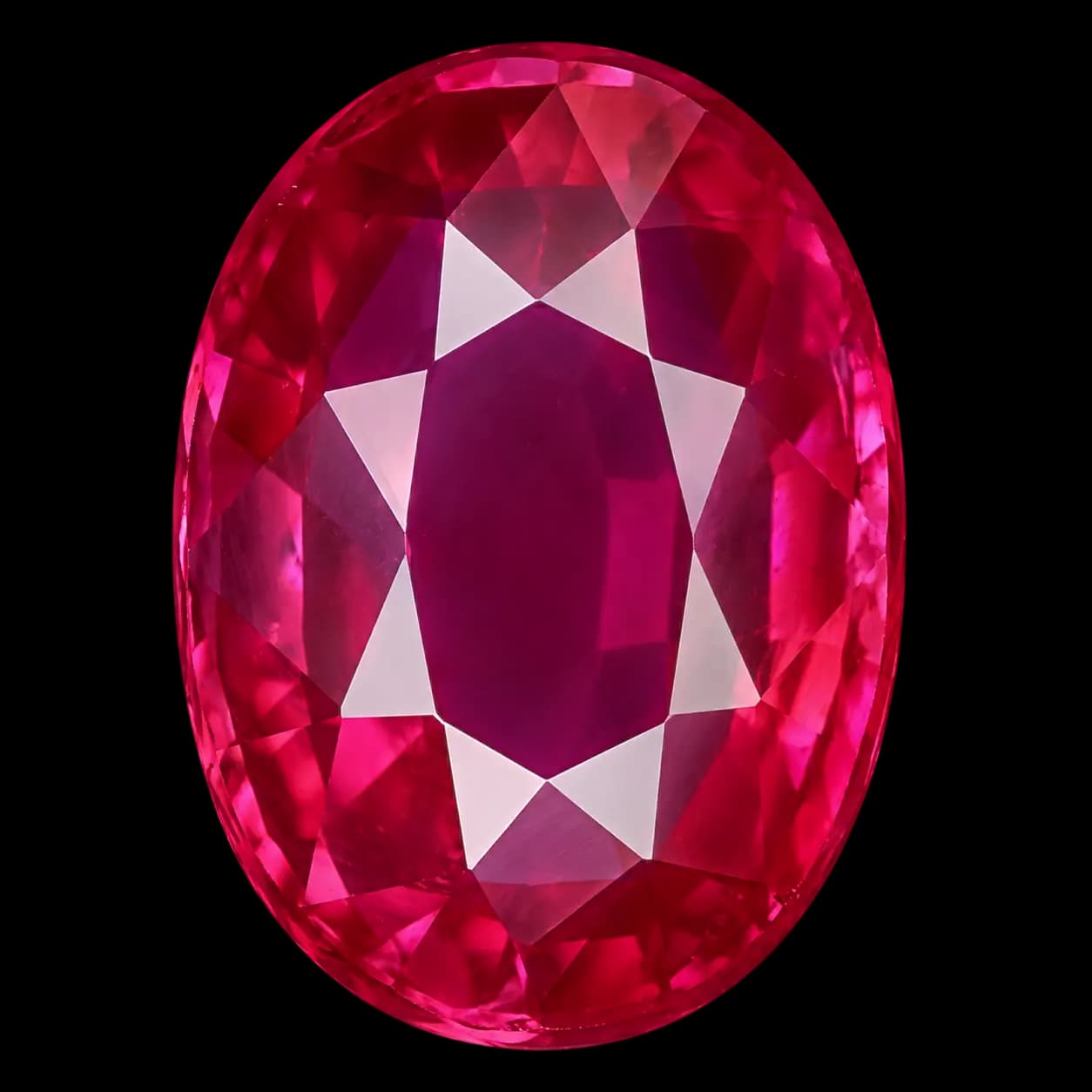
Ruby, the king of gemstones, captivates with its intense red hues ranging from vivid crimson to deep pigeon blood. This rare and durable corundum variety embodies passion and timeless elegance, making it a cherished choice for fine jewelry and discerning collectors worldwide.
Ruby is a variety of the mineral corundum (aluminum oxide) colored by trace amounts of chromium. With a Mohs hardness of 9, it ranks among the hardest gemstones, offering exceptional durability for everyday wear. Rubies form in metamorphic rocks under high pressure and temperature conditions, often alongside sapphires. Key physical properties include a refractive index of 1.76-1.77, specific gravity of 3.97-4.05, vitreous to subadamantine luster, and no cleavage, making them tough yet brittle. Color varieties span pinkish-red to blood-red, with prized pigeon blood rubies exhibiting a pure, vibrant red with slight blue undertones. Famous examples include the Black Prince's Ruby in the British Imperial State Crown and the Sunrise Ruby, a 25.59-carat gem sold for over $30 million. Historically prized across ancient civilizations from Asia to Europe, rubies have symbolized power and beauty for centuries. Today, they feature prominently in high-end rings, necklaces, and earrings, valued for their rarity, brilliance, and ability to elevate any jewelry collection.
- Mineral Family
- Corundum
- Chemical Formula
- Al₂O₃
- Mohs Hardness
- 9
- Refractive Index
- 1.76 - 1.77
- Specific Gravity
- 3.97 - 4.05
- Cleavage
- None
- Crystal System
- Trigonal
- Luster
- Vitreous
- Color Range
- Red, Pink
When purchasing ruby gemstones, focus on the 4Cs: color, clarity, cut, and carat. The most desirable color is a rich, saturated pigeon blood red with even distribution and minimal brownish or purplish tones. Clarity in natural rubies typically includes fine inclusions (silk), which can enhance value if they don't detract from transparency; eye-clean stones are rare and premium. Excellent cuts maximize brilliance and color, often in oval, cushion, or round shapes. Larger carat weights above 3 carats command higher prices due to rarity. Top origins include Myanmar (Burma) for classic pigeon blood hues, Mozambique for vibrant material, and Sri Lanka for lighter, pinkish tones. Most commercial rubies undergo heat treatment to improve color and clarity, which is stable and accepted; untreated stones are rarer and more valuable. Distinguish natural from lab-grown rubies through gemological certification. Always seek GIA or equivalent reports for authenticity, origin, and treatment disclosure. Price factors include color intensity, clarity, size, and origin, with top-quality pieces ranging significantly per carat.
Ruby's exceptional hardness makes it suitable for daily wear, but proper care preserves its beauty. Clean regularly with warm soapy water and a soft brush, rinsing thoroughly and drying with a lint-free cloth. Ultrasonic and steam cleaners are generally safe for untreated or heat-treated rubies. Avoid harsh chemicals, acids, or sudden temperature changes, which may affect filled or treated stones. Store separately in a soft-lined jewelry box to prevent scratches from harder materials. Remove before engaging in strenuous activities or household chores to avoid impacts. Regular professional inspections ensure settings remain secure.
Ruby is a variety of the mineral corundum (aluminum oxide) colored by trace amounts of chromium. With a Mohs hardness of 9, it ranks among the hardest gemstones, offering exceptional durability for everyday wear. Rubies form in metamorphic rocks under high pressure and temperature conditions, often alongside sapphires. Key physical properties include a refractive index of 1.76-1.77, specific gravity of 3.97-4.05, vitreous to subadamantine luster, and no cleavage, making them tough yet brittle. Color varieties span pinkish-red to blood-red, with prized pigeon blood rubies exhibiting a pure, vibrant red with slight blue undertones. Famous examples include the Black Prince's Ruby in the British Imperial State Crown and the Sunrise Ruby, a 25.59-carat gem sold for over $30 million. Historically prized across ancient civilizations from Asia to Europe, rubies have symbolized power and beauty for centuries. Today, they feature prominently in high-end rings, necklaces, and earrings, valued for their rarity, brilliance, and ability to elevate any jewelry collection.
- Mineral Family
- Corundum
- Chemical Formula
- Al₂O₃
- Mohs Hardness
- 9
- Refractive Index
- 1.76 - 1.77
- Specific Gravity
- 3.97 - 4.05
- Cleavage
- None
- Crystal System
- Trigonal
- Luster
- Vitreous
- Color Range
- Red, Pink
When purchasing ruby gemstones, focus on the 4Cs: color, clarity, cut, and carat. The most desirable color is a rich, saturated pigeon blood red with even distribution and minimal brownish or purplish tones. Clarity in natural rubies typically includes fine inclusions (silk), which can enhance value if they don't detract from transparency; eye-clean stones are rare and premium. Excellent cuts maximize brilliance and color, often in oval, cushion, or round shapes. Larger carat weights above 3 carats command higher prices due to rarity. Top origins include Myanmar (Burma) for classic pigeon blood hues, Mozambique for vibrant material, and Sri Lanka for lighter, pinkish tones. Most commercial rubies undergo heat treatment to improve color and clarity, which is stable and accepted; untreated stones are rarer and more valuable. Distinguish natural from lab-grown rubies through gemological certification. Always seek GIA or equivalent reports for authenticity, origin, and treatment disclosure. Price factors include color intensity, clarity, size, and origin, with top-quality pieces ranging significantly per carat.
Ruby's exceptional hardness makes it suitable for daily wear, but proper care preserves its beauty. Clean regularly with warm soapy water and a soft brush, rinsing thoroughly and drying with a lint-free cloth. Ultrasonic and steam cleaners are generally safe for untreated or heat-treated rubies. Avoid harsh chemicals, acids, or sudden temperature changes, which may affect filled or treated stones. Store separately in a soft-lined jewelry box to prevent scratches from harder materials. Remove before engaging in strenuous activities or household chores to avoid impacts. Regular professional inspections ensure settings remain secure.
Ruby for Sale
No gems found
Try broadening your search or adjusting your filters.
Have a gem of your own? List it free - no fees