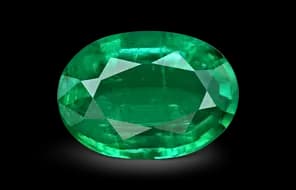
Afghanistan Emerald
Afghanistan emeralds are prized for their rich green color, distinctive inclusions, and exceptional crystals from the Panjshir Valley, making them compelling choices for fine jewelry and collectors.
Afghanistan emerald is the green gem variety of beryl, a beryllium aluminum silicate mineral. The most important deposits are in Afghanistan's Panjshir Valley, within the Hindu Kush Mountains northeast of Kabul. Commercial production became significant in the late 20th century, although historical references to emerald-like materials from the broader region are much older.
Emerald forms when geological fluids interact with suitable rocks under hydrothermal conditions. In the Panjshir region, emerald-bearing zones occur in metamorphic rocks affected by intense hydrothermal alteration. The resulting crystals can display strong green color and distinctive internal features. GIA research notes that multiphase fluid inclusions are common in Afghan emeralds and can provide useful evidence when determining geographic origin.
Chemically, emerald has the formula Be3Al2Si6O18. It belongs to the hexagonal crystal system, has a vitreous luster, a Mohs hardness of 7.5 to 8, and typically has a specific gravity around 2.72. Refractive indices vary with direction and individual stone, with emerald generally measuring within approximately 1.577 to 1.590.
Afghanistan emeralds are predominantly green, ranging from medium to rich and deep green. Fine Panjshir material can show saturated color comparable with highly regarded emeralds from other major sources. The valley is also known for well-formed rough crystals, including elongated pieces sometimes called pencil emeralds.
Panjshir Valley is the defining source associated with Afghanistan emerald. Important mining areas include deposits around the Khendj and adjacent valleys. Rather than being identified by a single famous named stone, Afghan emerald is valued as a geographic-origin material, with individual crystals and cut stones gaining recognition according to their color, clarity, size, cut quality, and documented provenance.
Today, natural Afghanistan emerald is used in rings, earrings, pendants, bracelets, luxury watches, and collector pieces. Buyers value it for its distinctive origin, attractive green color, natural character, and the limited availability of fine-quality material. As with emeralds from other origins, inclusions are common and should be evaluated in the context of overall beauty, durability, and treatment.
- Mineral Family
- Beryl
- Chemical Formula
- Be3Al2Si6O18
- Mohs Hardness
- 7.5 - 8
- Refractive Index
- 1.577 - 1.590
- Specific Gravity
- 2.72
- Cleavage
- Poor
- Crystal System
- Hexagonal
- Luster
- Vitreous
- Color Range
- Green
When buying Afghanistan emerald, begin with color. A vivid, well-saturated green is generally the most desirable, although personal preference and the stone's overall appearance matter. Examine the gem under neutral lighting as well as jewelry-store lighting to judge whether the color remains attractive.
Clarity is important, but emeralds commonly contain natural inclusions. A heavily included stone may have reduced transparency and durability, while a well-balanced inclusion pattern can confirm natural character. Cut should maximize color, brilliance, symmetry, and weight retention without creating excessive dark areas or weakening the stone.
Carat weight can have a substantial effect on price. Large, attractive stones with strong color and good transparency are considerably rarer than smaller commercial material. Origin can also influence value, particularly when a reputable laboratory confirms an Afghanistan or Panjshir geographic origin.
Treatments are common in emerald. Fracture filling with oils or other substances may be used to improve apparent clarity, so buyers should ask whether the stone has been treated and what material was used. Treatment disclosure is essential when comparing stones and prices.
Natural Afghanistan emerald should be distinguished from laboratory-grown synthetic emerald and imitation materials. Synthetic emerald has essentially the same chemical composition and crystal structure as natural emerald but is manufactured in a laboratory. A professional gemological laboratory can examine inclusions and other characteristics to help determine whether a stone is natural, synthetic, treated, or an imitation.
For significant purchases, request an independent gemological report stating the species and variety, and where applicable, treatment and geographic origin. Avoid relying solely on seller descriptions or photographs. Price is influenced by color, clarity, transparency, cut, carat weight, origin, treatment level, certification, and market demand.
If you plan to buy Afghanistan emerald online, choose a seller that provides clear photographs or videos, accurate measurements, treatment disclosure, return terms, and independent certification for higher-value stones. Ask for additional daylight images when color is difficult to judge on screen.
Clean Afghanistan emerald gently with lukewarm water, mild soap, and a soft brush or cloth. Rinse carefully and dry with a lint-free cloth. Avoid steam cleaners and ultrasonic cleaners unless a qualified gem professional has confirmed that the stone and its treatment can safely withstand them.
Store emerald jewelry separately from harder gemstones to reduce scratching, preferably in a soft-lined compartment or pouch. Avoid sudden temperature changes, strong chemicals, prolonged exposure to heat, and impacts that could worsen existing fractures.
Because emerald commonly contains fractures and may be clarity treated, use extra care during everyday wear. Remove emerald jewelry before strenuous activities, household cleaning, gardening, or situations where the stone could receive a sharp impact. Regular professional inspection is useful for valuable pieces, particularly around settings and fracture-filled stones.
Afghanistan emerald is the green gem variety of beryl, a beryllium aluminum silicate mineral. The most important deposits are in Afghanistan's Panjshir Valley, within the Hindu Kush Mountains northeast of Kabul. Commercial production became significant in the late 20th century, although historical references to emerald-like materials from the broader region are much older.
Emerald forms when geological fluids interact with suitable rocks under hydrothermal conditions. In the Panjshir region, emerald-bearing zones occur in metamorphic rocks affected by intense hydrothermal alteration. The resulting crystals can display strong green color and distinctive internal features. GIA research notes that multiphase fluid inclusions are common in Afghan emeralds and can provide useful evidence when determining geographic origin.
Chemically, emerald has the formula Be3Al2Si6O18. It belongs to the hexagonal crystal system, has a vitreous luster, a Mohs hardness of 7.5 to 8, and typically has a specific gravity around 2.72. Refractive indices vary with direction and individual stone, with emerald generally measuring within approximately 1.577 to 1.590.
Afghanistan emeralds are predominantly green, ranging from medium to rich and deep green. Fine Panjshir material can show saturated color comparable with highly regarded emeralds from other major sources. The valley is also known for well-formed rough crystals, including elongated pieces sometimes called pencil emeralds.
Panjshir Valley is the defining source associated with Afghanistan emerald. Important mining areas include deposits around the Khendj and adjacent valleys. Rather than being identified by a single famous named stone, Afghan emerald is valued as a geographic-origin material, with individual crystals and cut stones gaining recognition according to their color, clarity, size, cut quality, and documented provenance.
Today, natural Afghanistan emerald is used in rings, earrings, pendants, bracelets, luxury watches, and collector pieces. Buyers value it for its distinctive origin, attractive green color, natural character, and the limited availability of fine-quality material. As with emeralds from other origins, inclusions are common and should be evaluated in the context of overall beauty, durability, and treatment.
- Mineral Family
- Beryl
- Chemical Formula
- Be3Al2Si6O18
- Mohs Hardness
- 7.5 - 8
- Refractive Index
- 1.577 - 1.590
- Specific Gravity
- 2.72
- Cleavage
- Poor
- Crystal System
- Hexagonal
- Luster
- Vitreous
- Color Range
- Green
When buying Afghanistan emerald, begin with color. A vivid, well-saturated green is generally the most desirable, although personal preference and the stone's overall appearance matter. Examine the gem under neutral lighting as well as jewelry-store lighting to judge whether the color remains attractive.
Clarity is important, but emeralds commonly contain natural inclusions. A heavily included stone may have reduced transparency and durability, while a well-balanced inclusion pattern can confirm natural character. Cut should maximize color, brilliance, symmetry, and weight retention without creating excessive dark areas or weakening the stone.
Carat weight can have a substantial effect on price. Large, attractive stones with strong color and good transparency are considerably rarer than smaller commercial material. Origin can also influence value, particularly when a reputable laboratory confirms an Afghanistan or Panjshir geographic origin.
Treatments are common in emerald. Fracture filling with oils or other substances may be used to improve apparent clarity, so buyers should ask whether the stone has been treated and what material was used. Treatment disclosure is essential when comparing stones and prices.
Natural Afghanistan emerald should be distinguished from laboratory-grown synthetic emerald and imitation materials. Synthetic emerald has essentially the same chemical composition and crystal structure as natural emerald but is manufactured in a laboratory. A professional gemological laboratory can examine inclusions and other characteristics to help determine whether a stone is natural, synthetic, treated, or an imitation.
For significant purchases, request an independent gemological report stating the species and variety, and where applicable, treatment and geographic origin. Avoid relying solely on seller descriptions or photographs. Price is influenced by color, clarity, transparency, cut, carat weight, origin, treatment level, certification, and market demand.
If you plan to buy Afghanistan emerald online, choose a seller that provides clear photographs or videos, accurate measurements, treatment disclosure, return terms, and independent certification for higher-value stones. Ask for additional daylight images when color is difficult to judge on screen.
Clean Afghanistan emerald gently with lukewarm water, mild soap, and a soft brush or cloth. Rinse carefully and dry with a lint-free cloth. Avoid steam cleaners and ultrasonic cleaners unless a qualified gem professional has confirmed that the stone and its treatment can safely withstand them.
Store emerald jewelry separately from harder gemstones to reduce scratching, preferably in a soft-lined compartment or pouch. Avoid sudden temperature changes, strong chemicals, prolonged exposure to heat, and impacts that could worsen existing fractures.
Because emerald commonly contains fractures and may be clarity treated, use extra care during everyday wear. Remove emerald jewelry before strenuous activities, household cleaning, gardening, or situations where the stone could receive a sharp impact. Regular professional inspection is useful for valuable pieces, particularly around settings and fracture-filled stones.
Afghanistan Emerald for Sale
No gems found
Try broadening your search or adjusting your filters.
Have a gem of your own? List it free - no fees