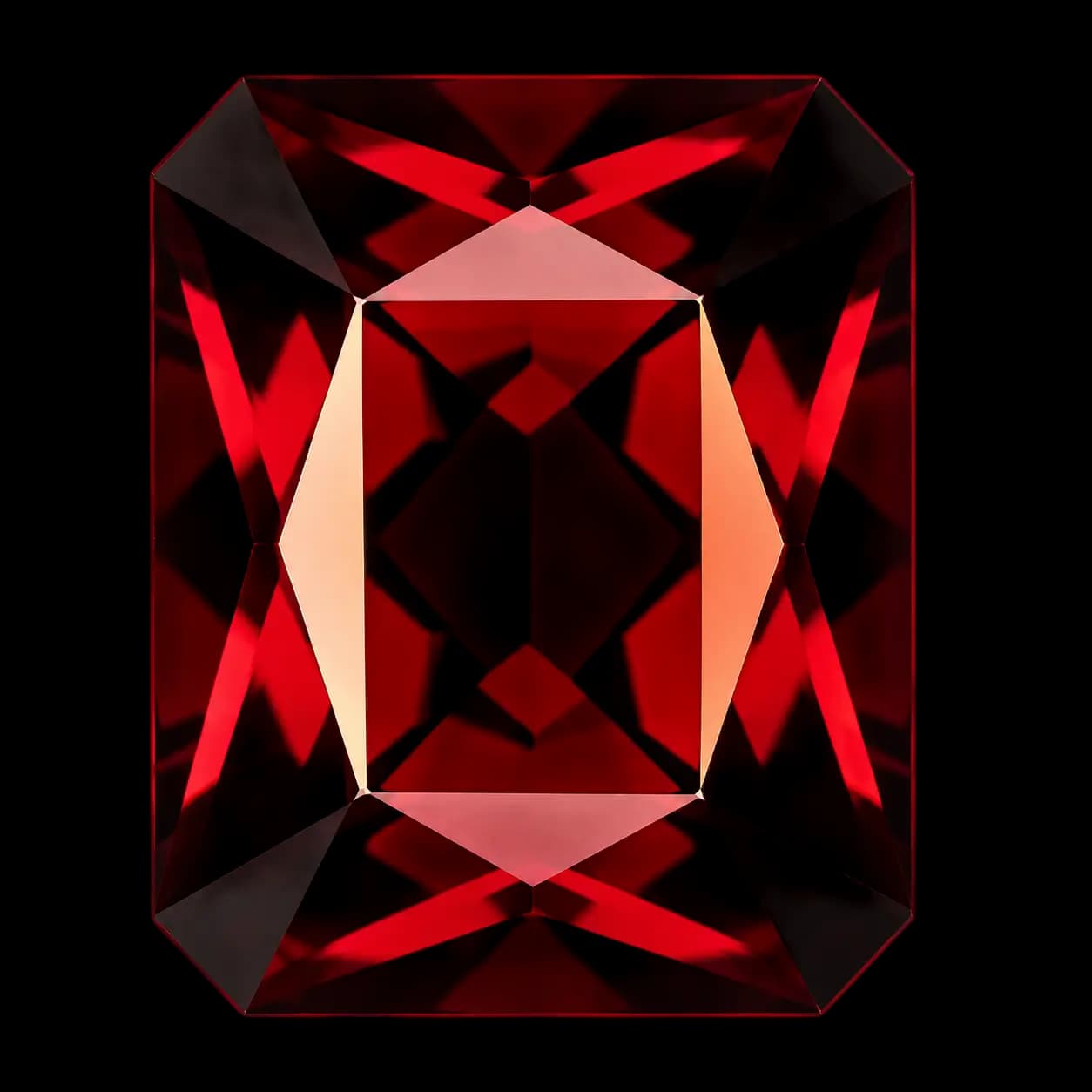
Garnet
Garnet gemstone is admired for its rich colors, brilliant sparkle, and remarkable variety. From classic red garnets to rare green varieties, it remains a timeless choice for fine jewelry and collectors.
Garnet is a diverse family of silicate minerals known for its wide range of colors, exceptional brilliance, and long history in jewelry. Unlike many gemstones that represent a single mineral species, garnet refers to a group of closely related minerals with different chemical compositions and characteristics.
The garnet mineral family includes popular varieties such as Almandine, Pyrope, Spessartine, Grossular, Andradite, and Uvarovite. Each variety offers unique colors and visual qualities. Almandine and Pyrope are commonly recognized for their deep red shades, while Tsavorite garnet displays vivid green tones and Spessartine garnet is valued for its vibrant orange hues.
Garnets form naturally under high-pressure geological conditions, often within metamorphic rocks. Their chemical composition varies depending on the elements present during formation, including aluminum, calcium, magnesium, iron, and manganese.
With a cubic crystal system, vitreous luster, and hardness ranging from 6.5 to 7.5 on the Mohs scale, garnets are suitable for many types of jewelry including rings, earrings, pendants, and bracelets when properly cared for.
Throughout history, garnets have been used in jewelry and decorative objects across ancient civilizations. Archaeological discoveries show garnet ornaments were valued for their beauty and durability thousands of years ago. Today, natural garnet continues to attract jewelry buyers who appreciate its color diversity, affordability, and individuality.
Famous garnet varieties include the rare green Tsavorite from East Africa, Demantoid garnet known for its exceptional brilliance, and vibrant orange Spessartine garnet. Collectors and jewelry enthusiasts value garnet because every variety offers a distinct combination of color, rarity, and character.
- Mineral Family
- Garnet
- Chemical Formula
- Varies by garnet species. Common examples include Pyrope: Mg3Al2(SiO4)3, Almandine: Fe3Al2(SiO4)3, Grossular: Ca3Al2(SiO4)3, Spessartine: Mn3Al2(SiO4)3, Andradite: Ca3Fe2(SiO4)3
- Mohs Hardness
- 6.5 - 7.5
- Refractive Index
- 1.714 - 1.888 depending on variety
- Specific Gravity
- 3.1 - 4.3 depending on variety
- Cleavage
- None
- Crystal System
- Cubic
- Luster
- Vitreous
- Color Range
- Red, Green, Orange, Pink, Purple, Yellow, Black
When you buy Garnet online, understanding quality factors helps you select a gemstone with excellent beauty and value.
Color: Color is one of the most important factors affecting garnet value. Deep, vivid red tones are highly popular in Almandine and Pyrope garnets, while bright green Tsavorite, intense orange Spessartine, and rare color-changing garnets can command higher prices due to their rarity.
Clarity: Most garnets are naturally included to some degree, but gemstones with good transparency and minimal visible inclusions are generally more valuable. Rare varieties such as Demantoid garnet may contain distinctive inclusions that collectors appreciate.
Cut: A well-executed cut enhances garnet's brilliance and improves light reflection. Popular cuts include oval, round, cushion, and emerald cuts, depending on the gemstone variety and crystal shape.
Carat Weight: Larger garnets are available in the market, but price per carat depends heavily on variety, color, clarity, and rarity. Rare green garnets and exceptional collector specimens increase significantly in value with size.
Origin: Origin can influence value, especially for rare garnets. Tsavorite garnets from Kenya and Tanzania, Demantoid garnets from Russia, and high-quality garnets from Madagascar are particularly recognized by collectors.
Treatments: Most garnets are sold in their natural state without treatments. Buyers should always ask about any enhancements and purchase gemstones with transparent treatment disclosure.
Natural vs Lab-Grown: Natural garnets are formed through geological processes and are valued for their natural origin. Lab-grown alternatives may exist for some garnet compositions but are less common in the fine gemstone market.
Certification and Authenticity: A reputable gemstone certificate from a recognized gemological laboratory helps confirm authenticity, variety, treatments, and important quality details. Certified natural Garnet provides confidence when making a purchase.
Garnet jewelry can maintain its beauty for generations with proper care.
Clean garnet gemstones using warm water, mild soap, and a soft brush. Gently remove dirt and oils from the surface without using harsh chemicals or abrasive cleaners.
Avoid exposing garnet jewelry to sudden temperature changes, strong chemicals, and unnecessary impacts. Although garnet is durable, harder gemstones or rough handling may cause scratches or damage.
Store garnet pieces separately in a soft pouch or lined jewelry box to prevent contact with other gemstones. Keeping each piece separated helps protect the polished surface.
For rings and frequently worn jewelry, periodic professional inspections are recommended to check the gemstone setting and ensure long-term security.
Garnet is a diverse family of silicate minerals known for its wide range of colors, exceptional brilliance, and long history in jewelry. Unlike many gemstones that represent a single mineral species, garnet refers to a group of closely related minerals with different chemical compositions and characteristics.
The garnet mineral family includes popular varieties such as Almandine, Pyrope, Spessartine, Grossular, Andradite, and Uvarovite. Each variety offers unique colors and visual qualities. Almandine and Pyrope are commonly recognized for their deep red shades, while Tsavorite garnet displays vivid green tones and Spessartine garnet is valued for its vibrant orange hues.
Garnets form naturally under high-pressure geological conditions, often within metamorphic rocks. Their chemical composition varies depending on the elements present during formation, including aluminum, calcium, magnesium, iron, and manganese.
With a cubic crystal system, vitreous luster, and hardness ranging from 6.5 to 7.5 on the Mohs scale, garnets are suitable for many types of jewelry including rings, earrings, pendants, and bracelets when properly cared for.
Throughout history, garnets have been used in jewelry and decorative objects across ancient civilizations. Archaeological discoveries show garnet ornaments were valued for their beauty and durability thousands of years ago. Today, natural garnet continues to attract jewelry buyers who appreciate its color diversity, affordability, and individuality.
Famous garnet varieties include the rare green Tsavorite from East Africa, Demantoid garnet known for its exceptional brilliance, and vibrant orange Spessartine garnet. Collectors and jewelry enthusiasts value garnet because every variety offers a distinct combination of color, rarity, and character.
- Mineral Family
- Garnet
- Chemical Formula
- Varies by garnet species. Common examples include Pyrope: Mg3Al2(SiO4)3, Almandine: Fe3Al2(SiO4)3, Grossular: Ca3Al2(SiO4)3, Spessartine: Mn3Al2(SiO4)3, Andradite: Ca3Fe2(SiO4)3
- Mohs Hardness
- 6.5 - 7.5
- Refractive Index
- 1.714 - 1.888 depending on variety
- Specific Gravity
- 3.1 - 4.3 depending on variety
- Cleavage
- None
- Crystal System
- Cubic
- Luster
- Vitreous
- Color Range
- Red, Green, Orange, Pink, Purple, Yellow, Black
When you buy Garnet online, understanding quality factors helps you select a gemstone with excellent beauty and value.
Color: Color is one of the most important factors affecting garnet value. Deep, vivid red tones are highly popular in Almandine and Pyrope garnets, while bright green Tsavorite, intense orange Spessartine, and rare color-changing garnets can command higher prices due to their rarity.
Clarity: Most garnets are naturally included to some degree, but gemstones with good transparency and minimal visible inclusions are generally more valuable. Rare varieties such as Demantoid garnet may contain distinctive inclusions that collectors appreciate.
Cut: A well-executed cut enhances garnet's brilliance and improves light reflection. Popular cuts include oval, round, cushion, and emerald cuts, depending on the gemstone variety and crystal shape.
Carat Weight: Larger garnets are available in the market, but price per carat depends heavily on variety, color, clarity, and rarity. Rare green garnets and exceptional collector specimens increase significantly in value with size.
Origin: Origin can influence value, especially for rare garnets. Tsavorite garnets from Kenya and Tanzania, Demantoid garnets from Russia, and high-quality garnets from Madagascar are particularly recognized by collectors.
Treatments: Most garnets are sold in their natural state without treatments. Buyers should always ask about any enhancements and purchase gemstones with transparent treatment disclosure.
Natural vs Lab-Grown: Natural garnets are formed through geological processes and are valued for their natural origin. Lab-grown alternatives may exist for some garnet compositions but are less common in the fine gemstone market.
Certification and Authenticity: A reputable gemstone certificate from a recognized gemological laboratory helps confirm authenticity, variety, treatments, and important quality details. Certified natural Garnet provides confidence when making a purchase.
Garnet jewelry can maintain its beauty for generations with proper care.
Clean garnet gemstones using warm water, mild soap, and a soft brush. Gently remove dirt and oils from the surface without using harsh chemicals or abrasive cleaners.
Avoid exposing garnet jewelry to sudden temperature changes, strong chemicals, and unnecessary impacts. Although garnet is durable, harder gemstones or rough handling may cause scratches or damage.
Store garnet pieces separately in a soft pouch or lined jewelry box to prevent contact with other gemstones. Keeping each piece separated helps protect the polished surface.
For rings and frequently worn jewelry, periodic professional inspections are recommended to check the gemstone setting and ensure long-term security.
Garnet for Sale
No gems found
Try broadening your search or adjusting your filters.
Have a gem of your own? List it free - no fees