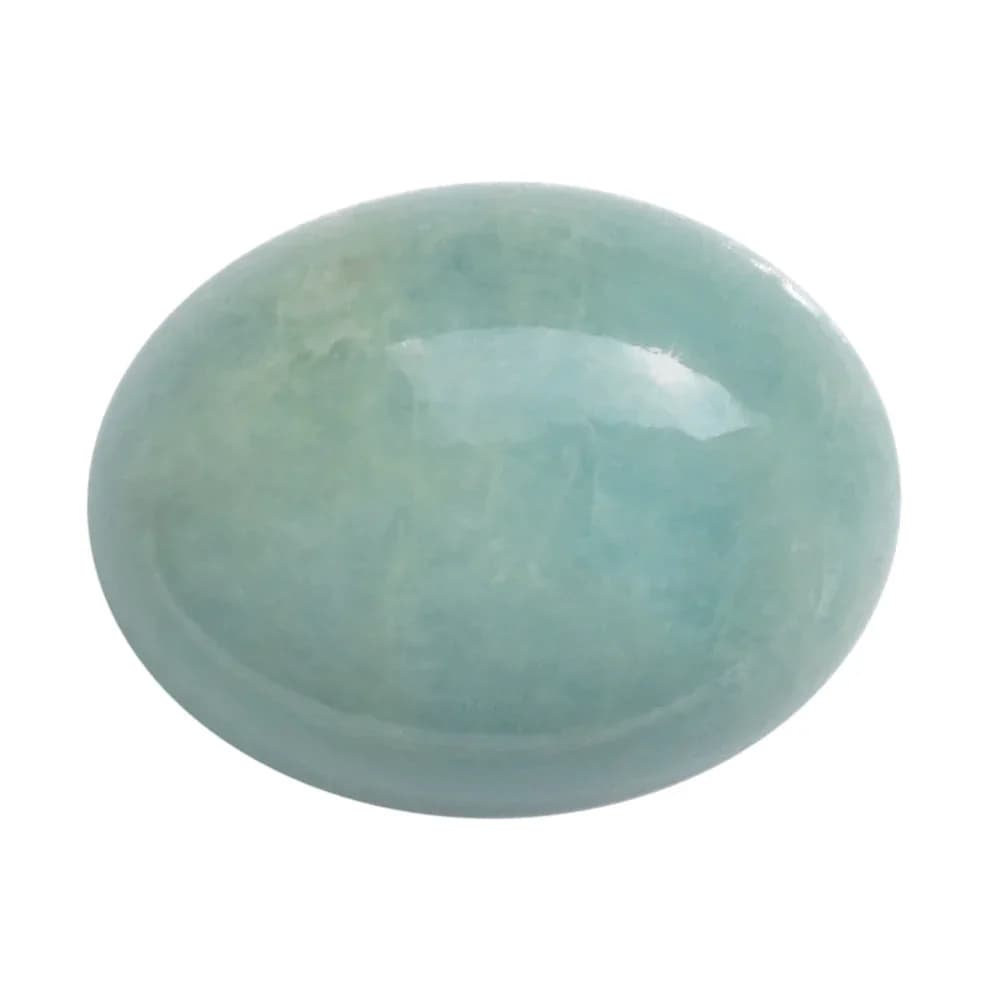
Aquamarine Cats Eye
Aquamarine Cats Eye is a rare chatoyant variety of beryl, combining ocean-blue color with a distinctive band of reflected light that gives cabochons exceptional character.
Aquamarine Cats Eye is a rare form of aquamarine that displays chatoyancy, the moving band of light commonly called a cat's eye effect. Aquamarine is the blue to greenish-blue variety of beryl, a beryllium aluminum silicate mineral with the chemical formula Be3Al2Si6O18. The blue color is primarily associated with iron within the beryl structure. In cat's-eye aquamarine, parallel tube-like or liquid-filled inclusions can reflect light in a concentrated line, producing the characteristic optical phenomenon. GIA notes that some beryl crystals contain enough parallel inclusions to allow cutters to fashion a cat's eye. Because the optical effect is best displayed from a smooth surface, Aquamarine Cats Eye is generally fashioned as a polished cabochon rather than a faceted gem. Its body color can range from pale blue to greenish blue, while attractive specimens may show pleasing saturation combined with a sharp, bright eye. Aquamarine has a Mohs hardness of 7.5 to 8, a refractive index of approximately 1.577 to 1.583, a specific gravity around 2.72, a hexagonal crystal system, and vitreous luster. Aquamarine is also the traditional birthstone for March. Natural aquamarine occurs in important gem-producing regions including Brazil, Pakistan, Madagascar, Mozambique, Nigeria, Afghanistan, and other localities. Brazilian material is especially well known for important aquamarine crystals and fine gems, while African localities have produced strongly colored stones. The history of aquamarine extends through centuries of gemstone collecting and jewelry, with its sea-inspired color contributing to its enduring popularity. Today, Aquamarine Cats Eye is particularly appealing to collectors and jewelry buyers who want something less conventional than standard faceted aquamarine. It works well in rings, pendants, earrings, bracelets, and bespoke jewelry, although the cabochon surface and individual inclusions should be considered when selecting a setting. Buyers value natural Aquamarine Cats Eye for the combination of genuine beryl composition, attractive blue color, rarity of chatoyancy, quality of the cat's eye line, and overall craftsmanship. The strongest stones typically show a bright, well-centered eye that moves cleanly across the domed surface when the stone is rocked under a direct light source.
- Mineral Family
- Beryl
- Chemical Formula
- Be3Al2Si6O18
- Mohs Hardness
- 7.5 - 8
- Refractive Index
- 1.577 - 1.583
- Specific Gravity
- 2.72
- Cleavage
- Indistinct
- Crystal System
- Hexagonal
- Luster
- Vitreous
- Color Range
- Blue
When buying Aquamarine Cats Eye online, evaluate the stone as both an aquamarine and a chatoyant gemstone. Color: Look for an attractive blue to greenish-blue body color with good distribution. More saturated blue can be desirable, but the cat's eye effect should remain clearly visible. Clarity: Unlike ordinary faceted aquamarine, inclusions are essential to producing chatoyancy. The goal is not necessarily an inclusion-free stone but a specimen where parallel inclusions create an attractive optical effect without excessive distracting fractures or cloudiness. Cat's Eye Effect: This is one of the most important value factors. A fine stone should show a distinct, bright line that appears to move across the surface as the gem is tilted. The eye should ideally be centered and reasonably sharp rather than broad, weak, or poorly defined. Cut: Aquamarine Cats Eye is usually cut as a high-domed oval, round, cushion, or other cabochon. Proper orientation of the rough is important because the cutter needs to align the internal inclusions so they produce the strongest possible chatoyancy. Carat Weight: Larger stones with attractive color and a strong, centered eye can be harder to find and may command higher prices. Size should not be considered separately from color, transparency, chatoyancy, and overall appearance. Origin: Aquamarine is found in several countries, including Brazil, Pakistan, Madagascar, Mozambique, Nigeria, and Afghanistan. Origin can contribute to provenance and collector interest, but it should not automatically be treated as a guarantee of superior quality. Treatments: Standard aquamarine may be heat treated to improve or modify color, and treatment disclosure is important. A seller should clearly state any known treatment rather than assuming that all blue aquamarine is untreated. Natural vs Lab-Grown: Ask whether the gemstone is natural beryl, laboratory-grown material, or an imitation. Natural Aquamarine Cats Eye with genuine chatoyancy should be identified accurately, and unusual claims should be supported by gemological testing. Certification: For valuable stones, an independent laboratory report can help confirm species, variety, natural or synthetic status, and detectable treatments. Authenticity: Request clear photographs and videos showing the cat's eye effect under direct light, along with weight and dimensions. Be cautious when a seller uses the term cat's eye loosely or provides only generic gemstone photographs. Price Factors: Aquamarine Cats Eye does not have one universal price per carat. Value depends on body color, transparency, strength and alignment of chatoyancy, cut quality, surface polish, size, natural status, treatment, provenance, certification, and market demand. To buy Aquamarine Cats Eye online confidently, compare stones based on their actual photographs, measurements, disclosed treatments, laboratory documentation where appropriate, and return policy rather than relying on a generic price chart.
Aquamarine Cats Eye is reasonably durable because beryl has a Mohs hardness of 7.5 to 8, but its cabochon surface can still be scratched or damaged by harder materials. Cleaning: Use lukewarm water, mild soap, and a soft lint-free cloth. Gently clean around the stone and setting, then rinse and dry carefully. Avoid abrasive powders, rough brushes, and aggressive cleaning products. Chemicals: Keep the gemstone away from bleach, strong household cleaners, solvents, and prolonged contact with cosmetics, perfume, or hairspray. Heat and Sudden Temperature Changes: Avoid unnecessary exposure to high heat and sudden temperature changes, particularly when the stone has visible fractures or significant inclusions. Ultrasonic or steam cleaning should not be used automatically; professional advice is preferable when the stone contains fractures, liquid inclusions, or has undergone treatment. Storage: Store Aquamarine Cats Eye separately in a soft pouch or fabric-lined compartment so it does not come into contact with harder gemstones that could scratch its polished surface. Everyday Wear: The gemstone can be used in jewelry, but rings receive more impact than pendants or earrings. Remove Aquamarine Cats Eye jewelry before sports, heavy manual work, gardening, household cleaning, swimming, or activities where the stone could be struck. Regularly inspect the setting of a ring or pendant and have loose prongs or mounting issues repaired promptly.
Aquamarine Cats Eye is a rare form of aquamarine that displays chatoyancy, the moving band of light commonly called a cat's eye effect. Aquamarine is the blue to greenish-blue variety of beryl, a beryllium aluminum silicate mineral with the chemical formula Be3Al2Si6O18. The blue color is primarily associated with iron within the beryl structure. In cat's-eye aquamarine, parallel tube-like or liquid-filled inclusions can reflect light in a concentrated line, producing the characteristic optical phenomenon. GIA notes that some beryl crystals contain enough parallel inclusions to allow cutters to fashion a cat's eye. Because the optical effect is best displayed from a smooth surface, Aquamarine Cats Eye is generally fashioned as a polished cabochon rather than a faceted gem. Its body color can range from pale blue to greenish blue, while attractive specimens may show pleasing saturation combined with a sharp, bright eye. Aquamarine has a Mohs hardness of 7.5 to 8, a refractive index of approximately 1.577 to 1.583, a specific gravity around 2.72, a hexagonal crystal system, and vitreous luster. Aquamarine is also the traditional birthstone for March. Natural aquamarine occurs in important gem-producing regions including Brazil, Pakistan, Madagascar, Mozambique, Nigeria, Afghanistan, and other localities. Brazilian material is especially well known for important aquamarine crystals and fine gems, while African localities have produced strongly colored stones. The history of aquamarine extends through centuries of gemstone collecting and jewelry, with its sea-inspired color contributing to its enduring popularity. Today, Aquamarine Cats Eye is particularly appealing to collectors and jewelry buyers who want something less conventional than standard faceted aquamarine. It works well in rings, pendants, earrings, bracelets, and bespoke jewelry, although the cabochon surface and individual inclusions should be considered when selecting a setting. Buyers value natural Aquamarine Cats Eye for the combination of genuine beryl composition, attractive blue color, rarity of chatoyancy, quality of the cat's eye line, and overall craftsmanship. The strongest stones typically show a bright, well-centered eye that moves cleanly across the domed surface when the stone is rocked under a direct light source.
- Mineral Family
- Beryl
- Chemical Formula
- Be3Al2Si6O18
- Mohs Hardness
- 7.5 - 8
- Refractive Index
- 1.577 - 1.583
- Specific Gravity
- 2.72
- Cleavage
- Indistinct
- Crystal System
- Hexagonal
- Luster
- Vitreous
- Color Range
- Blue
When buying Aquamarine Cats Eye online, evaluate the stone as both an aquamarine and a chatoyant gemstone. Color: Look for an attractive blue to greenish-blue body color with good distribution. More saturated blue can be desirable, but the cat's eye effect should remain clearly visible. Clarity: Unlike ordinary faceted aquamarine, inclusions are essential to producing chatoyancy. The goal is not necessarily an inclusion-free stone but a specimen where parallel inclusions create an attractive optical effect without excessive distracting fractures or cloudiness. Cat's Eye Effect: This is one of the most important value factors. A fine stone should show a distinct, bright line that appears to move across the surface as the gem is tilted. The eye should ideally be centered and reasonably sharp rather than broad, weak, or poorly defined. Cut: Aquamarine Cats Eye is usually cut as a high-domed oval, round, cushion, or other cabochon. Proper orientation of the rough is important because the cutter needs to align the internal inclusions so they produce the strongest possible chatoyancy. Carat Weight: Larger stones with attractive color and a strong, centered eye can be harder to find and may command higher prices. Size should not be considered separately from color, transparency, chatoyancy, and overall appearance. Origin: Aquamarine is found in several countries, including Brazil, Pakistan, Madagascar, Mozambique, Nigeria, and Afghanistan. Origin can contribute to provenance and collector interest, but it should not automatically be treated as a guarantee of superior quality. Treatments: Standard aquamarine may be heat treated to improve or modify color, and treatment disclosure is important. A seller should clearly state any known treatment rather than assuming that all blue aquamarine is untreated. Natural vs Lab-Grown: Ask whether the gemstone is natural beryl, laboratory-grown material, or an imitation. Natural Aquamarine Cats Eye with genuine chatoyancy should be identified accurately, and unusual claims should be supported by gemological testing. Certification: For valuable stones, an independent laboratory report can help confirm species, variety, natural or synthetic status, and detectable treatments. Authenticity: Request clear photographs and videos showing the cat's eye effect under direct light, along with weight and dimensions. Be cautious when a seller uses the term cat's eye loosely or provides only generic gemstone photographs. Price Factors: Aquamarine Cats Eye does not have one universal price per carat. Value depends on body color, transparency, strength and alignment of chatoyancy, cut quality, surface polish, size, natural status, treatment, provenance, certification, and market demand. To buy Aquamarine Cats Eye online confidently, compare stones based on their actual photographs, measurements, disclosed treatments, laboratory documentation where appropriate, and return policy rather than relying on a generic price chart.
Aquamarine Cats Eye is reasonably durable because beryl has a Mohs hardness of 7.5 to 8, but its cabochon surface can still be scratched or damaged by harder materials. Cleaning: Use lukewarm water, mild soap, and a soft lint-free cloth. Gently clean around the stone and setting, then rinse and dry carefully. Avoid abrasive powders, rough brushes, and aggressive cleaning products. Chemicals: Keep the gemstone away from bleach, strong household cleaners, solvents, and prolonged contact with cosmetics, perfume, or hairspray. Heat and Sudden Temperature Changes: Avoid unnecessary exposure to high heat and sudden temperature changes, particularly when the stone has visible fractures or significant inclusions. Ultrasonic or steam cleaning should not be used automatically; professional advice is preferable when the stone contains fractures, liquid inclusions, or has undergone treatment. Storage: Store Aquamarine Cats Eye separately in a soft pouch or fabric-lined compartment so it does not come into contact with harder gemstones that could scratch its polished surface. Everyday Wear: The gemstone can be used in jewelry, but rings receive more impact than pendants or earrings. Remove Aquamarine Cats Eye jewelry before sports, heavy manual work, gardening, household cleaning, swimming, or activities where the stone could be struck. Regularly inspect the setting of a ring or pendant and have loose prongs or mounting issues repaired promptly.
Aquamarine Cats Eye for Sale
No gems found
Try broadening your search or adjusting your filters.
Have a gem of your own? List it free - no fees