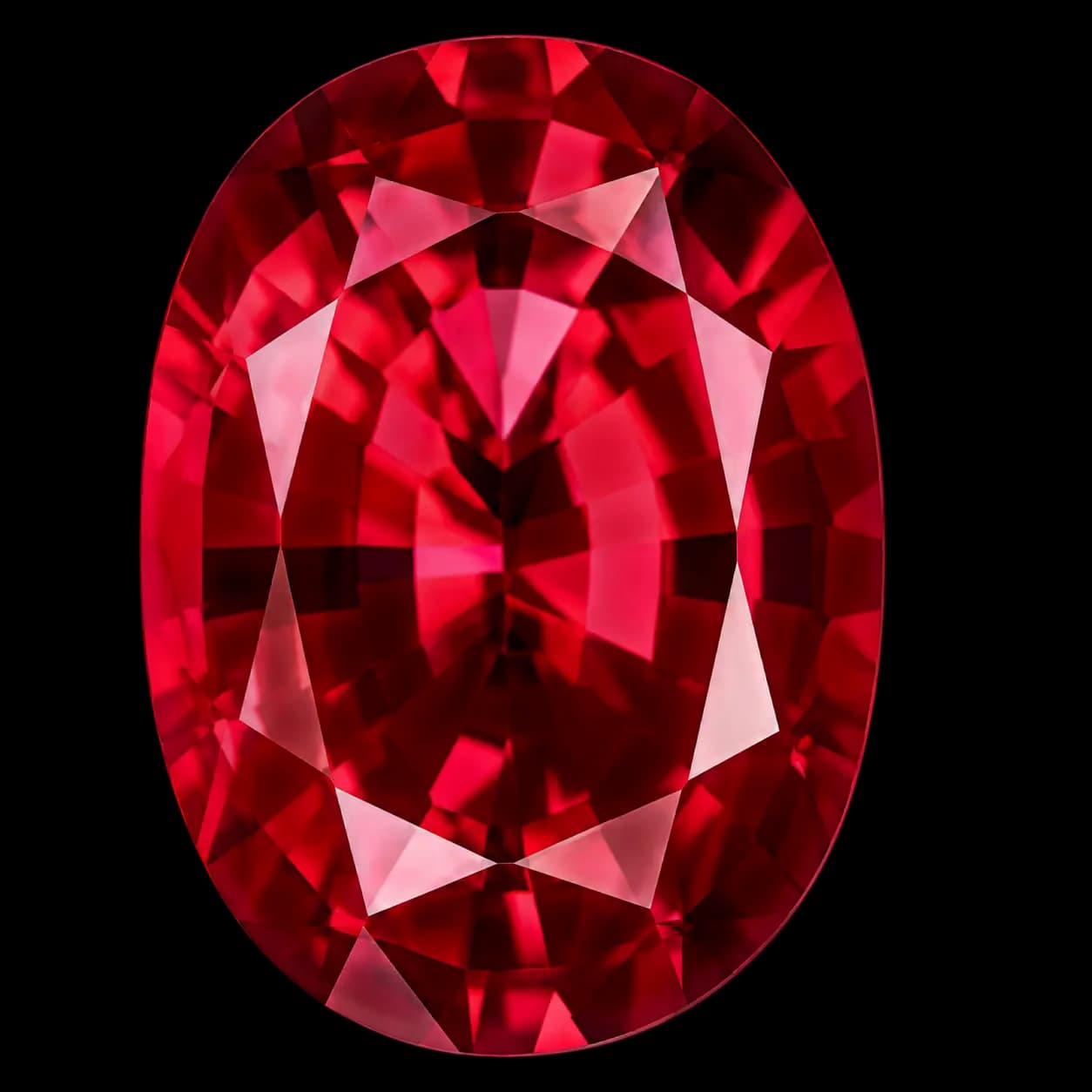
Spinel
Spinel is a captivating gemstone admired for its exceptional brilliance, vibrant colors, and remarkable durability. From vivid reds to rare blues, natural Spinel offers timeless beauty for fine jewelry.
Spinel is a natural gemstone belonging to the spinel mineral group. For centuries, it was often mistaken for ruby because of its intense red colors and brilliant appearance. Today, Spinel is recognized as a distinct and highly valued gemstone appreciated by collectors and jewelry enthusiasts worldwide.
Spinel forms naturally in metamorphic rocks, often alongside minerals such as corundum, marble, and gemstones like ruby and sapphire. It is a magnesium aluminum oxide mineral with the chemical formula MgAl2O4. Spinel crystallizes in the cubic crystal system, creating well-formed crystals with excellent transparency and brilliance.
Natural Spinel has a Mohs hardness of 8, making it a durable gemstone suitable for rings, earrings, necklaces, and bracelets. It has a vitreous luster, no cleavage, and a refractive index of approximately 1.718. Its combination of durability, transparency, and strong brilliance makes Spinel an excellent choice for everyday jewelry.
Spinel occurs in a wide range of colors including red, pink, blue, purple, orange, black, and colorless varieties. Red Spinel is among the most historically significant and desirable varieties, while vivid cobalt blue Spinel and bright pink Spinel are highly sought after by collectors. Rare orange-pink varieties are also admired for their unique beauty.
Throughout history, several famous red gemstones previously identified as rubies were later discovered to be Spinels. The gemstone has appeared in royal collections and historic jewelry pieces, increasing awareness of its unique identity and value. Important Spinel deposits have been found in Myanmar, Sri Lanka, Vietnam, Tajikistan, Tanzania, and other locations.
Spinel jewelry is valued for its brilliance, color variety, and durability. It is commonly used in engagement rings, statement rings, earrings, pendants, and luxury jewelry designs. Its natural beauty and growing recognition make it an attractive alternative to more traditional colored gemstones.
Collectors and buyers appreciate Spinel for its natural colors, excellent clarity, rarity in fine qualities, and historical importance. High-quality natural Spinel gemstones with vivid color and strong transparency are especially desirable in the international gemstone market.
- Mineral Family
- Spinel
- Chemical Formula
- MgAl2O4
- Mohs Hardness
- 8
- Refractive Index
- 1.718
- Specific Gravity
- 3.54 - 3.63
- Cleavage
- None
- Crystal System
- Cubic
- Luster
- Vitreous
- Color Range
- Red, Pink, Purple, Blue, Orange, Black, White
When choosing a natural Spinel gemstone, buyers should evaluate color, clarity, cut, carat weight, origin, treatments, and certification.
Color: Color is one of the most important factors affecting Spinel value. Vivid and saturated colors generally command higher prices. Bright red, cobalt blue, vivid pink, and exceptional orange-pink Spinels are among the most desirable varieties.
Clarity: Spinel is naturally a transparent gemstone, and many fine examples display excellent clarity. Minor natural inclusions can help confirm authenticity, while eye-clean stones with strong transparency are usually more valuable.
Cut: A well-executed cut enhances Spinel's brilliance and color. Popular cuts include oval, cushion, round, and emerald cuts. Symmetry, proportions, and light reflection are important considerations when selecting a gemstone.
Carat Weight: Fine-quality Spinels become increasingly rare in larger sizes. Larger gemstones with excellent color and clarity often carry significant premiums due to their scarcity.
Origin: Important Spinel sources include Myanmar, Sri Lanka, Vietnam, Tanzania, and Tajikistan. Origin may influence collector interest, especially for stones with exceptional color characteristics.
Treatments: Natural Spinel is generally valued because it is commonly found without significant treatment. Some Spinels may undergo heat treatment to improve appearance, and any treatments should be disclosed by sellers.
Natural vs Lab-Grown Spinel: Natural Spinel forms through geological processes over millions of years. Lab-grown Spinel can have similar chemical properties but is created artificially and is typically more affordable. Buyers should confirm whether a gemstone is natural or synthetic before purchase.
Certification and Authenticity: A reputable gemstone laboratory certificate helps verify Spinel authenticity, natural origin, treatments, and important characteristics. Buyers looking to buy Spinel online should choose trusted sellers who provide transparent gemstone information.
Spinel is a durable gemstone with a Mohs hardness of 8, making it suitable for regular jewelry wear. However, proper care helps maintain its brilliance and appearance.
Cleaning: Clean Spinel jewelry using warm water, mild soap, and a soft brush. Gently remove dirt and residue, then rinse and dry with a soft cloth.
Storage: Store Spinel jewelry separately from softer gemstones to prevent scratches. Keeping pieces in individual fabric-lined compartments is recommended.
Everyday Wear Advice: Spinel is suitable for rings, earrings, bracelets, and necklaces. Although durable, avoid exposing Spinel jewelry to harsh chemicals, sudden temperature changes, and unnecessary impacts.
Things to Avoid: Avoid strong cleaning chemicals, abrasive materials, and prolonged exposure to extreme heat. Professional inspection is recommended for valuable Spinel jewelry settings.
Spinel is a natural gemstone belonging to the spinel mineral group. For centuries, it was often mistaken for ruby because of its intense red colors and brilliant appearance. Today, Spinel is recognized as a distinct and highly valued gemstone appreciated by collectors and jewelry enthusiasts worldwide.
Spinel forms naturally in metamorphic rocks, often alongside minerals such as corundum, marble, and gemstones like ruby and sapphire. It is a magnesium aluminum oxide mineral with the chemical formula MgAl2O4. Spinel crystallizes in the cubic crystal system, creating well-formed crystals with excellent transparency and brilliance.
Natural Spinel has a Mohs hardness of 8, making it a durable gemstone suitable for rings, earrings, necklaces, and bracelets. It has a vitreous luster, no cleavage, and a refractive index of approximately 1.718. Its combination of durability, transparency, and strong brilliance makes Spinel an excellent choice for everyday jewelry.
Spinel occurs in a wide range of colors including red, pink, blue, purple, orange, black, and colorless varieties. Red Spinel is among the most historically significant and desirable varieties, while vivid cobalt blue Spinel and bright pink Spinel are highly sought after by collectors. Rare orange-pink varieties are also admired for their unique beauty.
Throughout history, several famous red gemstones previously identified as rubies were later discovered to be Spinels. The gemstone has appeared in royal collections and historic jewelry pieces, increasing awareness of its unique identity and value. Important Spinel deposits have been found in Myanmar, Sri Lanka, Vietnam, Tajikistan, Tanzania, and other locations.
Spinel jewelry is valued for its brilliance, color variety, and durability. It is commonly used in engagement rings, statement rings, earrings, pendants, and luxury jewelry designs. Its natural beauty and growing recognition make it an attractive alternative to more traditional colored gemstones.
Collectors and buyers appreciate Spinel for its natural colors, excellent clarity, rarity in fine qualities, and historical importance. High-quality natural Spinel gemstones with vivid color and strong transparency are especially desirable in the international gemstone market.
- Mineral Family
- Spinel
- Chemical Formula
- MgAl2O4
- Mohs Hardness
- 8
- Refractive Index
- 1.718
- Specific Gravity
- 3.54 - 3.63
- Cleavage
- None
- Crystal System
- Cubic
- Luster
- Vitreous
- Color Range
- Red, Pink, Purple, Blue, Orange, Black, White
When choosing a natural Spinel gemstone, buyers should evaluate color, clarity, cut, carat weight, origin, treatments, and certification.
Color: Color is one of the most important factors affecting Spinel value. Vivid and saturated colors generally command higher prices. Bright red, cobalt blue, vivid pink, and exceptional orange-pink Spinels are among the most desirable varieties.
Clarity: Spinel is naturally a transparent gemstone, and many fine examples display excellent clarity. Minor natural inclusions can help confirm authenticity, while eye-clean stones with strong transparency are usually more valuable.
Cut: A well-executed cut enhances Spinel's brilliance and color. Popular cuts include oval, cushion, round, and emerald cuts. Symmetry, proportions, and light reflection are important considerations when selecting a gemstone.
Carat Weight: Fine-quality Spinels become increasingly rare in larger sizes. Larger gemstones with excellent color and clarity often carry significant premiums due to their scarcity.
Origin: Important Spinel sources include Myanmar, Sri Lanka, Vietnam, Tanzania, and Tajikistan. Origin may influence collector interest, especially for stones with exceptional color characteristics.
Treatments: Natural Spinel is generally valued because it is commonly found without significant treatment. Some Spinels may undergo heat treatment to improve appearance, and any treatments should be disclosed by sellers.
Natural vs Lab-Grown Spinel: Natural Spinel forms through geological processes over millions of years. Lab-grown Spinel can have similar chemical properties but is created artificially and is typically more affordable. Buyers should confirm whether a gemstone is natural or synthetic before purchase.
Certification and Authenticity: A reputable gemstone laboratory certificate helps verify Spinel authenticity, natural origin, treatments, and important characteristics. Buyers looking to buy Spinel online should choose trusted sellers who provide transparent gemstone information.
Spinel is a durable gemstone with a Mohs hardness of 8, making it suitable for regular jewelry wear. However, proper care helps maintain its brilliance and appearance.
Cleaning: Clean Spinel jewelry using warm water, mild soap, and a soft brush. Gently remove dirt and residue, then rinse and dry with a soft cloth.
Storage: Store Spinel jewelry separately from softer gemstones to prevent scratches. Keeping pieces in individual fabric-lined compartments is recommended.
Everyday Wear Advice: Spinel is suitable for rings, earrings, bracelets, and necklaces. Although durable, avoid exposing Spinel jewelry to harsh chemicals, sudden temperature changes, and unnecessary impacts.
Things to Avoid: Avoid strong cleaning chemicals, abrasive materials, and prolonged exposure to extreme heat. Professional inspection is recommended for valuable Spinel jewelry settings.

