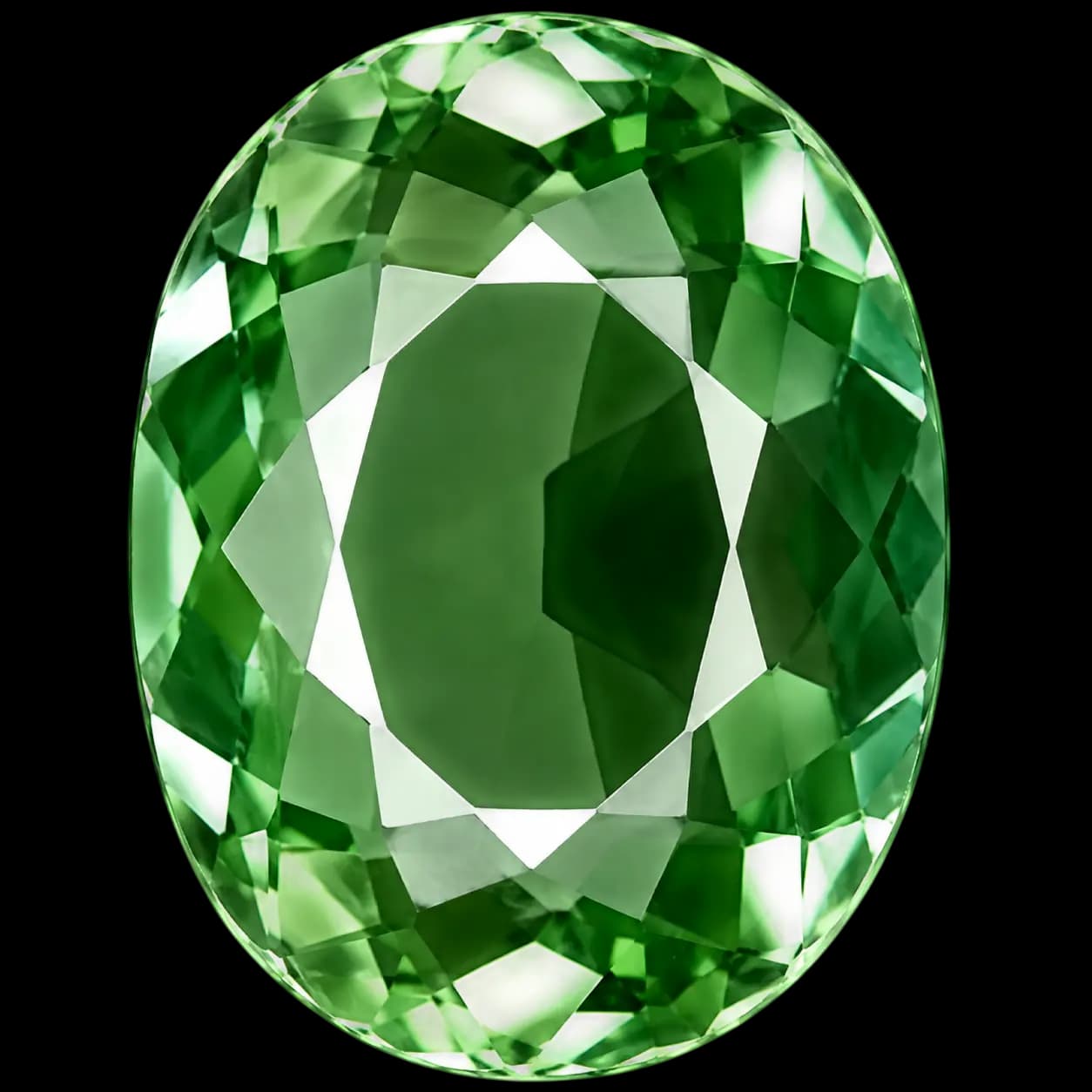
Tourmaline
Tourmaline is a captivating gemstone celebrated for its exceptional color variety, vibrant brilliance, and excellent durability. From rare Paraiba to elegant Pink Tourmaline, it is treasured by collectors and jewelry lovers worldwide.
Tourmaline is one of the most diverse and colorful gemstone groups in the world. It belongs to the tourmaline mineral family, a complex group of boron silicate minerals with variations in chemical composition that create its remarkable range of colors.
Natural Tourmaline forms in igneous and metamorphic environments, often growing as elongated prismatic crystals. Its complex chemistry allows different elements such as iron, manganese, copper, lithium, and chromium to influence its final color.
Tourmaline is known for its strong pleochroism, meaning a single crystal can display different colors or intensities when viewed from different angles. It also has unique electrical properties, including the ability to develop an electric charge when heated or compressed.
The gemstone is available in an extraordinary spectrum of colors. Popular varieties include Paraiba Tourmaline with its neon blue to green hues, Rubellite with rich red tones, Indicolite with deep blue shades, Verdelite with green colors, Pink Tourmaline, Watermelon Tourmaline with pink and green zoning, and Black Tourmaline (Schorl).
Some of the most important sources of Tourmaline include Brazil, Mozambique, Nigeria, Afghanistan, Pakistan, Madagascar, Sri Lanka, and the United States. Brazilian Paraiba Tourmaline remains one of the rarest and most valuable varieties due to its intense color and limited availability.
Throughout history, Tourmaline has been admired for its unusual colors and optical characteristics. Today, it is widely used in rings, earrings, necklaces, bracelets, and collector gemstones. Buyers value Tourmaline gemstone for its beauty, variety, durability, and the individuality of each natural crystal.
- Mineral Family
- Tourmaline
- Chemical Formula
- Complex boron silicate mineral with variable composition. Common gem varieties include elbaite, dravite, and schorl with formulas such as Na(Li,Al)3Al6(BO3)3Si6O18(OH)4 for elbaite.
- Mohs Hardness
- 7 - 7.5
- Refractive Index
- 1.603 - 1.655 (varies by variety)
- Specific Gravity
- 2.82 - 3.32 (varies by variety)
- Cleavage
- None
- Crystal System
- Trigonal
- Luster
- Vitreous
- Color Range
- Pink, Purple, Red, Blue, Orange, Gray, Cyan, Yellow, Green, Black, White
When choosing a natural Tourmaline gemstone, buyers should consider color, clarity, cut, carat weight, origin, treatments, and certification.
Color: Color is the most important factor affecting Tourmaline value. Bright, vivid, and rare colors generally command higher prices. Neon blue-green Paraiba Tourmaline, fine Rubellite, and exceptional Chrome Tourmaline are among the most sought-after varieties.
Clarity: Tourmaline naturally forms with internal characteristics. Eye-clean stones with attractive transparency are highly desirable, while certain inclusions may be accepted depending on the variety. Unique features such as color zoning in Watermelon Tourmaline can increase collector appeal.
Cut: Skilled cutting enhances Tourmaline’s brilliance and pleochroic effects. Many Tourmalines are cut into elongated rectangular shapes because of their natural crystal structure, but they can also be found in oval, cushion, round, and other fancy cuts.
Carat: Larger Tourmalines, especially rare colors, become increasingly valuable as fine-quality material is less commonly available in bigger sizes.
Origin: Origin can influence value, particularly for Paraiba Tourmaline. Brazilian material is especially famous, although important deposits also exist in Africa and other regions.
Treatments: Some Tourmalines may undergo treatments such as heat enhancement to improve color. Buyers should request disclosure of any treatments before purchase.
Natural vs Lab-grown: Natural Tourmaline is valued for its geological formation and individual characteristics. Buyers should confirm whether a gemstone is natural and request a trusted gemological certificate.
Certification: Independent laboratory certification helps verify authenticity, variety, treatments, and important gemstone characteristics when purchasing valuable Tourmaline.
Price Factors: Tourmaline prices vary widely depending on rarity, color quality, size, origin, clarity, and market demand. Rare varieties such as Paraiba can reach exceptional values, while common colors remain accessible for jewelry buyers.
Tourmaline is a durable gemstone suitable for everyday jewelry with proper care. Clean Tourmaline jewelry using warm water, mild soap, and a soft brush or lint-free cloth.
Avoid sudden temperature changes, harsh chemicals, and prolonged exposure to strong heat, as these may affect some treated stones or delicate settings.
Ultrasonic and steam cleaners should be used with caution, especially for stones containing visible inclusions or treated material.
Store Tourmaline jewelry separately from harder gemstones to prevent scratches. Keeping pieces in a soft pouch or lined jewelry box helps maintain their polish and beauty.
With regular gentle cleaning and careful handling, natural Tourmaline jewelry can retain its vibrant appearance for generations.
Tourmaline is one of the most diverse and colorful gemstone groups in the world. It belongs to the tourmaline mineral family, a complex group of boron silicate minerals with variations in chemical composition that create its remarkable range of colors.
Natural Tourmaline forms in igneous and metamorphic environments, often growing as elongated prismatic crystals. Its complex chemistry allows different elements such as iron, manganese, copper, lithium, and chromium to influence its final color.
Tourmaline is known for its strong pleochroism, meaning a single crystal can display different colors or intensities when viewed from different angles. It also has unique electrical properties, including the ability to develop an electric charge when heated or compressed.
The gemstone is available in an extraordinary spectrum of colors. Popular varieties include Paraiba Tourmaline with its neon blue to green hues, Rubellite with rich red tones, Indicolite with deep blue shades, Verdelite with green colors, Pink Tourmaline, Watermelon Tourmaline with pink and green zoning, and Black Tourmaline (Schorl).
Some of the most important sources of Tourmaline include Brazil, Mozambique, Nigeria, Afghanistan, Pakistan, Madagascar, Sri Lanka, and the United States. Brazilian Paraiba Tourmaline remains one of the rarest and most valuable varieties due to its intense color and limited availability.
Throughout history, Tourmaline has been admired for its unusual colors and optical characteristics. Today, it is widely used in rings, earrings, necklaces, bracelets, and collector gemstones. Buyers value Tourmaline gemstone for its beauty, variety, durability, and the individuality of each natural crystal.
- Mineral Family
- Tourmaline
- Chemical Formula
- Complex boron silicate mineral with variable composition. Common gem varieties include elbaite, dravite, and schorl with formulas such as Na(Li,Al)3Al6(BO3)3Si6O18(OH)4 for elbaite.
- Mohs Hardness
- 7 - 7.5
- Refractive Index
- 1.603 - 1.655 (varies by variety)
- Specific Gravity
- 2.82 - 3.32 (varies by variety)
- Cleavage
- None
- Crystal System
- Trigonal
- Luster
- Vitreous
- Color Range
- Pink, Purple, Red, Blue, Orange, Gray, Cyan, Yellow, Green, Black, White
When choosing a natural Tourmaline gemstone, buyers should consider color, clarity, cut, carat weight, origin, treatments, and certification.
Color: Color is the most important factor affecting Tourmaline value. Bright, vivid, and rare colors generally command higher prices. Neon blue-green Paraiba Tourmaline, fine Rubellite, and exceptional Chrome Tourmaline are among the most sought-after varieties.
Clarity: Tourmaline naturally forms with internal characteristics. Eye-clean stones with attractive transparency are highly desirable, while certain inclusions may be accepted depending on the variety. Unique features such as color zoning in Watermelon Tourmaline can increase collector appeal.
Cut: Skilled cutting enhances Tourmaline’s brilliance and pleochroic effects. Many Tourmalines are cut into elongated rectangular shapes because of their natural crystal structure, but they can also be found in oval, cushion, round, and other fancy cuts.
Carat: Larger Tourmalines, especially rare colors, become increasingly valuable as fine-quality material is less commonly available in bigger sizes.
Origin: Origin can influence value, particularly for Paraiba Tourmaline. Brazilian material is especially famous, although important deposits also exist in Africa and other regions.
Treatments: Some Tourmalines may undergo treatments such as heat enhancement to improve color. Buyers should request disclosure of any treatments before purchase.
Natural vs Lab-grown: Natural Tourmaline is valued for its geological formation and individual characteristics. Buyers should confirm whether a gemstone is natural and request a trusted gemological certificate.
Certification: Independent laboratory certification helps verify authenticity, variety, treatments, and important gemstone characteristics when purchasing valuable Tourmaline.
Price Factors: Tourmaline prices vary widely depending on rarity, color quality, size, origin, clarity, and market demand. Rare varieties such as Paraiba can reach exceptional values, while common colors remain accessible for jewelry buyers.
Tourmaline is a durable gemstone suitable for everyday jewelry with proper care. Clean Tourmaline jewelry using warm water, mild soap, and a soft brush or lint-free cloth.
Avoid sudden temperature changes, harsh chemicals, and prolonged exposure to strong heat, as these may affect some treated stones or delicate settings.
Ultrasonic and steam cleaners should be used with caution, especially for stones containing visible inclusions or treated material.
Store Tourmaline jewelry separately from harder gemstones to prevent scratches. Keeping pieces in a soft pouch or lined jewelry box helps maintain their polish and beauty.
With regular gentle cleaning and careful handling, natural Tourmaline jewelry can retain its vibrant appearance for generations.
Tourmaline for Sale
No gems found
Try broadening your search or adjusting your filters.
Have a gem of your own? List it free - no fees