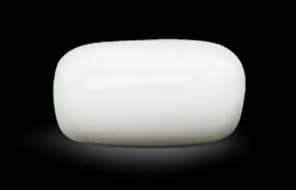
White Coral
White Coral is a naturally formed organic gemstone prized for its clean ivory-to-white appearance, smooth polish, and distinctive connection to the marine world.
White Coral is an organic gemstone formed from the calcium carbonate skeletons of marine coral colonies. Unlike crystalline gemstones formed deep within the Earth, coral develops in marine environments as colonies of tiny coral organisms gradually build hard skeletal structures. Gem-quality coral is valued as a decorative material when it can be cut and polished into attractive jewelry pieces. Precious coral belongs to a group of marine organisms historically associated with the genus Corallium, and its skeleton is predominantly calcium carbonate in the calcite form. Its chemical formula is CaCO3. White Coral typically has a Mohs hardness of about 3-4, making it considerably softer than sapphire, ruby, or quartz and requiring thoughtful care during wear. Its refractive index is approximately 1.486-1.658, while specific gravity is generally around 2.60-2.70. The material has no cleavage and can display a waxy to vitreous luster after polishing. Natural White Coral ranges from bright white to ivory, cream, and subtly warm off-white tones. Because coral is opaque, quality is judged primarily by color, surface condition, polish, texture, and overall appearance rather than gemstone transparency. Coral has a long history as an ornamental material, with coral objects and jewelry documented across Mediterranean, Asian, and other coastal cultures. Today, White Coral is used in beads, cabochons, pendants, earrings, bracelets, necklaces, and other jewelry designs. Buyers value natural White Coral for its organic origin, soft marine character, distinctive appearance, and suitability for classic as well as contemporary jewelry. When purchasing, it is especially important to establish whether the material is natural coral, treated coral, imitation material, or another white substance marketed as coral.
- Mineral Family
- Coral
- Chemical Formula
- CaCO3
- Mohs Hardness
- 3 - 4
- Refractive Index
- 1.486 - 1.658
- Specific Gravity
- 2.60 - 2.70
- Cleavage
- None
- Crystal System
- Trigonal
- Luster
- Waxy
- Color Range
- White
When buying a White Coral gemstone, start with color. Even, attractive white to ivory coloration and a well-maintained surface are generally desirable, while excessive discoloration, deep pits, cracks, or damaged areas can reduce appeal. Because White Coral is opaque, clarity is not assessed in the same way as it is for transparent gemstones; surface texture, porosity, spots, and polish are more relevant quality considerations. Cut is also different from faceted gemstones. Coral is commonly fashioned into beads, cabochons, polished sections, carvings, and smooth ornamental shapes because of its relatively low hardness. For carat weight, compare stones of similar dimensions, quality, and workmanship rather than assuming that a larger stone is automatically more valuable. Origin can be relevant because coral species, conservation status, availability, and market demand vary by source, but origin should be supported by credible documentation rather than assumed from appearance alone. Treatments are particularly important. Coral may be bleached, dyed, impregnated, filled, or otherwise enhanced, and imitation materials may also be sold as coral. Ask the seller to clearly disclose all treatments and whether the material is natural, treated, composite, or imitation. Natural coral should not be confused with lab-grown coral or coral-colored substitutes. Certification or an independent gemological report can help establish identity and disclose treatments, particularly for valuable pieces. Authenticity should be assessed through a qualified gemologist or reputable laboratory rather than relying only on visual inspection. Prices depend on natural status, color, surface quality, size, workmanship, treatment history, species, provenance, availability, and current market conditions. Before you buy White Coral online, review detailed photographs, request treatment and authenticity information, confirm the seller's return policy, and obtain appropriate documentation for higher-value purchases.
White Coral requires more careful handling than many common jewelry gemstones because its Mohs hardness is only about 3-4. For routine cleaning, gently wipe the stone with a soft, slightly damp cloth and dry it thoroughly afterward. Avoid ultrasonic and steam cleaners, which can damage or alter coral. Do not soak White Coral in harsh cleaning solutions, acids, solvents, or strong detergents. Perfume, hairspray, cosmetics, household chemicals, and prolonged exposure to moisture can also affect its surface or treatments. Store White Coral separately from harder gemstones such as diamond, sapphire, and quartz to prevent scratches. A soft fabric pouch or a lined jewelry box is preferable. Avoid wearing White Coral for strenuous activities, sports, swimming, bathing, or household work where it may encounter impacts, chemicals, or excessive moisture. With gentle handling and appropriate storage, natural White Coral jewelry can retain its polished appearance for many years.
White Coral is an organic gemstone formed from the calcium carbonate skeletons of marine coral colonies. Unlike crystalline gemstones formed deep within the Earth, coral develops in marine environments as colonies of tiny coral organisms gradually build hard skeletal structures. Gem-quality coral is valued as a decorative material when it can be cut and polished into attractive jewelry pieces. Precious coral belongs to a group of marine organisms historically associated with the genus Corallium, and its skeleton is predominantly calcium carbonate in the calcite form. Its chemical formula is CaCO3. White Coral typically has a Mohs hardness of about 3-4, making it considerably softer than sapphire, ruby, or quartz and requiring thoughtful care during wear. Its refractive index is approximately 1.486-1.658, while specific gravity is generally around 2.60-2.70. The material has no cleavage and can display a waxy to vitreous luster after polishing. Natural White Coral ranges from bright white to ivory, cream, and subtly warm off-white tones. Because coral is opaque, quality is judged primarily by color, surface condition, polish, texture, and overall appearance rather than gemstone transparency. Coral has a long history as an ornamental material, with coral objects and jewelry documented across Mediterranean, Asian, and other coastal cultures. Today, White Coral is used in beads, cabochons, pendants, earrings, bracelets, necklaces, and other jewelry designs. Buyers value natural White Coral for its organic origin, soft marine character, distinctive appearance, and suitability for classic as well as contemporary jewelry. When purchasing, it is especially important to establish whether the material is natural coral, treated coral, imitation material, or another white substance marketed as coral.
- Mineral Family
- Coral
- Chemical Formula
- CaCO3
- Mohs Hardness
- 3 - 4
- Refractive Index
- 1.486 - 1.658
- Specific Gravity
- 2.60 - 2.70
- Cleavage
- None
- Crystal System
- Trigonal
- Luster
- Waxy
- Color Range
- White
When buying a White Coral gemstone, start with color. Even, attractive white to ivory coloration and a well-maintained surface are generally desirable, while excessive discoloration, deep pits, cracks, or damaged areas can reduce appeal. Because White Coral is opaque, clarity is not assessed in the same way as it is for transparent gemstones; surface texture, porosity, spots, and polish are more relevant quality considerations. Cut is also different from faceted gemstones. Coral is commonly fashioned into beads, cabochons, polished sections, carvings, and smooth ornamental shapes because of its relatively low hardness. For carat weight, compare stones of similar dimensions, quality, and workmanship rather than assuming that a larger stone is automatically more valuable. Origin can be relevant because coral species, conservation status, availability, and market demand vary by source, but origin should be supported by credible documentation rather than assumed from appearance alone. Treatments are particularly important. Coral may be bleached, dyed, impregnated, filled, or otherwise enhanced, and imitation materials may also be sold as coral. Ask the seller to clearly disclose all treatments and whether the material is natural, treated, composite, or imitation. Natural coral should not be confused with lab-grown coral or coral-colored substitutes. Certification or an independent gemological report can help establish identity and disclose treatments, particularly for valuable pieces. Authenticity should be assessed through a qualified gemologist or reputable laboratory rather than relying only on visual inspection. Prices depend on natural status, color, surface quality, size, workmanship, treatment history, species, provenance, availability, and current market conditions. Before you buy White Coral online, review detailed photographs, request treatment and authenticity information, confirm the seller's return policy, and obtain appropriate documentation for higher-value purchases.
White Coral requires more careful handling than many common jewelry gemstones because its Mohs hardness is only about 3-4. For routine cleaning, gently wipe the stone with a soft, slightly damp cloth and dry it thoroughly afterward. Avoid ultrasonic and steam cleaners, which can damage or alter coral. Do not soak White Coral in harsh cleaning solutions, acids, solvents, or strong detergents. Perfume, hairspray, cosmetics, household chemicals, and prolonged exposure to moisture can also affect its surface or treatments. Store White Coral separately from harder gemstones such as diamond, sapphire, and quartz to prevent scratches. A soft fabric pouch or a lined jewelry box is preferable. Avoid wearing White Coral for strenuous activities, sports, swimming, bathing, or household work where it may encounter impacts, chemicals, or excessive moisture. With gentle handling and appropriate storage, natural White Coral jewelry can retain its polished appearance for many years.
White Coral for Sale
No gems found
Try broadening your search or adjusting your filters.
Have a gem of your own? List it free - no fees