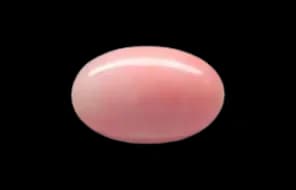
Japanese Angel Skin Coral
Japanese Angel Skin Coral is prized for its delicate peach-pink to soft orange color, smooth waxy luster, and distinctive natural beauty in fine jewelry and carvings.
Japanese Angel Skin Coral is a prized variety of precious coral recognized for its soft peach, pink, and warm orange hues. The name “angel skin” refers primarily to its distinctive delicate color and appearance rather than a separate mineral species. Japanese precious coral is associated with calcareous coral from the family Coralliidae, including species historically classified within Corallium and now placed in genera such as Pleurocorallium. These organisms form branching skeletal structures in marine environments, and the resulting material is composed predominantly of calcium carbonate. The accepted scientific classification of Pleurocorallium elatius, historically known as Corallium elatius, illustrates the taxonomic changes that have occurred within precious corals. Coral is an organic gemstone rather than a conventional crystalline mineral, so gemological references commonly describe it as amorphous or microcrystalline rather than assigning it a conventional crystal system. Its hardness is relatively low at about 3-4 on the Mohs scale, making it considerably softer than sapphire, ruby, or diamond. Its refractive behavior varies with the material and structure, while polished coral commonly displays a vitreous to waxy luster. Angel Skin Coral is especially valued when it shows an attractive even body color combined with subtle natural growth structure. Fine Japanese examples have long been appreciated in East Asian jewelry and carving traditions, while coral has also been used across Mediterranean and Asian cultures for centuries. Today, Japanese Angel Skin Coral appears in beads, cabochons, carved ornaments, pendants, earrings, bracelets, and statement jewelry. Buyers value it for its unusual natural color, organic origin, historical importance, and scarcity of fine-quality material. Because coral is comparatively soft and can be affected by chemicals, heat, and prolonged exposure to cosmetics, it is best suited to jewelry worn with care.
- Mineral Family
- Coral
- Chemical Formula
- CaCO3
- Mohs Hardness
- 3 - 4
- Refractive Index
- 1.48 - 1.65
- Specific Gravity
- 2.60 - 2.70
- Cleavage
- None
- Crystal System
- Amorphous
- Luster
- Waxy
- Color Range
- Pink, Orange, White
When buying Japanese Angel Skin Coral, color is one of the most important factors. Look for attractive, evenly distributed peach-pink, pink-orange, or soft salmon coloration with pleasing natural variation. Fine color and saturation can significantly influence value. Clarity is assessed differently from transparent gemstones: buyers should examine the surface for pits, cracks, excessive porosity, dark spots, and distracting growth structures. A well-executed polish can produce an attractive smooth, waxy-to-vitreous appearance. Cut is particularly important for beads, cabochons, and carvings because skilled shaping preserves material while presenting its best color and surface quality. Carat weight or total weight matters, but value is not determined by weight alone. Large pieces with desirable color and good structural integrity can command substantially higher prices. Origin can influence desirability, but a claimed Japanese origin should be supported by reliable documentation rather than assumed from appearance alone. Treatments are important to disclose because coral may be bleached, dyed, impregnated, coated, or otherwise enhanced. Natural untreated material is generally more desirable when its color and quality are attractive. Coral is an organic gemstone and should not be described simply as “lab-grown” in the same way as laboratory-grown diamond or ruby; instead, buyers should ask whether the material is natural coral, cultured material, reconstituted coral, or a manufactured simulant. For valuable pieces, an independent gemological identification report can help establish whether the material is coral and document detectable treatments. Authenticity should ideally be verified through microscopic examination, laboratory testing, provenance, and appropriate gemological measurements rather than appearance alone. Price depends on color, size, quality, rarity, condition, craftsmanship, origin claims, treatment status, provenance, and current availability. Buyers should also consider applicable wildlife-protection and international trade regulations because many precious coral species are subject to conservation controls.
Japanese Angel Skin Coral requires gentler care than most durable jewelry gemstones. Clean it with a soft, damp cloth and, when necessary, a small amount of mild soap followed by gentle rinsing and thorough drying. Avoid ultrasonic and steam cleaners. Keep coral away from acids, harsh detergents, perfumes, hairspray, cosmetics, alcohol-based products, and prolonged exposure to heat or strong chemicals. Because its hardness is only about 3-4, store it separately from harder gemstones to prevent scratches. A soft fabric pouch or lined jewelry compartment is ideal. Avoid wearing Angel Skin Coral during strenuous activity, swimming, bathing, or household cleaning. Do not expose it to sudden temperature changes or prolonged direct heat. Periodically inspect settings, beads, and drilled areas for wear or cracking, especially on frequently worn pieces.
Japanese Angel Skin Coral is a prized variety of precious coral recognized for its soft peach, pink, and warm orange hues. The name “angel skin” refers primarily to its distinctive delicate color and appearance rather than a separate mineral species. Japanese precious coral is associated with calcareous coral from the family Coralliidae, including species historically classified within Corallium and now placed in genera such as Pleurocorallium. These organisms form branching skeletal structures in marine environments, and the resulting material is composed predominantly of calcium carbonate. The accepted scientific classification of Pleurocorallium elatius, historically known as Corallium elatius, illustrates the taxonomic changes that have occurred within precious corals. Coral is an organic gemstone rather than a conventional crystalline mineral, so gemological references commonly describe it as amorphous or microcrystalline rather than assigning it a conventional crystal system. Its hardness is relatively low at about 3-4 on the Mohs scale, making it considerably softer than sapphire, ruby, or diamond. Its refractive behavior varies with the material and structure, while polished coral commonly displays a vitreous to waxy luster. Angel Skin Coral is especially valued when it shows an attractive even body color combined with subtle natural growth structure. Fine Japanese examples have long been appreciated in East Asian jewelry and carving traditions, while coral has also been used across Mediterranean and Asian cultures for centuries. Today, Japanese Angel Skin Coral appears in beads, cabochons, carved ornaments, pendants, earrings, bracelets, and statement jewelry. Buyers value it for its unusual natural color, organic origin, historical importance, and scarcity of fine-quality material. Because coral is comparatively soft and can be affected by chemicals, heat, and prolonged exposure to cosmetics, it is best suited to jewelry worn with care.
- Mineral Family
- Coral
- Chemical Formula
- CaCO3
- Mohs Hardness
- 3 - 4
- Refractive Index
- 1.48 - 1.65
- Specific Gravity
- 2.60 - 2.70
- Cleavage
- None
- Crystal System
- Amorphous
- Luster
- Waxy
- Color Range
- Pink, Orange, White
When buying Japanese Angel Skin Coral, color is one of the most important factors. Look for attractive, evenly distributed peach-pink, pink-orange, or soft salmon coloration with pleasing natural variation. Fine color and saturation can significantly influence value. Clarity is assessed differently from transparent gemstones: buyers should examine the surface for pits, cracks, excessive porosity, dark spots, and distracting growth structures. A well-executed polish can produce an attractive smooth, waxy-to-vitreous appearance. Cut is particularly important for beads, cabochons, and carvings because skilled shaping preserves material while presenting its best color and surface quality. Carat weight or total weight matters, but value is not determined by weight alone. Large pieces with desirable color and good structural integrity can command substantially higher prices. Origin can influence desirability, but a claimed Japanese origin should be supported by reliable documentation rather than assumed from appearance alone. Treatments are important to disclose because coral may be bleached, dyed, impregnated, coated, or otherwise enhanced. Natural untreated material is generally more desirable when its color and quality are attractive. Coral is an organic gemstone and should not be described simply as “lab-grown” in the same way as laboratory-grown diamond or ruby; instead, buyers should ask whether the material is natural coral, cultured material, reconstituted coral, or a manufactured simulant. For valuable pieces, an independent gemological identification report can help establish whether the material is coral and document detectable treatments. Authenticity should ideally be verified through microscopic examination, laboratory testing, provenance, and appropriate gemological measurements rather than appearance alone. Price depends on color, size, quality, rarity, condition, craftsmanship, origin claims, treatment status, provenance, and current availability. Buyers should also consider applicable wildlife-protection and international trade regulations because many precious coral species are subject to conservation controls.
Japanese Angel Skin Coral requires gentler care than most durable jewelry gemstones. Clean it with a soft, damp cloth and, when necessary, a small amount of mild soap followed by gentle rinsing and thorough drying. Avoid ultrasonic and steam cleaners. Keep coral away from acids, harsh detergents, perfumes, hairspray, cosmetics, alcohol-based products, and prolonged exposure to heat or strong chemicals. Because its hardness is only about 3-4, store it separately from harder gemstones to prevent scratches. A soft fabric pouch or lined jewelry compartment is ideal. Avoid wearing Angel Skin Coral during strenuous activity, swimming, bathing, or household cleaning. Do not expose it to sudden temperature changes or prolonged direct heat. Periodically inspect settings, beads, and drilled areas for wear or cracking, especially on frequently worn pieces.
Japanese Angel Skin Coral for Sale
No gems found
Try broadening your search or adjusting your filters.
Have a gem of your own? List it free - no fees