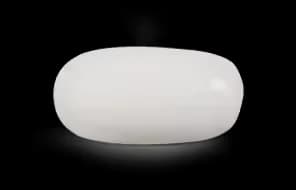
Japanese White Coral
Japanese White Coral is a distinctive organic gemstone prized for its clean white color, smooth polish and delicate natural growth patterns in fine jewelry.
Japanese White Coral is an organic gem material formed from the calcium-carbonate skeletons of marine coral colonies. Gem-quality white coral associated with Japanese waters is commonly linked to precious-corals such as Corallium konojoi, although the trade name can cover more than one coral type. Unlike crystalline minerals, coral is biological in origin, and its polished structure reflects its natural growth history. Its main chemical component is calcium carbonate (CaCO3), with the skeletal material predominantly composed of calcite in precious coral. Japanese White Coral is typically white to creamy white and opaque, sometimes showing subtle growth lines, pits, pores or other natural surface features. It generally has a Mohs hardness of about 3-4 and is therefore softer and more vulnerable to scratching than many conventional jewelry gemstones. Its specific gravity is commonly around 2.60-2.70, while reported refractive-index values for coral vary approximately from 1.48 to 1.65 depending on material and measurement. Japanese coral has a long history as a carving and jewelry material, particularly in East Asian craftsmanship, and Japanese precious corals have also been commercially traded internationally for centuries. Today, Japanese White Coral is used for cabochons, beads, carvings, pendants, earrings and other decorative jewelry. Buyers value natural material for its organic origin, distinctive texture, polished surface and scarcity of attractive, well-formed pieces.
- Mineral Family
- Coral
- Chemical Formula
- CaCO3
- Mohs Hardness
- 3 - 4
- Refractive Index
- 1.48 - 1.65
- Specific Gravity
- 2.60 - 2.70
- Cleavage
- None
- Crystal System
- Amorphous
- Luster
- Waxy
- Color Range
- White
When buying Japanese White Coral, begin with color and surface quality. Even, attractive white or creamy-white material is generally preferred, while natural growth markings should not automatically be treated as defects because they can help reveal coral's biological origin. Because white coral is opaque, clarity is assessed through texture, surface condition, pits, grooves, inclusions and overall polish rather than transparency. Cabochons, beads and carved forms are common because coral is relatively soft and does not require faceting to display its beauty. Carat weight matters for pricing, but size alone does not determine value. Origin can influence desirability, particularly when Japanese provenance is documented. Treatments should always be disclosed; coral may be polished, impregnated, dyed or otherwise enhanced depending on the material and market. Natural coral should be distinguished from dyed coral, resin composites, glass, plastic and other imitations. Laboratory identification is recommended for valuable pieces, especially when origin, treatment or natural status is important. A reputable gem laboratory or seller should be able to provide documentation identifying the material and, where possible, disclose treatments and provenance. Price depends on natural status, color, uniformity, surface quality, size, craftsmanship, documented origin, rarity and demand. Before you buy Japanese White Coral online, ask for clear photographs, dimensions, treatment disclosure and an independent certificate when the value warrants it.
Japanese White Coral requires gentle care because its Mohs hardness of about 3-4 makes it susceptible to scratches and abrasion. Clean it with a soft, damp cloth and mild soapy water when necessary, then dry it thoroughly with a soft cloth. Avoid ultrasonic and steam cleaners unless a qualified professional confirms that the specific piece can tolerate them. Keep coral away from acids, vinegar, harsh chemicals, cosmetics, perfumes and prolonged exposure to heat. Do not use abrasive polishing compounds or stiff brushes. Store Japanese White Coral separately from harder gemstones such as quartz, sapphire and diamond, ideally in a soft pouch or lined jewelry compartment. For everyday wear, avoid activities that could expose the piece to knocks, friction or chemicals. Removing coral jewelry before swimming, exercising, cleaning or applying personal-care products will help preserve its polish and surface condition.
Japanese White Coral is an organic gem material formed from the calcium-carbonate skeletons of marine coral colonies. Gem-quality white coral associated with Japanese waters is commonly linked to precious-corals such as Corallium konojoi, although the trade name can cover more than one coral type. Unlike crystalline minerals, coral is biological in origin, and its polished structure reflects its natural growth history. Its main chemical component is calcium carbonate (CaCO3), with the skeletal material predominantly composed of calcite in precious coral. Japanese White Coral is typically white to creamy white and opaque, sometimes showing subtle growth lines, pits, pores or other natural surface features. It generally has a Mohs hardness of about 3-4 and is therefore softer and more vulnerable to scratching than many conventional jewelry gemstones. Its specific gravity is commonly around 2.60-2.70, while reported refractive-index values for coral vary approximately from 1.48 to 1.65 depending on material and measurement. Japanese coral has a long history as a carving and jewelry material, particularly in East Asian craftsmanship, and Japanese precious corals have also been commercially traded internationally for centuries. Today, Japanese White Coral is used for cabochons, beads, carvings, pendants, earrings and other decorative jewelry. Buyers value natural material for its organic origin, distinctive texture, polished surface and scarcity of attractive, well-formed pieces.
- Mineral Family
- Coral
- Chemical Formula
- CaCO3
- Mohs Hardness
- 3 - 4
- Refractive Index
- 1.48 - 1.65
- Specific Gravity
- 2.60 - 2.70
- Cleavage
- None
- Crystal System
- Amorphous
- Luster
- Waxy
- Color Range
- White
When buying Japanese White Coral, begin with color and surface quality. Even, attractive white or creamy-white material is generally preferred, while natural growth markings should not automatically be treated as defects because they can help reveal coral's biological origin. Because white coral is opaque, clarity is assessed through texture, surface condition, pits, grooves, inclusions and overall polish rather than transparency. Cabochons, beads and carved forms are common because coral is relatively soft and does not require faceting to display its beauty. Carat weight matters for pricing, but size alone does not determine value. Origin can influence desirability, particularly when Japanese provenance is documented. Treatments should always be disclosed; coral may be polished, impregnated, dyed or otherwise enhanced depending on the material and market. Natural coral should be distinguished from dyed coral, resin composites, glass, plastic and other imitations. Laboratory identification is recommended for valuable pieces, especially when origin, treatment or natural status is important. A reputable gem laboratory or seller should be able to provide documentation identifying the material and, where possible, disclose treatments and provenance. Price depends on natural status, color, uniformity, surface quality, size, craftsmanship, documented origin, rarity and demand. Before you buy Japanese White Coral online, ask for clear photographs, dimensions, treatment disclosure and an independent certificate when the value warrants it.
Japanese White Coral requires gentle care because its Mohs hardness of about 3-4 makes it susceptible to scratches and abrasion. Clean it with a soft, damp cloth and mild soapy water when necessary, then dry it thoroughly with a soft cloth. Avoid ultrasonic and steam cleaners unless a qualified professional confirms that the specific piece can tolerate them. Keep coral away from acids, vinegar, harsh chemicals, cosmetics, perfumes and prolonged exposure to heat. Do not use abrasive polishing compounds or stiff brushes. Store Japanese White Coral separately from harder gemstones such as quartz, sapphire and diamond, ideally in a soft pouch or lined jewelry compartment. For everyday wear, avoid activities that could expose the piece to knocks, friction or chemicals. Removing coral jewelry before swimming, exercising, cleaning or applying personal-care products will help preserve its polish and surface condition.
Japanese White Coral for Sale
No gems found
Try broadening your search or adjusting your filters.
Have a gem of your own? List it free - no fees