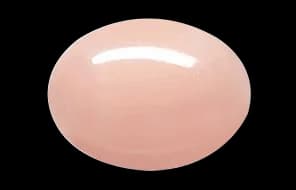
Angel Skin Coral
Angel Skin Coral is a rare, delicate pink precious coral prized for its soft pastel color, organic origin and exceptional appeal in fine jewelry.
Angel Skin Coral is a rare variety of precious coral recognized for its delicate pale pink to flesh-pink color and fine, often remarkably even appearance. It is an organic gem rather than a mineral crystal formed in the conventional geological sense. The material used in jewelry is the calcium-carbonate skeleton produced by marine coral colonies. Angel Skin Coral is commonly associated with Pleurocorallium elatius and is also known in the trade as Pelle d'Angelo, Boké or Magai coral. Precious coral grows slowly in deep marine environments, and Angel Skin material is particularly valued because naturally uniform pink specimens are uncommon. Important sources include waters around Japan and Taiwan. Its color can range from very pale pink and salmon-pink to warmer peachy tones, sometimes with a characteristic lighter core or subtle natural variation. The material has a Mohs hardness of about 3 to 4, making it considerably softer and more vulnerable to scratching than quartz gemstones. Its refractive index is approximately 1.486-1.658 and its specific gravity is about 2.60-2.70. Angel Skin Coral has a vitreous to waxy luster and no cleavage. Historically, precious coral has been carved and worn as beads, amulets and decorative objects across Mediterranean, Asian and other jewelry traditions. Today, Angel Skin Coral is especially desirable in high jewelry, where it is fashioned into cabochons, beads, carved forms, earrings, pendants, bracelets and distinctive necklaces. Buyers value it for its unusual pastel color, rarity, organic character and the difficulty of obtaining well-matched material. Because coral is a marine resource, responsible sourcing and awareness of applicable trade and conservation regulations are important when purchasing natural Angel Skin Coral.
- Mineral Family
- Coral
- Chemical Formula
- CaCO3
- Mohs Hardness
- 3 - 4
- Refractive Index
- 1.486 - 1.658
- Specific Gravity
- 2.60 - 2.70
- Cleavage
- None
- Crystal System
- Trigonal
- Luster
- Waxy
- Color Range
- Pink, Orange, White
When buying Angel Skin Coral, begin with color. Even, attractive pale pink to flesh-pink material is generally the most desirable, while pleasing salmon, peach and subtly varied tones can also be attractive. Examine the surface carefully for pits, cracks, abrasions and excessive irregularities. Unlike transparent faceted gemstones, coral is normally judged by the quality, uniformity and beauty of its surface rather than by traditional gemstone clarity. Cut and shape should suit the material and intended jewelry design; cabochons, beads and carved forms are common because coral is relatively soft. Carat weight matters, but size alone does not establish value. Large, evenly colored and well-matched pieces can be particularly scarce. Origin may contribute to market value, but a claimed origin should be supported by reliable documentation rather than assumed from appearance alone. Treatments are an important consideration. Precious coral may be bleached, dyed, waxed, impregnated or otherwise treated, and reconstructed coral or other imitations may also be encountered. Ask the seller to disclose all known treatments. Natural coral should not be confused with a conventional laboratory-grown gemstone; reconstructed or manufactured coral products should be clearly identified as such. For valuable Angel Skin Coral, request an independent gemological report that identifies the material and, where possible, documents treatments and origin. A laboratory report is especially useful because visual inspection alone cannot reliably establish species, treatment status or geographic origin. Authenticity should be assessed through professional testing rather than home scratch tests or unreliable internet methods. Price depends on color, uniformity, size, surface quality, matching, treatment status, provenance, craftsmanship and current market demand. Extremely low prices for material represented as rare, natural and untreated Angel Skin Coral warrant additional scrutiny.
Angel Skin Coral requires gentle care because its Mohs hardness is only about 3 to 4. Clean jewelry with a soft, damp cloth or lukewarm water and mild soap when necessary, then rinse lightly and dry thoroughly with a soft cloth. Avoid ultrasonic cleaners, steam cleaners, high heat and harsh chemicals. Perfume, cosmetics, hairspray, chlorine, strong detergents and prolonged exposure to acidic substances can damage or alter the surface. Put Angel Skin Coral jewelry on after applying cosmetics and fragrance, and remove it before swimming, bathing, exercising or doing household work. Store each piece separately in a soft pouch or lined compartment so it does not rub against harder gemstones or metal edges. Rings and bracelets receive more impact and abrasion during everyday wear, so pendants and earrings are generally easier ways to enjoy coral while reducing physical contact. Periodic professional inspection is advisable for valuable pieces, particularly when coral is mounted in intricate jewelry.
Angel Skin Coral is a rare variety of precious coral recognized for its delicate pale pink to flesh-pink color and fine, often remarkably even appearance. It is an organic gem rather than a mineral crystal formed in the conventional geological sense. The material used in jewelry is the calcium-carbonate skeleton produced by marine coral colonies. Angel Skin Coral is commonly associated with Pleurocorallium elatius and is also known in the trade as Pelle d'Angelo, Boké or Magai coral. Precious coral grows slowly in deep marine environments, and Angel Skin material is particularly valued because naturally uniform pink specimens are uncommon. Important sources include waters around Japan and Taiwan. Its color can range from very pale pink and salmon-pink to warmer peachy tones, sometimes with a characteristic lighter core or subtle natural variation. The material has a Mohs hardness of about 3 to 4, making it considerably softer and more vulnerable to scratching than quartz gemstones. Its refractive index is approximately 1.486-1.658 and its specific gravity is about 2.60-2.70. Angel Skin Coral has a vitreous to waxy luster and no cleavage. Historically, precious coral has been carved and worn as beads, amulets and decorative objects across Mediterranean, Asian and other jewelry traditions. Today, Angel Skin Coral is especially desirable in high jewelry, where it is fashioned into cabochons, beads, carved forms, earrings, pendants, bracelets and distinctive necklaces. Buyers value it for its unusual pastel color, rarity, organic character and the difficulty of obtaining well-matched material. Because coral is a marine resource, responsible sourcing and awareness of applicable trade and conservation regulations are important when purchasing natural Angel Skin Coral.
- Mineral Family
- Coral
- Chemical Formula
- CaCO3
- Mohs Hardness
- 3 - 4
- Refractive Index
- 1.486 - 1.658
- Specific Gravity
- 2.60 - 2.70
- Cleavage
- None
- Crystal System
- Trigonal
- Luster
- Waxy
- Color Range
- Pink, Orange, White
When buying Angel Skin Coral, begin with color. Even, attractive pale pink to flesh-pink material is generally the most desirable, while pleasing salmon, peach and subtly varied tones can also be attractive. Examine the surface carefully for pits, cracks, abrasions and excessive irregularities. Unlike transparent faceted gemstones, coral is normally judged by the quality, uniformity and beauty of its surface rather than by traditional gemstone clarity. Cut and shape should suit the material and intended jewelry design; cabochons, beads and carved forms are common because coral is relatively soft. Carat weight matters, but size alone does not establish value. Large, evenly colored and well-matched pieces can be particularly scarce. Origin may contribute to market value, but a claimed origin should be supported by reliable documentation rather than assumed from appearance alone. Treatments are an important consideration. Precious coral may be bleached, dyed, waxed, impregnated or otherwise treated, and reconstructed coral or other imitations may also be encountered. Ask the seller to disclose all known treatments. Natural coral should not be confused with a conventional laboratory-grown gemstone; reconstructed or manufactured coral products should be clearly identified as such. For valuable Angel Skin Coral, request an independent gemological report that identifies the material and, where possible, documents treatments and origin. A laboratory report is especially useful because visual inspection alone cannot reliably establish species, treatment status or geographic origin. Authenticity should be assessed through professional testing rather than home scratch tests or unreliable internet methods. Price depends on color, uniformity, size, surface quality, matching, treatment status, provenance, craftsmanship and current market demand. Extremely low prices for material represented as rare, natural and untreated Angel Skin Coral warrant additional scrutiny.
Angel Skin Coral requires gentle care because its Mohs hardness is only about 3 to 4. Clean jewelry with a soft, damp cloth or lukewarm water and mild soap when necessary, then rinse lightly and dry thoroughly with a soft cloth. Avoid ultrasonic cleaners, steam cleaners, high heat and harsh chemicals. Perfume, cosmetics, hairspray, chlorine, strong detergents and prolonged exposure to acidic substances can damage or alter the surface. Put Angel Skin Coral jewelry on after applying cosmetics and fragrance, and remove it before swimming, bathing, exercising or doing household work. Store each piece separately in a soft pouch or lined compartment so it does not rub against harder gemstones or metal edges. Rings and bracelets receive more impact and abrasion during everyday wear, so pendants and earrings are generally easier ways to enjoy coral while reducing physical contact. Periodic professional inspection is advisable for valuable pieces, particularly when coral is mounted in intricate jewelry.
Angel Skin Coral for Sale
No gems found
Try broadening your search or adjusting your filters.
Have a gem of your own? List it free - no fees