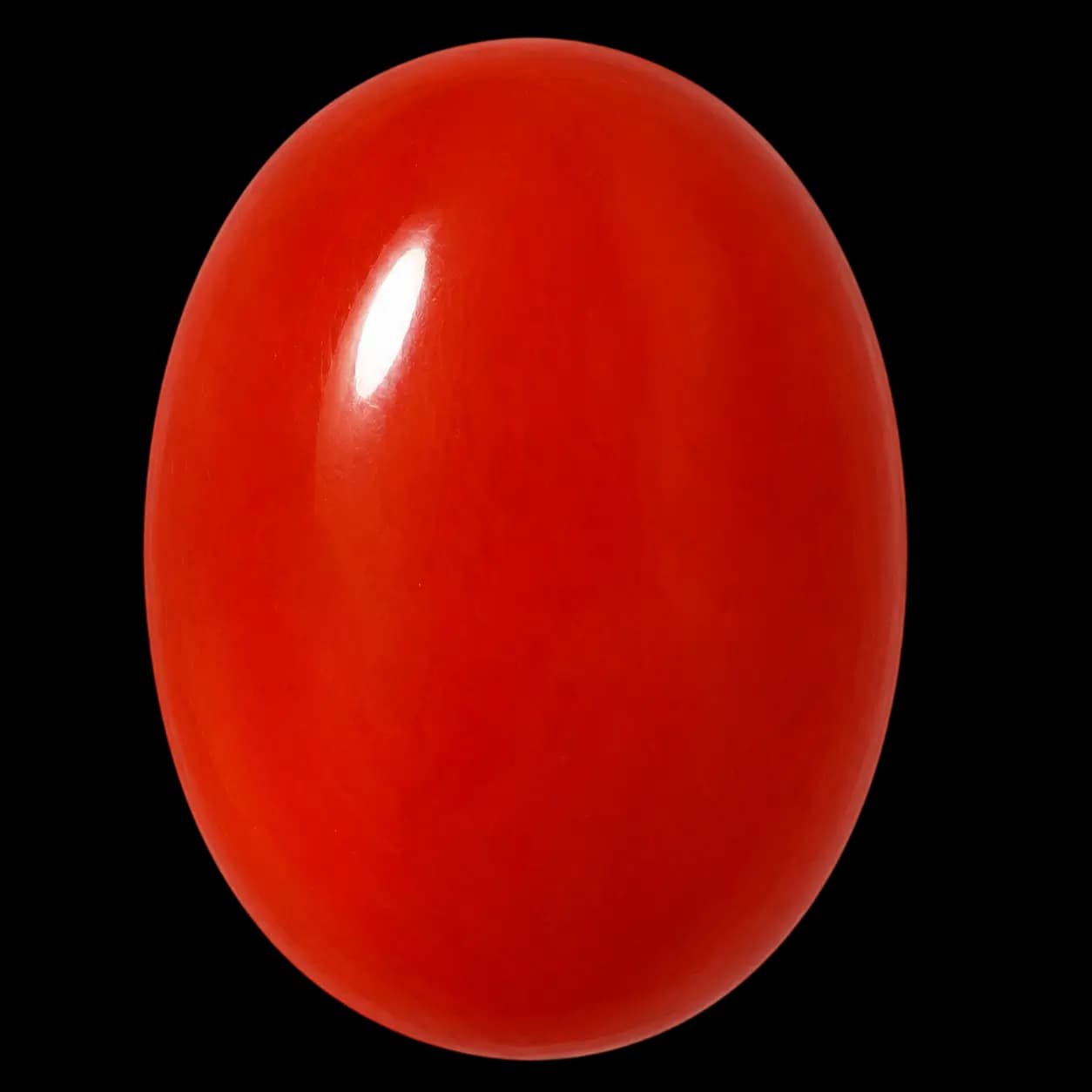
Coral
Coral gemstone is a unique organic gem admired for its vibrant colors, smooth texture, and timeless appeal in fine jewelry and collections.
Coral is an organic gemstone formed from the calcium carbonate skeletons of marine coral organisms. Unlike traditional minerals, Coral is created through biological processes in warm ocean environments and has been valued for centuries for its distinctive beauty.
Natural Coral belongs mainly to the aragonite group of calcium carbonate materials. It is found in marine regions including the Mediterranean Sea, the Pacific Ocean, and other tropical waters. Precious Coral varieties are especially known for their rich red, orange-red, and pink shades.
Coral has a relatively low hardness compared with many gemstones, making its smooth surface and natural colors its most important attractions. It has a waxy to dull luster and is typically polished to reveal its soft, organic appearance.
Color is one of the defining features of Coral. Popular varieties include deep red, vivid orange-red, salmon pink, angel skin pink, and white Coral. The most valued examples generally display attractive, even coloration and fine surface quality.
Throughout history, Coral has been used in jewelry, carvings, ornaments, and decorative objects across Mediterranean, Asian, and European cultures. Today, Coral jewelry remains popular among collectors and designers who appreciate natural materials with a connection to the ocean.
Buyers value natural Coral gemstone for its rarity, organic origin, distinctive appearance, and handcrafted jewelry appeal. Because natural Coral resources are limited and protected in many regions, authenticity and responsible sourcing are important considerations.
- Mineral Family
- Coral
- Chemical Formula
- CaCO3
- Mohs Hardness
- 3 - 4
- Refractive Index
- 1.486 - 1.658
- Specific Gravity
- 2.60 - 2.70
- Cleavage
- None
- Crystal System
- Orthorhombic
- Luster
- Waxy
- Color Range
- Red, Orange, Pink, White
When buying Coral gemstone, several factors influence quality and value.
Color: Color is the most important quality factor. Rich, even red, orange-red, and pink tones are highly desirable. Natural color consistency and saturation can significantly affect value.
Clarity: Unlike transparent gemstones, Coral is evaluated by surface quality, texture, and the presence of natural growth patterns or imperfections. Fine examples have a smooth, even surface.
Cut: Coral is commonly shaped into cabochons, beads, carvings, and decorative forms. A good polish enhances its natural color and texture.
Carat: Coral is often sold by size and weight, but overall quality, color, rarity, and craftsmanship usually have a stronger influence on price than carat weight alone.
Origin: Historically important sources include the Mediterranean region, Japan, Taiwan, and other marine areas. Origin may influence collector interest and availability.
Treatments: Some Coral may be dyed, bleached, filled, or treated to enhance appearance. Buyers should always ask about treatments before purchasing.
Natural vs imitation: Authentic natural Coral should be distinguished from plastic, glass, resin, and reconstructed materials. Laboratory identification can help confirm authenticity.
Certification: For valuable Coral pieces, independent gemological reports and transparent seller information provide confidence in the purchase.
Price factors: The final price depends on color quality, natural condition, size, origin, rarity, craftsmanship, and whether the material is responsibly sourced.
Coral gemstone requires careful handling because of its relatively low hardness and organic composition.
Clean Coral jewelry using a soft damp cloth and mild soap if necessary. Avoid harsh chemicals, ultrasonic cleaners, steam cleaners, and abrasive materials, as they can damage the surface.
Store Coral pieces separately from harder gemstones such as diamonds, sapphires, and rubies to prevent scratches. Keep them in a soft pouch or lined jewelry box.
Avoid prolonged exposure to strong sunlight, extreme heat, perfumes, cosmetics, and household chemicals, as these may affect Coral's natural appearance.
With proper care, Coral jewelry can maintain its beautiful color and smooth finish for generations.
Coral is an organic gemstone formed from the calcium carbonate skeletons of marine coral organisms. Unlike traditional minerals, Coral is created through biological processes in warm ocean environments and has been valued for centuries for its distinctive beauty.
Natural Coral belongs mainly to the aragonite group of calcium carbonate materials. It is found in marine regions including the Mediterranean Sea, the Pacific Ocean, and other tropical waters. Precious Coral varieties are especially known for their rich red, orange-red, and pink shades.
Coral has a relatively low hardness compared with many gemstones, making its smooth surface and natural colors its most important attractions. It has a waxy to dull luster and is typically polished to reveal its soft, organic appearance.
Color is one of the defining features of Coral. Popular varieties include deep red, vivid orange-red, salmon pink, angel skin pink, and white Coral. The most valued examples generally display attractive, even coloration and fine surface quality.
Throughout history, Coral has been used in jewelry, carvings, ornaments, and decorative objects across Mediterranean, Asian, and European cultures. Today, Coral jewelry remains popular among collectors and designers who appreciate natural materials with a connection to the ocean.
Buyers value natural Coral gemstone for its rarity, organic origin, distinctive appearance, and handcrafted jewelry appeal. Because natural Coral resources are limited and protected in many regions, authenticity and responsible sourcing are important considerations.
- Mineral Family
- Coral
- Chemical Formula
- CaCO3
- Mohs Hardness
- 3 - 4
- Refractive Index
- 1.486 - 1.658
- Specific Gravity
- 2.60 - 2.70
- Cleavage
- None
- Crystal System
- Orthorhombic
- Luster
- Waxy
- Color Range
- Red, Orange, Pink, White
When buying Coral gemstone, several factors influence quality and value.
Color: Color is the most important quality factor. Rich, even red, orange-red, and pink tones are highly desirable. Natural color consistency and saturation can significantly affect value.
Clarity: Unlike transparent gemstones, Coral is evaluated by surface quality, texture, and the presence of natural growth patterns or imperfections. Fine examples have a smooth, even surface.
Cut: Coral is commonly shaped into cabochons, beads, carvings, and decorative forms. A good polish enhances its natural color and texture.
Carat: Coral is often sold by size and weight, but overall quality, color, rarity, and craftsmanship usually have a stronger influence on price than carat weight alone.
Origin: Historically important sources include the Mediterranean region, Japan, Taiwan, and other marine areas. Origin may influence collector interest and availability.
Treatments: Some Coral may be dyed, bleached, filled, or treated to enhance appearance. Buyers should always ask about treatments before purchasing.
Natural vs imitation: Authentic natural Coral should be distinguished from plastic, glass, resin, and reconstructed materials. Laboratory identification can help confirm authenticity.
Certification: For valuable Coral pieces, independent gemological reports and transparent seller information provide confidence in the purchase.
Price factors: The final price depends on color quality, natural condition, size, origin, rarity, craftsmanship, and whether the material is responsibly sourced.
Coral gemstone requires careful handling because of its relatively low hardness and organic composition.
Clean Coral jewelry using a soft damp cloth and mild soap if necessary. Avoid harsh chemicals, ultrasonic cleaners, steam cleaners, and abrasive materials, as they can damage the surface.
Store Coral pieces separately from harder gemstones such as diamonds, sapphires, and rubies to prevent scratches. Keep them in a soft pouch or lined jewelry box.
Avoid prolonged exposure to strong sunlight, extreme heat, perfumes, cosmetics, and household chemicals, as these may affect Coral's natural appearance.
With proper care, Coral jewelry can maintain its beautiful color and smooth finish for generations.
Coral for Sale
No gems found
Try broadening your search or adjusting your filters.
Have a gem of your own? List it free - no fees