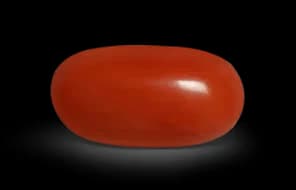
Italian Red Coral
Italian Red Coral is prized for its rich red color, smooth polish, and Mediterranean heritage. Its organic origin and limited availability make it a distinctive choice for fine jewelry and collectors.
Italian Red Coral is a precious coral material associated with Corallium rubrum, a marine octocoral native to the Mediterranean region. Unlike mineral gemstones, coral is a biogenic material formed by colonies of tiny marine animals that build calcium carbonate skeletons. The skeleton is predominantly composed of calcium carbonate and develops gradually in marine environments. Gem-quality material is carefully cut and polished to reveal its characteristic smooth surface and deep color.
The most valued Italian Red Coral typically displays an even, saturated red color, although natural material can range from vivid red to orange-red and pinkish-red. Fine examples may have a polished, porcelain-like appearance, while natural surface features, growth structures, pits, or lighter areas can occur. Because coral is organic rather than crystalline in the conventional mineralogical sense, it does not have a conventional crystal system or mineral cleavage. Its relatively low hardness means it should be treated more carefully than durable gemstones such as sapphire or ruby.
Corallium rubrum has a long history of use in Mediterranean jewelry, decorative objects, and personal adornment. Mediterranean coral has been traded and worked for centuries, with Italy becoming particularly associated with skilled coral carving and jewelry craftsmanship. Today, Italian Red Coral is used in beads, cabochons, pendants, earrings, bracelets, necklaces, and sculptural jewelry. Its warm color and organic character make it especially appealing to buyers seeking a distinctive alternative to traditional faceted gemstones.
Buyers value Italian Red Coral for its natural origin, saturated color, smooth polish, historical significance, and limited availability. Because natural coral populations are sensitive to harvesting and environmental pressures, responsible sourcing and documentation are important considerations when purchasing a piece.
- Mineral Family
- Coral
- Chemical Formula
- CaCO3
- Mohs Hardness
- 3 - 4
- Refractive Index
- 1.486 - 1.658
- Specific Gravity
- 2.60 - 2.70
- Cleavage
- None
- Luster
- Waxy
- Color Range
- Red, Orange, Pink
When buying Italian Red Coral, begin with color. Strong, even red coloration is generally the most sought after, while attractive orange-red and pinkish-red material can also be desirable. Look for consistent color across the visible surface, while remembering that natural coral may contain growth-related variations.
Surface quality is particularly important because coral is commonly fashioned as a polished cabochon or bead rather than a transparent faceted stone. Examine the material for excessive pits, cracks, drill marks, scratches, discoloration, or poorly polished areas. Cut and shape should be evaluated according to the intended jewelry design, and well-proportioned, symmetrical pieces generally have stronger visual appeal.
Carat weight matters, but size should not be considered separately from color, surface quality, shape, and overall craftsmanship. Larger pieces of attractive, evenly colored natural coral can command a premium. Origin can also influence value, but a seller's geographic claim should be supported by credible documentation rather than assumed from appearance alone.
Treatments are an important consideration. Coral may be dyed, bleached, impregnated, filled, or otherwise enhanced, and imitation materials such as colored glass, plastic, and other substitutes are also encountered in the market. Ask whether the material is natural, what treatments have been applied, and whether the treatment is permanent or requires special care. Lab-created coral should not be confused with naturally formed Corallium rubrum.
For higher-value purchases, request an independent laboratory report that clearly identifies the material and discloses significant treatments. A reputable seller should provide transparent information about species or material identity, treatment status, provenance claims, weight, measurements, and any available documentation. Price varies substantially with color, surface quality, size, workmanship, rarity, treatment status, provenance, and market demand, so unusually low prices deserve additional scrutiny.
Italian Red Coral is relatively soft and porous compared with many traditional jewelry gemstones, so careful handling is essential. Clean it gently with a soft, damp cloth and mild soapy water when necessary, then rinse lightly and dry thoroughly. Avoid ultrasonic cleaners, steam cleaners, abrasive materials, and harsh chemicals.
Keep coral jewelry away from perfumes, cosmetics, hairspray, chlorine, strong detergents, prolonged heat, and direct contact with acidic substances. These can dull the polish, alter the surface, or damage treatments. Store Italian Red Coral separately from harder gemstones to prevent scratches, ideally in a soft pouch or lined jewelry compartment.
For everyday wear, remove coral jewelry before swimming, showering, exercising, cleaning, or performing activities where it may be struck or exposed to chemicals. Because coral can be scratched relatively easily, it is best suited to mindful everyday wear rather than high-impact activities.
Italian Red Coral is a precious coral material associated with Corallium rubrum, a marine octocoral native to the Mediterranean region. Unlike mineral gemstones, coral is a biogenic material formed by colonies of tiny marine animals that build calcium carbonate skeletons. The skeleton is predominantly composed of calcium carbonate and develops gradually in marine environments. Gem-quality material is carefully cut and polished to reveal its characteristic smooth surface and deep color.
The most valued Italian Red Coral typically displays an even, saturated red color, although natural material can range from vivid red to orange-red and pinkish-red. Fine examples may have a polished, porcelain-like appearance, while natural surface features, growth structures, pits, or lighter areas can occur. Because coral is organic rather than crystalline in the conventional mineralogical sense, it does not have a conventional crystal system or mineral cleavage. Its relatively low hardness means it should be treated more carefully than durable gemstones such as sapphire or ruby.
Corallium rubrum has a long history of use in Mediterranean jewelry, decorative objects, and personal adornment. Mediterranean coral has been traded and worked for centuries, with Italy becoming particularly associated with skilled coral carving and jewelry craftsmanship. Today, Italian Red Coral is used in beads, cabochons, pendants, earrings, bracelets, necklaces, and sculptural jewelry. Its warm color and organic character make it especially appealing to buyers seeking a distinctive alternative to traditional faceted gemstones.
Buyers value Italian Red Coral for its natural origin, saturated color, smooth polish, historical significance, and limited availability. Because natural coral populations are sensitive to harvesting and environmental pressures, responsible sourcing and documentation are important considerations when purchasing a piece.
- Mineral Family
- Coral
- Chemical Formula
- CaCO3
- Mohs Hardness
- 3 - 4
- Refractive Index
- 1.486 - 1.658
- Specific Gravity
- 2.60 - 2.70
- Cleavage
- None
- Luster
- Waxy
- Color Range
- Red, Orange, Pink
When buying Italian Red Coral, begin with color. Strong, even red coloration is generally the most sought after, while attractive orange-red and pinkish-red material can also be desirable. Look for consistent color across the visible surface, while remembering that natural coral may contain growth-related variations.
Surface quality is particularly important because coral is commonly fashioned as a polished cabochon or bead rather than a transparent faceted stone. Examine the material for excessive pits, cracks, drill marks, scratches, discoloration, or poorly polished areas. Cut and shape should be evaluated according to the intended jewelry design, and well-proportioned, symmetrical pieces generally have stronger visual appeal.
Carat weight matters, but size should not be considered separately from color, surface quality, shape, and overall craftsmanship. Larger pieces of attractive, evenly colored natural coral can command a premium. Origin can also influence value, but a seller's geographic claim should be supported by credible documentation rather than assumed from appearance alone.
Treatments are an important consideration. Coral may be dyed, bleached, impregnated, filled, or otherwise enhanced, and imitation materials such as colored glass, plastic, and other substitutes are also encountered in the market. Ask whether the material is natural, what treatments have been applied, and whether the treatment is permanent or requires special care. Lab-created coral should not be confused with naturally formed Corallium rubrum.
For higher-value purchases, request an independent laboratory report that clearly identifies the material and discloses significant treatments. A reputable seller should provide transparent information about species or material identity, treatment status, provenance claims, weight, measurements, and any available documentation. Price varies substantially with color, surface quality, size, workmanship, rarity, treatment status, provenance, and market demand, so unusually low prices deserve additional scrutiny.
Italian Red Coral is relatively soft and porous compared with many traditional jewelry gemstones, so careful handling is essential. Clean it gently with a soft, damp cloth and mild soapy water when necessary, then rinse lightly and dry thoroughly. Avoid ultrasonic cleaners, steam cleaners, abrasive materials, and harsh chemicals.
Keep coral jewelry away from perfumes, cosmetics, hairspray, chlorine, strong detergents, prolonged heat, and direct contact with acidic substances. These can dull the polish, alter the surface, or damage treatments. Store Italian Red Coral separately from harder gemstones to prevent scratches, ideally in a soft pouch or lined jewelry compartment.
For everyday wear, remove coral jewelry before swimming, showering, exercising, cleaning, or performing activities where it may be struck or exposed to chemicals. Because coral can be scratched relatively easily, it is best suited to mindful everyday wear rather than high-impact activities.
Italian Red Coral for Sale
No gems found
Try broadening your search or adjusting your filters.
Have a gem of your own? List it free - no fees