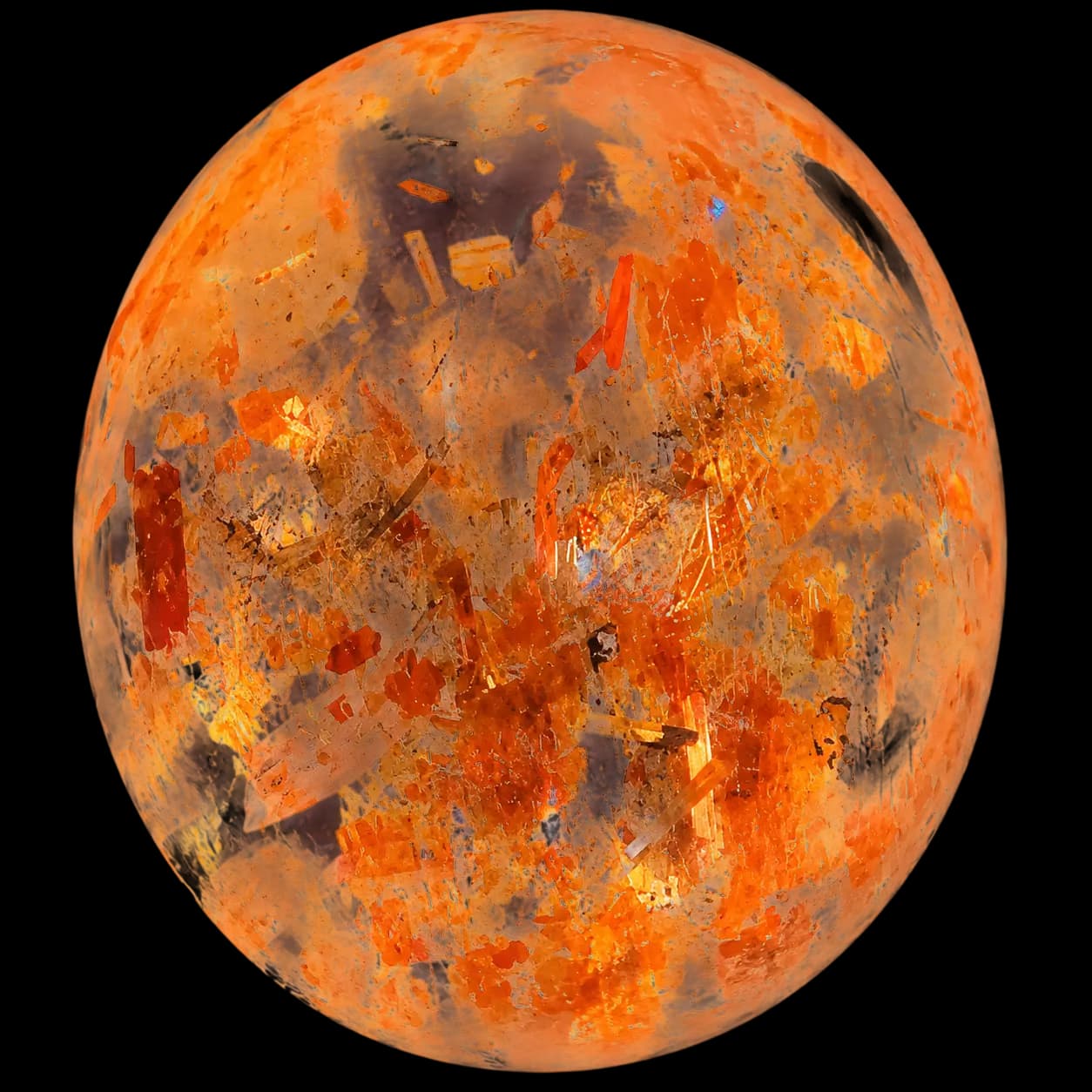
Sunstone
Sunstone gemstone is admired for its warm golden to copper hues and distinctive aventurescence, a natural sparkle created by reflective inclusions. This feldspar gem brings vibrant character to modern jewelry collections.
Sunstone is a beautiful feldspar gemstone recognized for its warm colors and unique shimmering effect known as aventurescence. It belongs to the feldspar mineral group, one of the most abundant mineral families in the Earth’s crust.
Natural Sunstone forms within igneous rocks through geological processes involving feldspar-rich minerals. Its chemical composition is a sodium-calcium aluminum silicate, and microscopic inclusions of minerals such as copper or hematite can create its signature metallic glow.
Sunstone typically displays colors ranging from pale yellow and peach to orange, red, pink, green, and brown. Oregon Sunstone from the United States is especially valued for its natural copper inclusions, transparent appearance, and attractive red to orange tones. Other notable sources include India, Norway, Tanzania, and Canada.
The gemstone has a long history of appreciation due to its unusual optical appearance. Today, natural Sunstone is popular among jewelry designers and collectors who appreciate gems with individuality and natural character. It is commonly used in rings, earrings, pendants, bracelets, and artistic custom jewelry pieces.
Buyers value Sunstone gemstone for its distinctive aventurescence, warm color palette, relative rarity, and ability to create jewelry designs that feel both elegant and expressive.
- Mineral Family
- Feldspar
- Chemical Formula
- (Na,Ca)(Al,Si)4O8
- Mohs Hardness
- 6 - 6.5
- Refractive Index
- 1.525 - 1.548
- Specific Gravity
- 2.62 - 2.65
- Cleavage
- Perfect in two directions
- Crystal System
- Triclinic
- Luster
- Pearly
- Color Range
- Orange, Pink, Red, Yellow, Green, Gray, White
When buying Sunstone gemstone, several quality factors influence appearance, rarity, and value.
Color: Color is one of the most important factors. Highly valued Sunstones often show vivid orange, peach, red, or golden tones with strong aventurescence. Even color distribution and attractive saturation generally increase desirability.
Clarity: Sunstone can contain natural inclusions that create its shimmer. Fine examples may show transparent clarity with evenly distributed reflective inclusions, while excessive fractures or cloudy areas can reduce value.
Cut: The cut should enhance the gemstone’s aventurescence and natural beauty. Well-designed faceted cuts can highlight transparency, while cabochon cuts often emphasize the internal shimmer.
Carat: Larger Sunstones with attractive color, good transparency, and strong aventurescence are less common and may command higher prices per carat.
Origin: Oregon Sunstone is among the most recognized varieties because of its copper-bearing inclusions and distinctive colors. However, gemstone quality depends on the individual stone rather than origin alone.
Treatments: Natural Sunstone is generally valued for its untreated appearance. Buyers should ask sellers about any treatments, coatings, or enhancements before purchase.
Natural vs Lab-Grown: Natural Sunstone occurs in nature and is valued for its unique inclusions and optical effects. Buyers should confirm whether a stone is natural or a synthetic or imitation material.
Certification: A gemstone certificate from a reputable gemological laboratory can provide information about authenticity, treatments, and characteristics. When buying Sunstone online, choose sellers who provide transparent descriptions and documentation.
Price Factors: Sunstone price depends on color, clarity, size, cut quality, origin, aventurescence, and overall rarity. Premium stones with vivid colors and exceptional shimmer typically have higher market value.
Sunstone jewelry should be handled with care to preserve its natural beauty and brilliance.
Cleaning: Clean Sunstone using lukewarm water, mild soap, and a soft cloth. A soft brush can be used gently to remove dirt from jewelry settings.
Storage: Store Sunstone separately from harder gemstones to prevent scratches. A fabric-lined jewelry box or soft pouch is recommended.
Everyday Wear: Sunstone has moderate durability and is suitable for many jewelry designs, including earrings, pendants, and occasional-wear rings. Rings should be worn carefully because they experience more impact.
Avoid: Avoid harsh chemicals, sudden temperature changes, steam cleaners, and ultrasonic cleaners unless recommended by a professional jeweler. Remove Sunstone jewelry before activities that may cause impact or abrasion.
Sunstone is a beautiful feldspar gemstone recognized for its warm colors and unique shimmering effect known as aventurescence. It belongs to the feldspar mineral group, one of the most abundant mineral families in the Earth’s crust.
Natural Sunstone forms within igneous rocks through geological processes involving feldspar-rich minerals. Its chemical composition is a sodium-calcium aluminum silicate, and microscopic inclusions of minerals such as copper or hematite can create its signature metallic glow.
Sunstone typically displays colors ranging from pale yellow and peach to orange, red, pink, green, and brown. Oregon Sunstone from the United States is especially valued for its natural copper inclusions, transparent appearance, and attractive red to orange tones. Other notable sources include India, Norway, Tanzania, and Canada.
The gemstone has a long history of appreciation due to its unusual optical appearance. Today, natural Sunstone is popular among jewelry designers and collectors who appreciate gems with individuality and natural character. It is commonly used in rings, earrings, pendants, bracelets, and artistic custom jewelry pieces.
Buyers value Sunstone gemstone for its distinctive aventurescence, warm color palette, relative rarity, and ability to create jewelry designs that feel both elegant and expressive.
- Mineral Family
- Feldspar
- Chemical Formula
- (Na,Ca)(Al,Si)4O8
- Mohs Hardness
- 6 - 6.5
- Refractive Index
- 1.525 - 1.548
- Specific Gravity
- 2.62 - 2.65
- Cleavage
- Perfect in two directions
- Crystal System
- Triclinic
- Luster
- Pearly
- Color Range
- Orange, Pink, Red, Yellow, Green, Gray, White
When buying Sunstone gemstone, several quality factors influence appearance, rarity, and value.
Color: Color is one of the most important factors. Highly valued Sunstones often show vivid orange, peach, red, or golden tones with strong aventurescence. Even color distribution and attractive saturation generally increase desirability.
Clarity: Sunstone can contain natural inclusions that create its shimmer. Fine examples may show transparent clarity with evenly distributed reflective inclusions, while excessive fractures or cloudy areas can reduce value.
Cut: The cut should enhance the gemstone’s aventurescence and natural beauty. Well-designed faceted cuts can highlight transparency, while cabochon cuts often emphasize the internal shimmer.
Carat: Larger Sunstones with attractive color, good transparency, and strong aventurescence are less common and may command higher prices per carat.
Origin: Oregon Sunstone is among the most recognized varieties because of its copper-bearing inclusions and distinctive colors. However, gemstone quality depends on the individual stone rather than origin alone.
Treatments: Natural Sunstone is generally valued for its untreated appearance. Buyers should ask sellers about any treatments, coatings, or enhancements before purchase.
Natural vs Lab-Grown: Natural Sunstone occurs in nature and is valued for its unique inclusions and optical effects. Buyers should confirm whether a stone is natural or a synthetic or imitation material.
Certification: A gemstone certificate from a reputable gemological laboratory can provide information about authenticity, treatments, and characteristics. When buying Sunstone online, choose sellers who provide transparent descriptions and documentation.
Price Factors: Sunstone price depends on color, clarity, size, cut quality, origin, aventurescence, and overall rarity. Premium stones with vivid colors and exceptional shimmer typically have higher market value.
Sunstone jewelry should be handled with care to preserve its natural beauty and brilliance.
Cleaning: Clean Sunstone using lukewarm water, mild soap, and a soft cloth. A soft brush can be used gently to remove dirt from jewelry settings.
Storage: Store Sunstone separately from harder gemstones to prevent scratches. A fabric-lined jewelry box or soft pouch is recommended.
Everyday Wear: Sunstone has moderate durability and is suitable for many jewelry designs, including earrings, pendants, and occasional-wear rings. Rings should be worn carefully because they experience more impact.
Avoid: Avoid harsh chemicals, sudden temperature changes, steam cleaners, and ultrasonic cleaners unless recommended by a professional jeweler. Remove Sunstone jewelry before activities that may cause impact or abrasion.
Sunstone for Sale
No gems found
Try broadening your search or adjusting your filters.
Have a gem of your own? List it free - no fees