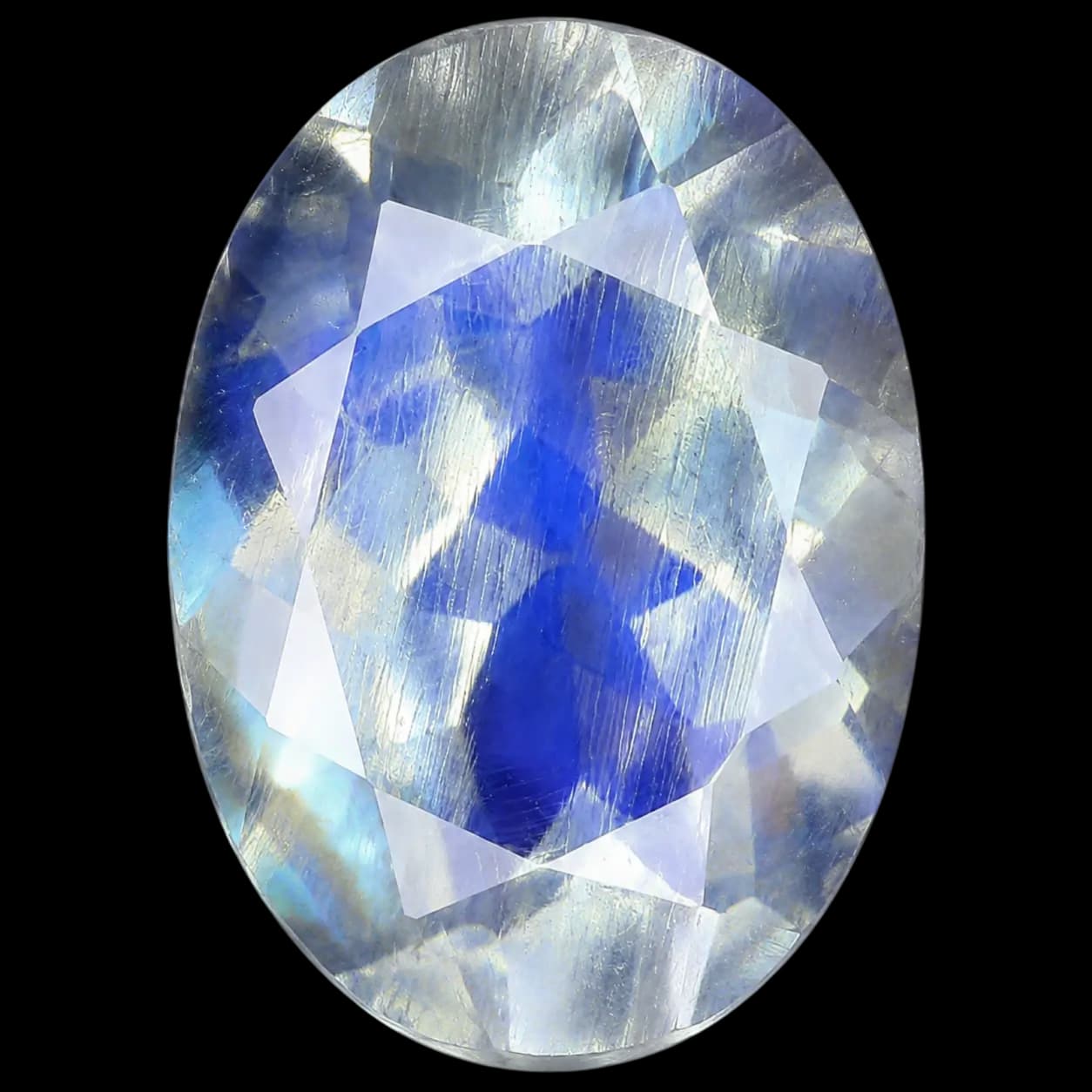
Labradorite
Labradorite is a striking gemstone known for its vivid labradorescence, making every stone feel one of a kind in jewelry and collections.
Labradorite is a plagioclase feldspar prized for its labradorescence, the shifting flashes of blue, green, yellow, orange, and sometimes purple that appear as the stone moves in light. It forms in igneous rocks and is also found in some metamorphic settings, where slow cooling and internal layering create its signature optical effect. Chemically, it is a calcium-rich sodium calcium aluminosilicate in the feldspar family. Most gem-quality material is cut as cabochons to bring out the color play, while especially vivid Finnish material is known in the trade as spectrolite. First identified in Labrador, Canada, this gemstone now comes from several sources worldwide, including Madagascar, Finland, and Canada. Buyers value Labradorite for its dramatic appearance, accessible price range, and strong appeal in rings, pendants, earrings, beads, and statement carvings.
- Mineral Family
- Feldspar
- Chemical Formula
- (Ca,Na)(Al,Si)4O8
- Mohs Hardness
- 6–6.5
- Refractive Index
- 1.555–1.575
- Specific Gravity
- 2.68–2.72
- Cleavage
- Perfect on {001}, good on {010}
- Color Range
- Gray, Black, Blue, Green, Yellow, Orange, Red, Purple
When buying Labradorite, color and flash are the most important factors. Look for a strong, bright labradorescence with good contrast against the body color, whether the stone appears gray, black, or translucent. Inclusions are common, so focus on the quality of the flash, polish, and face-up appearance rather than expecting eye-clean clarity. Cabochon cuts usually show Labradorite best, while well-matched sizes are ideal for coordinated jewelry. Larger stones can still be affordable, but vivid color, strong flash, fine finish, and rare locality material raise value. Ask whether the stone is natural and untreated; most fine Labradorite is sold untreated, though any coating, backing, or enhancement should be disclosed. Certification is especially useful for higher-value pieces, custom jewelry orders, or premium origin claims. Always buy from a seller who clearly states origin, treatment status, and whether the gem is natural Labradorite or a trade name such as spectrolite.
Clean Labradorite with lukewarm water, mild soap, and a soft cloth. Avoid ultrasonic cleaners, steam cleaning, harsh chemicals, and prolonged heat or strong sunlight. Store it separately from harder gems to reduce scratches, and keep cabochons and jewelry away from hard knocks because feldspar cleavage can make the stone vulnerable to chips. Remove Labradorite before sports, heavy cleaning, or any task that may expose it to impact.
Labradorite is a plagioclase feldspar prized for its labradorescence, the shifting flashes of blue, green, yellow, orange, and sometimes purple that appear as the stone moves in light. It forms in igneous rocks and is also found in some metamorphic settings, where slow cooling and internal layering create its signature optical effect. Chemically, it is a calcium-rich sodium calcium aluminosilicate in the feldspar family. Most gem-quality material is cut as cabochons to bring out the color play, while especially vivid Finnish material is known in the trade as spectrolite. First identified in Labrador, Canada, this gemstone now comes from several sources worldwide, including Madagascar, Finland, and Canada. Buyers value Labradorite for its dramatic appearance, accessible price range, and strong appeal in rings, pendants, earrings, beads, and statement carvings.
- Mineral Family
- Feldspar
- Chemical Formula
- (Ca,Na)(Al,Si)4O8
- Mohs Hardness
- 6–6.5
- Refractive Index
- 1.555–1.575
- Specific Gravity
- 2.68–2.72
- Cleavage
- Perfect on {001}, good on {010}
- Color Range
- Gray, Black, Blue, Green, Yellow, Orange, Red, Purple
When buying Labradorite, color and flash are the most important factors. Look for a strong, bright labradorescence with good contrast against the body color, whether the stone appears gray, black, or translucent. Inclusions are common, so focus on the quality of the flash, polish, and face-up appearance rather than expecting eye-clean clarity. Cabochon cuts usually show Labradorite best, while well-matched sizes are ideal for coordinated jewelry. Larger stones can still be affordable, but vivid color, strong flash, fine finish, and rare locality material raise value. Ask whether the stone is natural and untreated; most fine Labradorite is sold untreated, though any coating, backing, or enhancement should be disclosed. Certification is especially useful for higher-value pieces, custom jewelry orders, or premium origin claims. Always buy from a seller who clearly states origin, treatment status, and whether the gem is natural Labradorite or a trade name such as spectrolite.
Clean Labradorite with lukewarm water, mild soap, and a soft cloth. Avoid ultrasonic cleaners, steam cleaning, harsh chemicals, and prolonged heat or strong sunlight. Store it separately from harder gems to reduce scratches, and keep cabochons and jewelry away from hard knocks because feldspar cleavage can make the stone vulnerable to chips. Remove Labradorite before sports, heavy cleaning, or any task that may expose it to impact.
Labradorite for Sale
No gems found
Try broadening your search or adjusting your filters.
Have a gem of your own? List it free - no fees