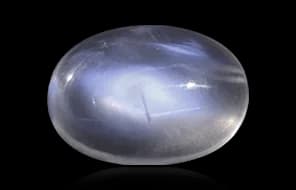
Blue Moonstone
Blue Moonstone is prized for its soft, floating blue adularescence, a distinctive optical effect that gives this feldspar gemstone an ethereal glow in jewelry.
Blue Moonstone is a variety of gem-quality moonstone from the feldspar group, best known for its attractive blue adularescence. Moonstone is commonly associated with orthoclase feldspar and forms through the intergrowth of orthoclase and albite layers. As these feldspar components separate during cooling, microscopic layers develop within the material. Light scattering between these layers produces adularescence, the mobile glow that appears to move across the stone as it is viewed from different angles. The finest Blue Moonstone typically combines a relatively colorless or lightly colored body with a strong, vivid blue sheen. Its chemical composition is commonly represented as KAlSi3O8, with a Mohs hardness of 6.0-6.5, refractive index of approximately 1.518-1.526, and specific gravity around 2.58. It has perfect cleavage, so it requires more care than harder gemstones such as sapphire. Moonstone has a long history in jewelry and gem collecting and is also recognized as a June birthstone. Important moonstone sources have included Sri Lanka, Myanmar, India, Madagascar, Tanzania, Australia and other feldspar-bearing regions, although quality varies considerably by deposit. Today, Blue Moonstone is used in rings, pendants, earrings, bracelets and other jewelry, with cabochon cutting being especially effective at displaying its moving sheen. Buyers value it primarily for the quality and intensity of its adularescence, transparency, body color, craftsmanship and overall rarity at higher qualities. GIA notes that the most favored moonstones have a colorless, semitransparent to nearly transparent appearance combined with vivid blue adularescence.
- Mineral Family
- Feldspar
- Chemical Formula
- KAlSi3O8
- Mohs Hardness
- 6.0 - 6.5
- Refractive Index
- 1.518 - 1.526
- Specific Gravity
- 2.58
- Cleavage
- Perfect
- Crystal System
- Monoclinic
- Luster
- Pearly
- Color Range
- Blue, White, Gray
When buying Blue Moonstone, evaluate the gemstone as a combination of body appearance and optical effect rather than relying on the name alone. Color is important: a relatively colorless or lightly colored body with a strong, vivid blue adularescence is particularly desirable. The blue sheen should be attractive, mobile and well positioned across the face of the stone. Clarity should be assessed realistically because natural moonstone can contain characteristic inclusions and internal features. A completely flawless appearance is not required, but excessive fractures can affect durability and appearance. Cut has a major influence on value because a well-oriented cabochon can maximize the visible adularescence. Carat weight also affects price, although quality and optical performance generally matter more than size alone. Origin can contribute to desirability when supported by reliable documentation, but origin should not replace an assessment of the individual stone. Ask whether the gemstone is natural and whether any treatment or enhancement has been applied. Natural moonstone should be distinguished from simulants and any laboratory-created material offered as moonstone. Treatments should always be disclosed because they can affect value, care requirements and buyer expectations. For higher-value stones, request an independent gemological identification report confirming the gemstone identity and, where applicable, treatment status and origin. A reputable laboratory report can also help distinguish natural material from synthetic or imitation material. Price depends on the strength and quality of adularescence, transparency, body color, clarity, cut, size, origin, treatment status and market demand. Avoid judging Blue Moonstone solely by color or carat weight; compare the quality of the optical effect and the overall condition of the stone.
Blue Moonstone requires thoughtful care because its Mohs hardness of 6.0-6.5 and perfect cleavage make it vulnerable to scratches, chips and breakage from sharp impacts. For routine cleaning, use lukewarm water, mild soap and a soft cloth or soft brush. Rinse carefully and dry with a clean, soft cloth. Avoid ultrasonic cleaners and steam cleaning, particularly when the stone has significant inclusions, fractures or an uncertain treatment history. Store Blue Moonstone separately from harder gemstones such as sapphire, ruby and diamond to prevent scratches. A soft jewelry pouch or fabric-lined compartment is ideal. Rings should receive extra protection because the stone can be exposed to knocks during everyday activities. For frequent wear, pendants and earrings generally offer better protection than exposed rings. Remove Blue Moonstone jewelry before sports, heavy manual work, household cleaning and other activities where the gemstone could receive a hard impact. Avoid sudden temperature changes and harsh chemicals. Proper storage and gentle cleaning will help preserve the stone's polish and distinctive adularescence.
Blue Moonstone is a variety of gem-quality moonstone from the feldspar group, best known for its attractive blue adularescence. Moonstone is commonly associated with orthoclase feldspar and forms through the intergrowth of orthoclase and albite layers. As these feldspar components separate during cooling, microscopic layers develop within the material. Light scattering between these layers produces adularescence, the mobile glow that appears to move across the stone as it is viewed from different angles. The finest Blue Moonstone typically combines a relatively colorless or lightly colored body with a strong, vivid blue sheen. Its chemical composition is commonly represented as KAlSi3O8, with a Mohs hardness of 6.0-6.5, refractive index of approximately 1.518-1.526, and specific gravity around 2.58. It has perfect cleavage, so it requires more care than harder gemstones such as sapphire. Moonstone has a long history in jewelry and gem collecting and is also recognized as a June birthstone. Important moonstone sources have included Sri Lanka, Myanmar, India, Madagascar, Tanzania, Australia and other feldspar-bearing regions, although quality varies considerably by deposit. Today, Blue Moonstone is used in rings, pendants, earrings, bracelets and other jewelry, with cabochon cutting being especially effective at displaying its moving sheen. Buyers value it primarily for the quality and intensity of its adularescence, transparency, body color, craftsmanship and overall rarity at higher qualities. GIA notes that the most favored moonstones have a colorless, semitransparent to nearly transparent appearance combined with vivid blue adularescence.
- Mineral Family
- Feldspar
- Chemical Formula
- KAlSi3O8
- Mohs Hardness
- 6.0 - 6.5
- Refractive Index
- 1.518 - 1.526
- Specific Gravity
- 2.58
- Cleavage
- Perfect
- Crystal System
- Monoclinic
- Luster
- Pearly
- Color Range
- Blue, White, Gray
When buying Blue Moonstone, evaluate the gemstone as a combination of body appearance and optical effect rather than relying on the name alone. Color is important: a relatively colorless or lightly colored body with a strong, vivid blue adularescence is particularly desirable. The blue sheen should be attractive, mobile and well positioned across the face of the stone. Clarity should be assessed realistically because natural moonstone can contain characteristic inclusions and internal features. A completely flawless appearance is not required, but excessive fractures can affect durability and appearance. Cut has a major influence on value because a well-oriented cabochon can maximize the visible adularescence. Carat weight also affects price, although quality and optical performance generally matter more than size alone. Origin can contribute to desirability when supported by reliable documentation, but origin should not replace an assessment of the individual stone. Ask whether the gemstone is natural and whether any treatment or enhancement has been applied. Natural moonstone should be distinguished from simulants and any laboratory-created material offered as moonstone. Treatments should always be disclosed because they can affect value, care requirements and buyer expectations. For higher-value stones, request an independent gemological identification report confirming the gemstone identity and, where applicable, treatment status and origin. A reputable laboratory report can also help distinguish natural material from synthetic or imitation material. Price depends on the strength and quality of adularescence, transparency, body color, clarity, cut, size, origin, treatment status and market demand. Avoid judging Blue Moonstone solely by color or carat weight; compare the quality of the optical effect and the overall condition of the stone.
Blue Moonstone requires thoughtful care because its Mohs hardness of 6.0-6.5 and perfect cleavage make it vulnerable to scratches, chips and breakage from sharp impacts. For routine cleaning, use lukewarm water, mild soap and a soft cloth or soft brush. Rinse carefully and dry with a clean, soft cloth. Avoid ultrasonic cleaners and steam cleaning, particularly when the stone has significant inclusions, fractures or an uncertain treatment history. Store Blue Moonstone separately from harder gemstones such as sapphire, ruby and diamond to prevent scratches. A soft jewelry pouch or fabric-lined compartment is ideal. Rings should receive extra protection because the stone can be exposed to knocks during everyday activities. For frequent wear, pendants and earrings generally offer better protection than exposed rings. Remove Blue Moonstone jewelry before sports, heavy manual work, household cleaning and other activities where the gemstone could receive a hard impact. Avoid sudden temperature changes and harsh chemicals. Proper storage and gentle cleaning will help preserve the stone's polish and distinctive adularescence.
Blue Moonstone for Sale
No gems found
Try broadening your search or adjusting your filters.
Have a gem of your own? List it free - no fees