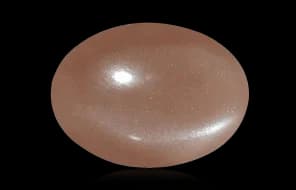
Brown Moonstone
Brown Moonstone combines warm earthy color with the soft, floating glow of adularescence, making it a distinctive choice for cabochons, rings, pendants and collector pieces.
Brown Moonstone is a brown-colored variety of moonstone, a phenomenal feldspar gemstone valued for its characteristic adularescence—a billowing or floating sheen that appears to move across the surface as the stone is viewed from different angles. Moonstone is principally associated with orthoclase feldspar, although the trade name can also encompass other feldspar compositions that display the characteristic optical phenomenon. Orthoclase moonstone has the chemical formula KAlSi3O8 and belongs to the feldspar group. It crystallizes in the monoclinic crystal system and has a Mohs hardness of 6.0 to 6.5, making it suitable for jewelry but more vulnerable to scratches, chips and impact than harder gemstones. Its refractive index is approximately 1.518 to 1.526 and its specific gravity is about 2.58. The luster is typically vitreous to pearly, with perfect cleavage requiring careful handling. Brown is a recognized natural moonstone bodycolor and can range from light, honey-like brown to deeper earthy tones. The most attractive stones often combine an appealing bodycolor with a clearly visible, mobile sheen. Moonstone forms through feldspar crystallization and subsequent separation of feldspar components into microscopic layers; light scattering between these layers produces the characteristic adularescence. Sri Lanka has a long-established history as an important source of fine moonstone, with material documented from areas including Meetiyagoda. Moonstone has also been found in several other gem-producing regions around the world. Today, Brown Moonstone is commonly fashioned as cabochons because the rounded surface helps display its optical effect. It is used in rings, pendants, earrings, bracelets and statement jewelry, while attractive larger specimens may appeal to collectors. Buyers value Brown Moonstone for its natural character, warm coloration, distinctive optical phenomenon and individuality from stone to stone.
- Mineral Family
- Feldspar
- Chemical Formula
- KAlSi3O8
- Mohs Hardness
- 6.0 - 6.5
- Refractive Index
- 1.518 - 1.526
- Specific Gravity
- 2.58
- Cleavage
- Perfect
- Crystal System
- Monoclinic
- Luster
- Pearly
When buying Brown Moonstone, begin with the quality of the bodycolor and the strength and movement of its adularescence. Color should be attractive and evenly distributed, although natural variations can add character. For clarity, transparent to translucent material with fewer distracting fractures is generally more desirable, particularly when the stone displays a strong floating sheen. Cut is especially important because moonstone is commonly cut as a cabochon and the proportions and orientation must be chosen to display the optical effect effectively. Carat weight should be considered alongside overall quality rather than treated as the main indicator of value. Origin can influence desirability and price when a documented locality has a strong reputation, but an attractive stone should not be valued on origin alone. Ask whether the stone has received any treatments or enhancements, and request disclosure from the seller. Natural Brown Moonstone should be distinguished from imitations and assembled materials, which can be made to resemble its appearance. Lab-grown or synthetic materials are not the same as natural moonstone and should be clearly disclosed if offered. For higher-value stones, an independent gemological report can provide useful confirmation of identity, treatments and other characteristics. Authenticity is best assessed through professional gemological testing rather than appearance alone. Price depends on color, transparency, strength and quality of adularescence, cut, size, clarity, origin, treatment status and overall craftsmanship. When you buy Brown Moonstone online, choose a seller that provides clear photographs, accurate dimensions, treatment disclosure and a transparent return policy.
Brown Moonstone requires thoughtful care because its 6.0 to 6.5 Mohs hardness and perfect cleavage make it susceptible to scratches, chips and breakage from sharp impacts. Clean it with lukewarm water, a mild soap and a soft cloth or soft brush, then rinse and dry gently. Avoid harsh chemicals, abrasive cleaners, steam cleaning and ultrasonic cleaning unless a qualified gemologist has confirmed that the particular stone can safely tolerate them. Store Brown Moonstone separately from harder gemstones such as sapphire, ruby and diamond to prevent scratches. A soft fabric pouch or individual jewelry compartment is ideal. Avoid wearing moonstone during activities involving heavy impact, rough work or sudden temperature changes. For rings worn frequently, protective settings and sensible handling are especially important. Wipe the stone after use to remove oils and residue and have valuable jewelry professionally inspected periodically.
Brown Moonstone is a brown-colored variety of moonstone, a phenomenal feldspar gemstone valued for its characteristic adularescence—a billowing or floating sheen that appears to move across the surface as the stone is viewed from different angles. Moonstone is principally associated with orthoclase feldspar, although the trade name can also encompass other feldspar compositions that display the characteristic optical phenomenon. Orthoclase moonstone has the chemical formula KAlSi3O8 and belongs to the feldspar group. It crystallizes in the monoclinic crystal system and has a Mohs hardness of 6.0 to 6.5, making it suitable for jewelry but more vulnerable to scratches, chips and impact than harder gemstones. Its refractive index is approximately 1.518 to 1.526 and its specific gravity is about 2.58. The luster is typically vitreous to pearly, with perfect cleavage requiring careful handling. Brown is a recognized natural moonstone bodycolor and can range from light, honey-like brown to deeper earthy tones. The most attractive stones often combine an appealing bodycolor with a clearly visible, mobile sheen. Moonstone forms through feldspar crystallization and subsequent separation of feldspar components into microscopic layers; light scattering between these layers produces the characteristic adularescence. Sri Lanka has a long-established history as an important source of fine moonstone, with material documented from areas including Meetiyagoda. Moonstone has also been found in several other gem-producing regions around the world. Today, Brown Moonstone is commonly fashioned as cabochons because the rounded surface helps display its optical effect. It is used in rings, pendants, earrings, bracelets and statement jewelry, while attractive larger specimens may appeal to collectors. Buyers value Brown Moonstone for its natural character, warm coloration, distinctive optical phenomenon and individuality from stone to stone.
- Mineral Family
- Feldspar
- Chemical Formula
- KAlSi3O8
- Mohs Hardness
- 6.0 - 6.5
- Refractive Index
- 1.518 - 1.526
- Specific Gravity
- 2.58
- Cleavage
- Perfect
- Crystal System
- Monoclinic
- Luster
- Pearly
When buying Brown Moonstone, begin with the quality of the bodycolor and the strength and movement of its adularescence. Color should be attractive and evenly distributed, although natural variations can add character. For clarity, transparent to translucent material with fewer distracting fractures is generally more desirable, particularly when the stone displays a strong floating sheen. Cut is especially important because moonstone is commonly cut as a cabochon and the proportions and orientation must be chosen to display the optical effect effectively. Carat weight should be considered alongside overall quality rather than treated as the main indicator of value. Origin can influence desirability and price when a documented locality has a strong reputation, but an attractive stone should not be valued on origin alone. Ask whether the stone has received any treatments or enhancements, and request disclosure from the seller. Natural Brown Moonstone should be distinguished from imitations and assembled materials, which can be made to resemble its appearance. Lab-grown or synthetic materials are not the same as natural moonstone and should be clearly disclosed if offered. For higher-value stones, an independent gemological report can provide useful confirmation of identity, treatments and other characteristics. Authenticity is best assessed through professional gemological testing rather than appearance alone. Price depends on color, transparency, strength and quality of adularescence, cut, size, clarity, origin, treatment status and overall craftsmanship. When you buy Brown Moonstone online, choose a seller that provides clear photographs, accurate dimensions, treatment disclosure and a transparent return policy.
Brown Moonstone requires thoughtful care because its 6.0 to 6.5 Mohs hardness and perfect cleavage make it susceptible to scratches, chips and breakage from sharp impacts. Clean it with lukewarm water, a mild soap and a soft cloth or soft brush, then rinse and dry gently. Avoid harsh chemicals, abrasive cleaners, steam cleaning and ultrasonic cleaning unless a qualified gemologist has confirmed that the particular stone can safely tolerate them. Store Brown Moonstone separately from harder gemstones such as sapphire, ruby and diamond to prevent scratches. A soft fabric pouch or individual jewelry compartment is ideal. Avoid wearing moonstone during activities involving heavy impact, rough work or sudden temperature changes. For rings worn frequently, protective settings and sensible handling are especially important. Wipe the stone after use to remove oils and residue and have valuable jewelry professionally inspected periodically.
Brown Moonstone for Sale
No gems found
Try broadening your search or adjusting your filters.
Have a gem of your own? List it free - no fees