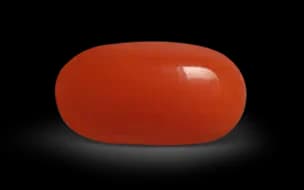
Red Coral
Red Coral is a distinctive organic gemstone prized for its vivid red to pinkish-red color, smooth polish, maritime origins, and timeless appeal in jewelry.
Red Coral is an organic gem material formed by marine organisms rather than a mineral crystal. Gem-quality red coral is associated with species of the Corallium genus, whose colonies build branching calcium-carbonate skeletons in marine environments. The material is composed primarily of calcium carbonate with a smaller organic component. Unlike crystalline gemstones, coral has no conventional crystal system. It is relatively soft, measuring about 3 to 4 on the Mohs scale, with a specific gravity of approximately 2.60 to 2.70 and a refractive index that commonly falls around 1.48 to 1.65. Its luster can range from waxy to vitreous after polishing. Red Coral is best known for its saturated red color, including vivid red, deep red, pinkish-red, and orange-red tones. Fine material generally has an even color and a smooth, lustrous surface. Natural growth structures, pits, bands, and other surface characteristics can occur and help distinguish coral from imitations. Historically, Mediterranean red coral has been highly prized and has been used in ornamentation for thousands of years. Important coral-producing regions and traditions have also developed around Japan and other parts of the western Pacific. Today, Red Coral is commonly fashioned into cabochons, beads, carved ornaments, pendants, rings, bracelets, and necklaces. Because coral is comparatively soft and porous, it is better suited to jewelry that receives careful handling than to pieces exposed to heavy abrasion. Buyers value natural Red Coral for its distinctive organic origin, strong color, rarity of fine material, cultural history, and unmistakable appearance.
- Mineral Family
- Coral
- Chemical Formula
- CaCO3 (primarily calcium carbonate, with minor organic material)
- Mohs Hardness
- 3 - 4
- Refractive Index
- 1.48 - 1.65
- Specific Gravity
- 2.60 - 2.70
- Cleavage
- None
- Luster
- Waxy
- Color Range
- Red, Pink, Orange
When buying Red Coral gemstone, begin with color. Strong, even red coloration is generally desirable, while attractive pinkish-red and orange-red material can also be valuable depending on the market and quality. Because coral is opaque, clarity is assessed differently from transparent gemstones: buyers should examine the surface for excessive pits, cracks, cavities, discoloration, or distracting growth features. Cut and finish are important because well-polished cabochons, beads, carvings, and other shapes should display an even surface and attractive luster without excessive material loss or damage. Carat weight matters, but size should be considered together with color, surface quality, shape, and origin. Origin can influence desirability and value, but an origin claim should be supported by reliable documentation rather than assumed from appearance alone. Treatments are common in the coral trade and may include dyeing, bleaching, wax or resin impregnation, and stabilization. These treatments should be disclosed because they can affect durability, appearance, and value. Natural Red Coral is not the same as a laboratory-grown mineral gemstone; commercial substitutes and imitations can include glass, plastic, dyed limestone, ceramics, bone, marble, reconstructed coral, and composite materials. Buyers should therefore ask whether the material is natural coral and whether it has been treated or reconstructed. For valuable purchases, an independent report from a reputable gemological laboratory can help confirm the material and disclose detectable treatments. Seller transparency, return policies, treatment disclosure, and documentation are important parts of authenticity assessment. Red Coral pricing varies widely according to color, quality, size, origin, treatment status, craftsmanship, and rarity. Fine natural, evenly colored material with an attractive polish and minimal damaging features generally commands a premium.
Red Coral requires more care than durable mineral gemstones because its hardness is only about 3 to 4 and the material can be porous. For routine cleaning, gently wipe the surface with a soft, damp cloth. If necessary, use a brief rinse with mild soapy water, then dry it thoroughly. Avoid ultrasonic and steam cleaners. Keep Red Coral away from perfumes, cosmetics, chlorine, strong chemicals, prolonged heat, and abrasive substances, as these can damage its polish or alter its color. Remove Red Coral jewelry before swimming, bathing, exercising, or doing household work where it could be exposed to chemicals or impact. Store it separately from harder gemstones such as diamond and sapphire, ideally in a soft pouch or lined jewelry box, to prevent scratches. Prolonged direct sunlight can affect some treated or dyed coral, so storage in a cool, dry, shaded place is preferable. Inspect coral jewelry periodically for cracks, chips, loose settings, or worn surfaces, especially on rings and bracelets that receive frequent contact.
Red Coral is an organic gem material formed by marine organisms rather than a mineral crystal. Gem-quality red coral is associated with species of the Corallium genus, whose colonies build branching calcium-carbonate skeletons in marine environments. The material is composed primarily of calcium carbonate with a smaller organic component. Unlike crystalline gemstones, coral has no conventional crystal system. It is relatively soft, measuring about 3 to 4 on the Mohs scale, with a specific gravity of approximately 2.60 to 2.70 and a refractive index that commonly falls around 1.48 to 1.65. Its luster can range from waxy to vitreous after polishing. Red Coral is best known for its saturated red color, including vivid red, deep red, pinkish-red, and orange-red tones. Fine material generally has an even color and a smooth, lustrous surface. Natural growth structures, pits, bands, and other surface characteristics can occur and help distinguish coral from imitations. Historically, Mediterranean red coral has been highly prized and has been used in ornamentation for thousands of years. Important coral-producing regions and traditions have also developed around Japan and other parts of the western Pacific. Today, Red Coral is commonly fashioned into cabochons, beads, carved ornaments, pendants, rings, bracelets, and necklaces. Because coral is comparatively soft and porous, it is better suited to jewelry that receives careful handling than to pieces exposed to heavy abrasion. Buyers value natural Red Coral for its distinctive organic origin, strong color, rarity of fine material, cultural history, and unmistakable appearance.
- Mineral Family
- Coral
- Chemical Formula
- CaCO3 (primarily calcium carbonate, with minor organic material)
- Mohs Hardness
- 3 - 4
- Refractive Index
- 1.48 - 1.65
- Specific Gravity
- 2.60 - 2.70
- Cleavage
- None
- Luster
- Waxy
- Color Range
- Red, Pink, Orange
When buying Red Coral gemstone, begin with color. Strong, even red coloration is generally desirable, while attractive pinkish-red and orange-red material can also be valuable depending on the market and quality. Because coral is opaque, clarity is assessed differently from transparent gemstones: buyers should examine the surface for excessive pits, cracks, cavities, discoloration, or distracting growth features. Cut and finish are important because well-polished cabochons, beads, carvings, and other shapes should display an even surface and attractive luster without excessive material loss or damage. Carat weight matters, but size should be considered together with color, surface quality, shape, and origin. Origin can influence desirability and value, but an origin claim should be supported by reliable documentation rather than assumed from appearance alone. Treatments are common in the coral trade and may include dyeing, bleaching, wax or resin impregnation, and stabilization. These treatments should be disclosed because they can affect durability, appearance, and value. Natural Red Coral is not the same as a laboratory-grown mineral gemstone; commercial substitutes and imitations can include glass, plastic, dyed limestone, ceramics, bone, marble, reconstructed coral, and composite materials. Buyers should therefore ask whether the material is natural coral and whether it has been treated or reconstructed. For valuable purchases, an independent report from a reputable gemological laboratory can help confirm the material and disclose detectable treatments. Seller transparency, return policies, treatment disclosure, and documentation are important parts of authenticity assessment. Red Coral pricing varies widely according to color, quality, size, origin, treatment status, craftsmanship, and rarity. Fine natural, evenly colored material with an attractive polish and minimal damaging features generally commands a premium.
Red Coral requires more care than durable mineral gemstones because its hardness is only about 3 to 4 and the material can be porous. For routine cleaning, gently wipe the surface with a soft, damp cloth. If necessary, use a brief rinse with mild soapy water, then dry it thoroughly. Avoid ultrasonic and steam cleaners. Keep Red Coral away from perfumes, cosmetics, chlorine, strong chemicals, prolonged heat, and abrasive substances, as these can damage its polish or alter its color. Remove Red Coral jewelry before swimming, bathing, exercising, or doing household work where it could be exposed to chemicals or impact. Store it separately from harder gemstones such as diamond and sapphire, ideally in a soft pouch or lined jewelry box, to prevent scratches. Prolonged direct sunlight can affect some treated or dyed coral, so storage in a cool, dry, shaded place is preferable. Inspect coral jewelry periodically for cracks, chips, loose settings, or worn surfaces, especially on rings and bracelets that receive frequent contact.
Red Coral for Sale
No gems found
Try broadening your search or adjusting your filters.
Have a gem of your own? List it free - no fees