Opal
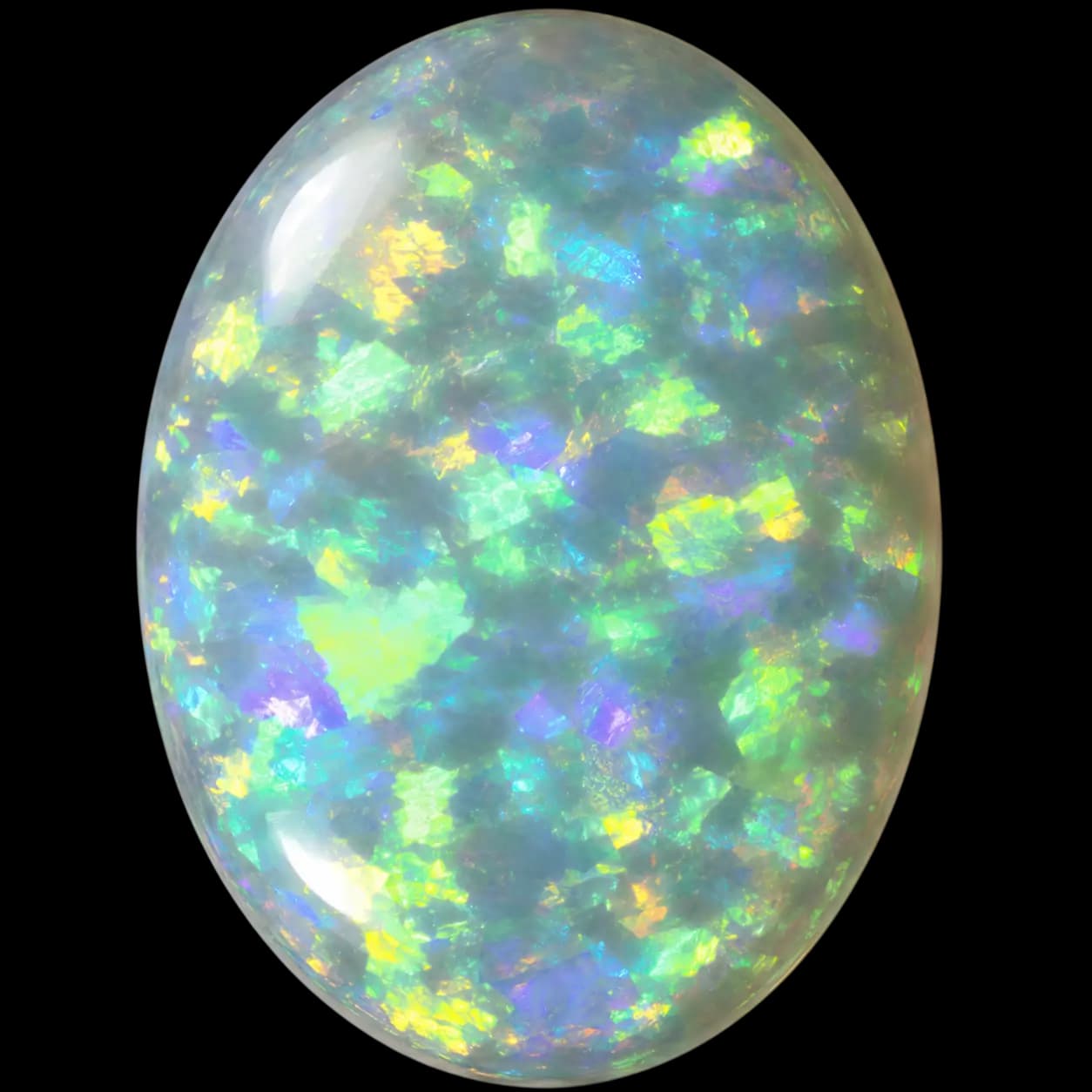
Opal is a captivating gemstone known for its unique play-of-colour, vibrant patterns, and delicate beauty. Valued for centuries, natural Opal remains a favorite choice for distinctive jewelry and collectors.
Opal is a unique gemstone from the silica mineral group, recognized for its extraordinary play-of-colour - a shifting display of rainbow-like flashes caused by its internal structure. Unlike most crystalline gemstones, Opal is an amorphous mineraloid, meaning it does not have a defined crystal structure.
Natural Opal is composed of hydrated silica with the chemical formula SiO₂·nH₂O. The amount of water contained within Opal varies depending on its formation environment and type. It forms when silica-rich water moves through cracks and cavities in rocks, depositing microscopic silica spheres over long periods.
Opal has a Mohs hardness of 5.5 - 6.5 and requires careful handling compared with harder gemstones. It has a vitreous to resinous luster and ranges from transparent to opaque. Its refractive index typically falls between 1.37 and 1.52.
The most famous feature of Opal is its play-of-colour, created when light interacts with microscopic silica structures inside precious Opal. The intensity, pattern, and brightness of this effect greatly influence its value.
Opal occurs in many varieties, including White Opal, Black Opal, Boulder Opal, Crystal Opal, Fire Opal, and Ethiopian Opal. White Opals display colorful flashes against a light body tone, while Black Opals are prized for their dramatic contrast and vibrant colors. Fire Opals are known for warm orange, yellow, and red body colors.
Australia is the world's most renowned source of fine Opal, producing famous varieties from regions such as Lightning Ridge, Coober Pedy, and Andamooka. Ethiopia, Mexico, Brazil, and the United States also produce notable Opal varieties.
The Australian Black Opal from Lightning Ridge is among the most collectible Opals due to its rarity and exceptional play-of-colour. Mexican Fire Opals are admired for their bright body colors, while Ethiopian Opals are known for their attractive transparency and colorful patterns.
Opal has been admired throughout history for its unusual optical beauty. Today, Opal jewelry remains popular among designers and collectors who appreciate its individuality. Opal rings, pendants, earrings, and bracelets are especially valued because every stone has a different color pattern.
Collectors and jewelry buyers value Opal for its uniqueness, natural beauty, variety of colors, and rarity. Since no two natural Opals have exactly the same internal pattern, each gemstone offers a one-of-a-kind appearance.
- Mineral Family
- Opal
- Chemical Formula
- SiO₂·nH₂O
- Mohs Hardness
- 5.5–6.5
- Refractive Index
- 1.37–1.52
- Specific Gravity
- 1.98–2.25
- Cleavage
- None
- Crystal System
- Amorphous
- Luster
- Resinous
- Color Range
- White, Black, Blue, Green, Orange, Pink, Yellow, Red
Choosing a quality Opal gemstone requires understanding several important factors.
Color and Play-of-Colour: Color is one of the most important factors when evaluating Opal. Buyers look for strong, vibrant flashes with attractive color combinations. Red flashes are often considered highly desirable because they are less common, while blue and green flashes are more frequently seen.
Clarity: Opal clarity depends on its variety. Transparent Crystal Opals are valued for their clarity, while Black Opal and White Opal are often judged by body color, brightness, and play-of-colour. Natural inclusions may occur and should be evaluated based on how they affect appearance and durability.
Cut and Shape: Most Opals are cut into cabochons to maximize their color display. A smooth, well-shaped dome helps enhance the gemstone's visual appeal and protects the stone.
Carat Weight: Larger Opals with exceptional color patterns are generally rarer and may command higher prices. However, quality factors such as play-of-colour and origin often influence value more than size alone.
Origin: Origin can influence the market value of Opal. Australian Opals, especially rare Black Opals, are highly regarded. Ethiopian, Mexican, and other sources also produce beautiful and valuable stones.
Treatments and Enhancements: Some Opals may receive treatments to improve appearance. Buyers should ask whether a gemstone is natural, treated, or assembled. Smoke treatment is sometimes used to enhance darker body colors in certain Opals, and transparent information from sellers is important.
Natural vs Lab-Grown Opal: Natural Opals form through geological processes over millions of years. Synthetic or laboratory-created Opals may have similar visual effects but are produced under controlled conditions. Buyers should confirm the gemstone type before purchase.
Certification and Authenticity: A reputable gemological certificate can verify important details such as gemstone identity, treatments, and characteristics. When buying Opal online, choose sellers who provide transparent descriptions, certification options, and clear return policies.
Price Factors: Opal prices depend on variety, origin, color intensity, play-of-colour pattern, clarity, size, and overall quality. Rare Black Opals with exceptional color displays are among the most valuable forms of Opal.
Opal jewelry requires gentle care because of its moderate hardness and natural water content.
Cleaning: Clean Opal using a soft cloth, mild soap, and lukewarm water. Avoid harsh chemicals, ultrasonic cleaners, and steam cleaning because they may damage some Opals.
Storage: Store Opal jewelry separately in a soft pouch or lined jewelry box to prevent scratches from harder gemstones or metals.
Everyday Wear Advice: Opal rings and bracelets should be worn carefully because they are more vulnerable to scratches and impacts compared with harder gemstones. Remove Opal jewelry before activities involving chemicals, strong impacts, or extreme temperature changes.
Things to Avoid: Avoid prolonged exposure to intense heat, sudden temperature changes, and abrasive materials. Proper care helps preserve the gemstone's natural beauty and color display for many years.
Opal is a unique gemstone from the silica mineral group, recognized for its extraordinary play-of-colour - a shifting display of rainbow-like flashes caused by its internal structure. Unlike most crystalline gemstones, Opal is an amorphous mineraloid, meaning it does not have a defined crystal structure.
Natural Opal is composed of hydrated silica with the chemical formula SiO₂·nH₂O. The amount of water contained within Opal varies depending on its formation environment and type. It forms when silica-rich water moves through cracks and cavities in rocks, depositing microscopic silica spheres over long periods.
Opal has a Mohs hardness of 5.5 - 6.5 and requires careful handling compared with harder gemstones. It has a vitreous to resinous luster and ranges from transparent to opaque. Its refractive index typically falls between 1.37 and 1.52.
The most famous feature of Opal is its play-of-colour, created when light interacts with microscopic silica structures inside precious Opal. The intensity, pattern, and brightness of this effect greatly influence its value.
Opal occurs in many varieties, including White Opal, Black Opal, Boulder Opal, Crystal Opal, Fire Opal, and Ethiopian Opal. White Opals display colorful flashes against a light body tone, while Black Opals are prized for their dramatic contrast and vibrant colors. Fire Opals are known for warm orange, yellow, and red body colors.
Australia is the world's most renowned source of fine Opal, producing famous varieties from regions such as Lightning Ridge, Coober Pedy, and Andamooka. Ethiopia, Mexico, Brazil, and the United States also produce notable Opal varieties.
The Australian Black Opal from Lightning Ridge is among the most collectible Opals due to its rarity and exceptional play-of-colour. Mexican Fire Opals are admired for their bright body colors, while Ethiopian Opals are known for their attractive transparency and colorful patterns.
Opal has been admired throughout history for its unusual optical beauty. Today, Opal jewelry remains popular among designers and collectors who appreciate its individuality. Opal rings, pendants, earrings, and bracelets are especially valued because every stone has a different color pattern.
Collectors and jewelry buyers value Opal for its uniqueness, natural beauty, variety of colors, and rarity. Since no two natural Opals have exactly the same internal pattern, each gemstone offers a one-of-a-kind appearance.
- Mineral Family
- Opal
- Chemical Formula
- SiO₂·nH₂O
- Mohs Hardness
- 5.5–6.5
- Refractive Index
- 1.37–1.52
- Specific Gravity
- 1.98–2.25
- Cleavage
- None
- Crystal System
- Amorphous
- Luster
- Resinous
- Color Range
- White, Black, Blue, Green, Orange, Pink, Yellow, Red
Choosing a quality Opal gemstone requires understanding several important factors.
Color and Play-of-Colour: Color is one of the most important factors when evaluating Opal. Buyers look for strong, vibrant flashes with attractive color combinations. Red flashes are often considered highly desirable because they are less common, while blue and green flashes are more frequently seen.
Clarity: Opal clarity depends on its variety. Transparent Crystal Opals are valued for their clarity, while Black Opal and White Opal are often judged by body color, brightness, and play-of-colour. Natural inclusions may occur and should be evaluated based on how they affect appearance and durability.
Cut and Shape: Most Opals are cut into cabochons to maximize their color display. A smooth, well-shaped dome helps enhance the gemstone's visual appeal and protects the stone.
Carat Weight: Larger Opals with exceptional color patterns are generally rarer and may command higher prices. However, quality factors such as play-of-colour and origin often influence value more than size alone.
Origin: Origin can influence the market value of Opal. Australian Opals, especially rare Black Opals, are highly regarded. Ethiopian, Mexican, and other sources also produce beautiful and valuable stones.
Treatments and Enhancements: Some Opals may receive treatments to improve appearance. Buyers should ask whether a gemstone is natural, treated, or assembled. Smoke treatment is sometimes used to enhance darker body colors in certain Opals, and transparent information from sellers is important.
Natural vs Lab-Grown Opal: Natural Opals form through geological processes over millions of years. Synthetic or laboratory-created Opals may have similar visual effects but are produced under controlled conditions. Buyers should confirm the gemstone type before purchase.
Certification and Authenticity: A reputable gemological certificate can verify important details such as gemstone identity, treatments, and characteristics. When buying Opal online, choose sellers who provide transparent descriptions, certification options, and clear return policies.
Price Factors: Opal prices depend on variety, origin, color intensity, play-of-colour pattern, clarity, size, and overall quality. Rare Black Opals with exceptional color displays are among the most valuable forms of Opal.
Opal jewelry requires gentle care because of its moderate hardness and natural water content.
Cleaning: Clean Opal using a soft cloth, mild soap, and lukewarm water. Avoid harsh chemicals, ultrasonic cleaners, and steam cleaning because they may damage some Opals.
Storage: Store Opal jewelry separately in a soft pouch or lined jewelry box to prevent scratches from harder gemstones or metals.
Everyday Wear Advice: Opal rings and bracelets should be worn carefully because they are more vulnerable to scratches and impacts compared with harder gemstones. Remove Opal jewelry before activities involving chemicals, strong impacts, or extreme temperature changes.
Things to Avoid: Avoid prolonged exposure to intense heat, sudden temperature changes, and abrasive materials. Proper care helps preserve the gemstone's natural beauty and color display for many years.
Opal for Sale
No gems found
Try broadening your search or adjusting your filters.
Have a gem of your own? List it free - no fees