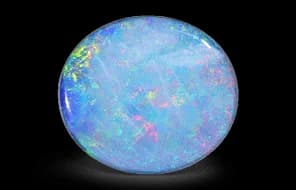
Blue Opal
Blue Opal is prized for its serene blue to blue-green body color and distinctive natural patterns. From Peruvian to Chilean material, it offers a sophisticated look for distinctive jewelry.
Blue Opal is a blue to blue-green variety of opal, a hydrated silica mineraloid known for its soft colors, distinctive textures and relatively low density. Unlike precious opal, many blue opals do not display play-of-color, although individual specimens can show unusual optical effects. Opal belongs to the hydrated silica family and has an amorphous rather than crystalline structure. Its general chemical composition is SiO₂·nH₂O, with variable water content.
Blue Opal forms when silica-rich fluids or gels deposit in cavities, fractures and other spaces within host rocks. Its appearance can be influenced by microscopic silica structures, impurities and associated minerals. Blue material is particularly associated with copper-rich geological environments in some deposits. Peruvian blue opal, often called Andean opal, is one of the best-known varieties, while blue opal from Chile's Atacama region has also attracted attention for its saturated blue and blue-green colors and distinctive banding. Blue opal has also been documented from localities such as Oregon in the United States.
The color range extends from pale blue and bluish green to stronger medium and deep blue tones. Some stones have attractive white, green or brown matrix patterns that form natural landscapes or seascape-like designs. Because blue opal is typically translucent to opaque, smooth polished cabochons are especially common. Freeform, oval, pear and other cabochon shapes allow cutters to preserve attractive color patterns and maximize the visual appeal of the rough.
Opal has a long history as a valued decorative gemstone, with important historic production from Europe and, later, Australia. Modern blue opal jewelry is appreciated for its unusual body color and organic appearance rather than the brilliance of a faceted transparent gemstone. It is commonly used in pendants, earrings, bracelets and occasional rings where appropriate care is provided.
Buyers value natural Blue Opal for its individuality, attractive blue coloration, locality characteristics and polished appearance. Since no two natural specimens are exactly alike, distinctive color zoning, patterns and textures can make individual stones particularly desirable.
- Mineral Family
- Opal
- Chemical Formula
- SiO₂·nH₂O
- Mohs Hardness
- 5 - 6.5
- Refractive Index
- 1.37 - 1.47
- Specific Gravity
- 2.15 (+0.08, -0.90)
- Cleavage
- None
- Crystal System
- Amorphous
- Luster
- Waxy
- Color Range
- Blue, Cyan, Green
When buying Blue Opal gemstone, begin with color. Attractive, evenly distributed blue or blue-green body color can increase desirability, while stronger saturation is often preferred when the color remains natural and visually balanced. Some collectors specifically seek patterned material with contrasting blue, green, white or matrix features, so beauty is not determined by color uniformity alone.
Clarity should be assessed according to the type of Blue Opal. Because much blue opal is translucent to opaque, minor internal features and natural patterns are not necessarily flaws. Instead, look for cracks, fractures, pits, poorly polished areas or structural weaknesses that may affect durability. A smooth, well-polished surface is especially important for cabochons.
Cut is usually evaluated by how effectively it presents the stone's color, pattern and surface quality. Cabochons are particularly common, including oval, pear, freeform and other shapes. A good cut should have an even, attractive dome and polish without sacrificing important color patterns. Carat weight affects the final price, but Blue Opal is generally valued more strongly according to overall quality, appearance, rarity and origin than by size alone.
Origin can influence collector interest and price. Peruvian or Andean blue opal is well known, while Chilean blue opal from the Atacama region is notable for saturated blue and blue-green material with distinctive banding. Oregon and other localities may also occur in the market. Origin claims should be supported by reliable documentation when they are important to the purchase.
Treatments require particular attention. Opal can be dyed, and gemological testing may be necessary to distinguish naturally colored material from treated material. GIA has documented dyed blue opal, so unusually vivid or concentrated blue color should not automatically be assumed to be natural. Ask the seller to disclose any known treatment and whether the stone is natural or laboratory-grown.
Natural Blue Opal means material formed in nature, while laboratory-grown or synthetic opal is produced artificially. Imitations may also be made from glass, plastic or other materials. These categories should not be treated as interchangeable. For higher-value purchases, an independent gemological report can help confirm identity, natural or laboratory-grown status and detectable treatments.
Certification is particularly useful when origin, treatment status or authenticity has a meaningful effect on value. Blue Opal prices vary according to color, pattern, clarity, polish, size, origin, rarity, treatment status and market demand. Compare stones on their actual visual quality rather than relying only on labels such as premium, AAA or investment grade, which may not have standardized meanings.
Blue Opal requires more careful handling than many harder jewelry gemstones because its Mohs hardness is only about 5-6.5. Clean it gently with lukewarm water, a soft cloth and mild soap when necessary. Rinse carefully and dry with a soft cloth.
Avoid ultrasonic cleaners, steam cleaners, harsh chemicals and abrasive cleaning products. Opal contains structurally bound water, and sudden or extreme changes in temperature can be undesirable for some opals. Avoid prolonged exposure to intense heat and rapid temperature changes.
Store Blue Opal separately from harder gemstones such as sapphire, ruby, diamond and quartz to prevent scratching. A soft jewelry pouch or lined compartment is ideal. For everyday jewelry, pendants and earrings are generally easier to protect than rings. If wearing a Blue Opal ring, remove it during activities involving impact, heavy work, sports, household chemicals or prolonged exposure to water.
Blue Opal is a blue to blue-green variety of opal, a hydrated silica mineraloid known for its soft colors, distinctive textures and relatively low density. Unlike precious opal, many blue opals do not display play-of-color, although individual specimens can show unusual optical effects. Opal belongs to the hydrated silica family and has an amorphous rather than crystalline structure. Its general chemical composition is SiO₂·nH₂O, with variable water content.
Blue Opal forms when silica-rich fluids or gels deposit in cavities, fractures and other spaces within host rocks. Its appearance can be influenced by microscopic silica structures, impurities and associated minerals. Blue material is particularly associated with copper-rich geological environments in some deposits. Peruvian blue opal, often called Andean opal, is one of the best-known varieties, while blue opal from Chile's Atacama region has also attracted attention for its saturated blue and blue-green colors and distinctive banding. Blue opal has also been documented from localities such as Oregon in the United States.
The color range extends from pale blue and bluish green to stronger medium and deep blue tones. Some stones have attractive white, green or brown matrix patterns that form natural landscapes or seascape-like designs. Because blue opal is typically translucent to opaque, smooth polished cabochons are especially common. Freeform, oval, pear and other cabochon shapes allow cutters to preserve attractive color patterns and maximize the visual appeal of the rough.
Opal has a long history as a valued decorative gemstone, with important historic production from Europe and, later, Australia. Modern blue opal jewelry is appreciated for its unusual body color and organic appearance rather than the brilliance of a faceted transparent gemstone. It is commonly used in pendants, earrings, bracelets and occasional rings where appropriate care is provided.
Buyers value natural Blue Opal for its individuality, attractive blue coloration, locality characteristics and polished appearance. Since no two natural specimens are exactly alike, distinctive color zoning, patterns and textures can make individual stones particularly desirable.
- Mineral Family
- Opal
- Chemical Formula
- SiO₂·nH₂O
- Mohs Hardness
- 5 - 6.5
- Refractive Index
- 1.37 - 1.47
- Specific Gravity
- 2.15 (+0.08, -0.90)
- Cleavage
- None
- Crystal System
- Amorphous
- Luster
- Waxy
- Color Range
- Blue, Cyan, Green
When buying Blue Opal gemstone, begin with color. Attractive, evenly distributed blue or blue-green body color can increase desirability, while stronger saturation is often preferred when the color remains natural and visually balanced. Some collectors specifically seek patterned material with contrasting blue, green, white or matrix features, so beauty is not determined by color uniformity alone.
Clarity should be assessed according to the type of Blue Opal. Because much blue opal is translucent to opaque, minor internal features and natural patterns are not necessarily flaws. Instead, look for cracks, fractures, pits, poorly polished areas or structural weaknesses that may affect durability. A smooth, well-polished surface is especially important for cabochons.
Cut is usually evaluated by how effectively it presents the stone's color, pattern and surface quality. Cabochons are particularly common, including oval, pear, freeform and other shapes. A good cut should have an even, attractive dome and polish without sacrificing important color patterns. Carat weight affects the final price, but Blue Opal is generally valued more strongly according to overall quality, appearance, rarity and origin than by size alone.
Origin can influence collector interest and price. Peruvian or Andean blue opal is well known, while Chilean blue opal from the Atacama region is notable for saturated blue and blue-green material with distinctive banding. Oregon and other localities may also occur in the market. Origin claims should be supported by reliable documentation when they are important to the purchase.
Treatments require particular attention. Opal can be dyed, and gemological testing may be necessary to distinguish naturally colored material from treated material. GIA has documented dyed blue opal, so unusually vivid or concentrated blue color should not automatically be assumed to be natural. Ask the seller to disclose any known treatment and whether the stone is natural or laboratory-grown.
Natural Blue Opal means material formed in nature, while laboratory-grown or synthetic opal is produced artificially. Imitations may also be made from glass, plastic or other materials. These categories should not be treated as interchangeable. For higher-value purchases, an independent gemological report can help confirm identity, natural or laboratory-grown status and detectable treatments.
Certification is particularly useful when origin, treatment status or authenticity has a meaningful effect on value. Blue Opal prices vary according to color, pattern, clarity, polish, size, origin, rarity, treatment status and market demand. Compare stones on their actual visual quality rather than relying only on labels such as premium, AAA or investment grade, which may not have standardized meanings.
Blue Opal requires more careful handling than many harder jewelry gemstones because its Mohs hardness is only about 5-6.5. Clean it gently with lukewarm water, a soft cloth and mild soap when necessary. Rinse carefully and dry with a soft cloth.
Avoid ultrasonic cleaners, steam cleaners, harsh chemicals and abrasive cleaning products. Opal contains structurally bound water, and sudden or extreme changes in temperature can be undesirable for some opals. Avoid prolonged exposure to intense heat and rapid temperature changes.
Store Blue Opal separately from harder gemstones such as sapphire, ruby, diamond and quartz to prevent scratching. A soft jewelry pouch or lined compartment is ideal. For everyday jewelry, pendants and earrings are generally easier to protect than rings. If wearing a Blue Opal ring, remove it during activities involving impact, heavy work, sports, household chemicals or prolonged exposure to water.
Blue Opal for Sale
No gems found
Try broadening your search or adjusting your filters.
Have a gem of your own? List it free - no fees