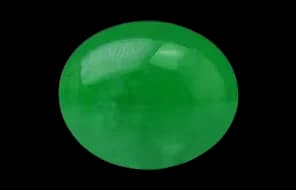
Myanmar Jadeite
Myanmar Jadeite is prized for exceptional toughness, translucency and vivid color. Fine green material, especially Imperial Jadeite, is among the world's most coveted jade varieties.
Myanmar Jadeite is the gem-quality variety of the mineral jadeite, a pyroxene belonging to the clinopyroxene group. Unlike nephrite, which is an amphibole aggregate, jadeite consists predominantly of tightly interlocking jadeite crystals. This structure gives jadeite exceptional toughness despite its moderate Mohs hardness. Its chemical composition is sodium aluminium silicate, NaAlSi2O6, and it crystallizes in the monoclinic system. Jadeite typically has a vitreous to greasy luster, a refractive index of about 1.666–1.680 and a specific gravity around 3.34. Myanmar is the world's most important historic source of fine jadeite, with the principal deposits concentrated in the Hpakan jade-mining district of northern Myanmar. The material is commonly recovered as rounded boulders and transported through established trade routes into China and other Asian markets. Jadeite can occur in green, lavender, white, yellow, orange, gray and black. The most valuable green material is commonly described as Imperial Jadeite: a vivid, highly saturated green with attractive translucency and fine texture. Color distribution, transparency and texture are central to evaluating jadeite quality. Jadeite has a long history in China, where it became an important carving material after jadeite from Myanmar entered the Chinese market in the late eighteenth century. The Qing court and elite collectors particularly valued rich green material, and jadeite carving developed into a sophisticated art form. Famous historic jadeite objects include the Hutton-Mdivani jadeite necklace, while exceptional Imperial Jadeite has also appeared in major international collections and auctions. Today, Myanmar Jadeite is fashioned into cabochons, beads, bangles, rings, pendants, earrings, bracelets and intricate carvings. Buyers value natural Myanmar Jadeite for its distinctive color, translucency, toughness, cultural history and scarcity. High-quality material can command exceptional prices, but quality varies considerably, so origin alone should never substitute for professional identification and treatment disclosure.
- Mineral Family
- Jade
- Chemical Formula
- NaAlSi2O6
- Mohs Hardness
- 6.5 - 7
- Refractive Index
- 1.666 - 1.680
- Specific Gravity
- 3.34
- Cleavage
- Good in two directions, but commonly obscured by its interlocking aggregate structure
- Crystal System
- Monoclinic
- Luster
- Greasy
- Color Range
- Green, White, Yellow, Orange, Gray, Black
When buying Myanmar Jadeite online, evaluate the material as a combination of color, transparency, texture, size, workmanship and treatment rather than relying on origin alone. Color is one of the most important factors. Vivid, evenly distributed green with strong saturation is generally the most sought-after, while lavender, white, yellow and other colors have their own markets. Transparency is also critical: fine jadeite is often semi-transparent and has a soft, glowing appearance rather than looking completely transparent. Texture refers to the size and arrangement of the interlocking crystals; a fine texture generally produces a smoother and more refined appearance. Cut and workmanship are particularly important because jadeite is commonly fashioned as cabochons, beads, bangles and carvings rather than traditional faceted gems. Symmetry, polish, proportions and the ability of the finished piece to display color and translucency can substantially affect value. Carat weight or overall size matters, but jadeite is not valued using a simple per-carat formula like diamond. Larger, high-quality bangles, cabochons and matched bead strands can become increasingly rare as size and quality rise together. Origin can add interest and provenance, and Myanmar is historically the leading source of fine jadeite, but laboratory evidence should be used to establish whether a specimen is actually jadeite and whether an origin determination is available. Treatment disclosure is essential. In the trade, Type A generally refers to natural jadeite or jadeite polished with wax only; Type B refers to jadeite that has been bleached and impregnated with polymer, while Type C refers to dyed material. B+C combinations also occur. Treatments can materially affect durability, appearance and value. There is no widely used laboratory-grown equivalent that should be treated as interchangeable with natural gem-quality Myanmar jadeite, although synthetic or imitation materials may be encountered in the broader jade market. For significant purchases, request an independent gemological report identifying jadeite and documenting detectable treatments. A reputable report is especially valuable for expensive Imperial Jadeite, antique pieces and investment-level purchases. Buyers should also verify seller identity, return terms, photographs under neutral lighting, dimensions, weight and whether the stated Myanmar origin is supported by laboratory testing. Avoid relying on informal tests such as temperature, cheek tests or scratching tests, as they cannot establish authenticity or treatment reliably.
Myanmar Jadeite is tough and suitable for many types of jewelry, but it still benefits from sensible care. For routine cleaning, use lukewarm water, a small amount of mild soap and a soft cloth or soft brush, then rinse and dry thoroughly. Untreated jadeite can tolerate gentle cleaning, but because treated jadeite may contain polymer, dye or other enhancements, warm soapy water is the safest general approach when treatment status is uncertain. Avoid strong acids, harsh household chemicals, abrasive cleaners and sudden temperature changes. High heat, including direct exposure to a jeweler's torch, can damage jade. Ultrasonic or steam cleaning should not be used when the stone has unknown treatment history, fractures or fillings; professional advice is preferable for valuable pieces. Jadeite is resistant to breaking because of its exceptional toughness, but its Mohs hardness of 6.5–7 means it can still be scratched by harder materials. Store jadeite separately from diamonds and other harder gemstones, ideally in a soft pouch or lined compartment. Bangles and other substantial pieces should not be exposed to unnecessary impact, even though jadeite is famously tough. Perfume, cosmetics and household chemicals should be kept away from jewelry whenever practical. With gentle cleaning, careful storage and appropriate everyday handling, natural Myanmar Jadeite can retain its polish and beauty for generations.
Myanmar Jadeite is the gem-quality variety of the mineral jadeite, a pyroxene belonging to the clinopyroxene group. Unlike nephrite, which is an amphibole aggregate, jadeite consists predominantly of tightly interlocking jadeite crystals. This structure gives jadeite exceptional toughness despite its moderate Mohs hardness. Its chemical composition is sodium aluminium silicate, NaAlSi2O6, and it crystallizes in the monoclinic system. Jadeite typically has a vitreous to greasy luster, a refractive index of about 1.666–1.680 and a specific gravity around 3.34. Myanmar is the world's most important historic source of fine jadeite, with the principal deposits concentrated in the Hpakan jade-mining district of northern Myanmar. The material is commonly recovered as rounded boulders and transported through established trade routes into China and other Asian markets. Jadeite can occur in green, lavender, white, yellow, orange, gray and black. The most valuable green material is commonly described as Imperial Jadeite: a vivid, highly saturated green with attractive translucency and fine texture. Color distribution, transparency and texture are central to evaluating jadeite quality. Jadeite has a long history in China, where it became an important carving material after jadeite from Myanmar entered the Chinese market in the late eighteenth century. The Qing court and elite collectors particularly valued rich green material, and jadeite carving developed into a sophisticated art form. Famous historic jadeite objects include the Hutton-Mdivani jadeite necklace, while exceptional Imperial Jadeite has also appeared in major international collections and auctions. Today, Myanmar Jadeite is fashioned into cabochons, beads, bangles, rings, pendants, earrings, bracelets and intricate carvings. Buyers value natural Myanmar Jadeite for its distinctive color, translucency, toughness, cultural history and scarcity. High-quality material can command exceptional prices, but quality varies considerably, so origin alone should never substitute for professional identification and treatment disclosure.
- Mineral Family
- Jade
- Chemical Formula
- NaAlSi2O6
- Mohs Hardness
- 6.5 - 7
- Refractive Index
- 1.666 - 1.680
- Specific Gravity
- 3.34
- Cleavage
- Good in two directions, but commonly obscured by its interlocking aggregate structure
- Crystal System
- Monoclinic
- Luster
- Greasy
- Color Range
- Green, White, Yellow, Orange, Gray, Black
When buying Myanmar Jadeite online, evaluate the material as a combination of color, transparency, texture, size, workmanship and treatment rather than relying on origin alone. Color is one of the most important factors. Vivid, evenly distributed green with strong saturation is generally the most sought-after, while lavender, white, yellow and other colors have their own markets. Transparency is also critical: fine jadeite is often semi-transparent and has a soft, glowing appearance rather than looking completely transparent. Texture refers to the size and arrangement of the interlocking crystals; a fine texture generally produces a smoother and more refined appearance. Cut and workmanship are particularly important because jadeite is commonly fashioned as cabochons, beads, bangles and carvings rather than traditional faceted gems. Symmetry, polish, proportions and the ability of the finished piece to display color and translucency can substantially affect value. Carat weight or overall size matters, but jadeite is not valued using a simple per-carat formula like diamond. Larger, high-quality bangles, cabochons and matched bead strands can become increasingly rare as size and quality rise together. Origin can add interest and provenance, and Myanmar is historically the leading source of fine jadeite, but laboratory evidence should be used to establish whether a specimen is actually jadeite and whether an origin determination is available. Treatment disclosure is essential. In the trade, Type A generally refers to natural jadeite or jadeite polished with wax only; Type B refers to jadeite that has been bleached and impregnated with polymer, while Type C refers to dyed material. B+C combinations also occur. Treatments can materially affect durability, appearance and value. There is no widely used laboratory-grown equivalent that should be treated as interchangeable with natural gem-quality Myanmar jadeite, although synthetic or imitation materials may be encountered in the broader jade market. For significant purchases, request an independent gemological report identifying jadeite and documenting detectable treatments. A reputable report is especially valuable for expensive Imperial Jadeite, antique pieces and investment-level purchases. Buyers should also verify seller identity, return terms, photographs under neutral lighting, dimensions, weight and whether the stated Myanmar origin is supported by laboratory testing. Avoid relying on informal tests such as temperature, cheek tests or scratching tests, as they cannot establish authenticity or treatment reliably.
Myanmar Jadeite is tough and suitable for many types of jewelry, but it still benefits from sensible care. For routine cleaning, use lukewarm water, a small amount of mild soap and a soft cloth or soft brush, then rinse and dry thoroughly. Untreated jadeite can tolerate gentle cleaning, but because treated jadeite may contain polymer, dye or other enhancements, warm soapy water is the safest general approach when treatment status is uncertain. Avoid strong acids, harsh household chemicals, abrasive cleaners and sudden temperature changes. High heat, including direct exposure to a jeweler's torch, can damage jade. Ultrasonic or steam cleaning should not be used when the stone has unknown treatment history, fractures or fillings; professional advice is preferable for valuable pieces. Jadeite is resistant to breaking because of its exceptional toughness, but its Mohs hardness of 6.5–7 means it can still be scratched by harder materials. Store jadeite separately from diamonds and other harder gemstones, ideally in a soft pouch or lined compartment. Bangles and other substantial pieces should not be exposed to unnecessary impact, even though jadeite is famously tough. Perfume, cosmetics and household chemicals should be kept away from jewelry whenever practical. With gentle cleaning, careful storage and appropriate everyday handling, natural Myanmar Jadeite can retain its polish and beauty for generations.
Myanmar Jadeite for Sale
No gems found
Try broadening your search or adjusting your filters.
Have a gem of your own? List it free - no fees