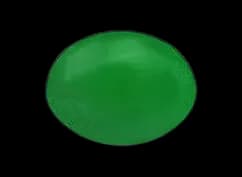
Imperial Jade
Imperial Jade is the finest color variety of jadeite, prized for its vivid emerald-green color, exceptional translucency, fine texture, and remarkable toughness.
Imperial Jade refers to the finest-quality green jadeite, distinguished by a vivid, saturated emerald-green color, strong translucency, and a fine, even texture. Jadeite belongs to the pyroxene mineral group and has the chemical formula NaAlSi2O6. Its interlocking microscopic crystals give jadeite exceptional toughness despite a Mohs hardness of 6.5 to 7. Imperial Jade is a metamorphic material formed under high-pressure geological conditions, particularly in environments associated with subduction zones. Myanmar is historically the most important source of fine-quality jadeite, and Burmese material has played a major role in the international jade trade. The finest Imperial Jade can appear almost transparent with a pure, penetrating green color. Slight bluish or yellowish green can occur, but the most prized material has strong saturation without an obvious gray component. Texture and transparency are equally important: fine-grained material with a smooth appearance and excellent translucency is especially desirable. Unlike many faceted gemstones, jadeite is commonly fashioned into cabochons, beads, bangles, rings, pendants, carvings, and other solid forms that showcase its color and texture. Jade has a long cultural history in China and across East and Southeast Asia, where it has been valued for artistry, craftsmanship, ceremonial objects, and personal adornment. Famous historic jadeite jewelry includes exceptional Burmese jadeite bangles and bead necklaces that have achieved extraordinary prices in the international collector market. Buyers value natural Imperial Jade for its rarity, distinctive color, toughness, craftsmanship, and cultural history. The term Imperial Jade is a quality and trade description rather than a separate mineral species, so a laboratory report is particularly important when a piece is represented as fine Imperial Jade.
- Mineral Family
- Jade
- Chemical Formula
- NaAlSi2O6
- Mohs Hardness
- 6.5 - 7
- Refractive Index
- 1.666 - 1.680
- Specific Gravity
- 3.34
- Cleavage
- Two directions, approximately 87° apart
- Crystal System
- Monoclinic
- Luster
- Greasy
- Color Range
- Green
When buying Imperial Jade, evaluate the complete combination of color, transparency, texture, clarity, size, workmanship, origin, and treatment rather than relying on color alone. Color is the most important quality factor. Look for an intense, even emerald-green color with strong saturation and minimal gray or brown overtones. Transparency is also critical: the finest Imperial Jade is highly translucent and can approach an almost transparent appearance. Fine texture creates a smooth, refined visual surface and is generally more desirable than coarse-grained material. Clarity should be considered together with texture and transparency because fractures can significantly affect value. Cut and craftsmanship are especially important because jadeite is commonly shaped into cabochons, bangles, beads, carvings, and hololiths rather than traditionally faceted. Examine symmetry, proportions, polish, surface condition, and the way the color is distributed through the piece. Carat weight is less informative than it is for faceted gemstones because jadeite is commonly valued and sold by the individual piece; size still matters, but exceptional color and transparency can make a smaller piece far more valuable than a larger lower-quality one. Origin can influence market value, with Myanmar being particularly important for fine Imperial Jadeite, but origin should be supported by laboratory evidence rather than assumed from appearance. Treatment disclosure is essential. In the jade trade, Type A generally refers to natural jadeite that has received no treatment other than traditional surface waxing; Type B refers to acid-bleached and polymer-impregnated jadeite; and Type C refers to dyed jadeite. Combination treatments may also occur. Natural Imperial Jade should not be confused with treated jadeite merely because both look attractive. Laboratory-grown or synthetic jadeite has been produced experimentally, but it is not a mainstream commercial counterpart to natural Imperial Jade; buyers should request clear disclosure if a seller offers any laboratory-grown material. Imitations and other materials can also resemble jadeite. For valuable purchases, obtain an independent report from a respected gemological laboratory confirming that the material is jadeite and documenting any detectable treatment. Authenticity cannot be reliably established by simple home tests alone. Price depends primarily on color quality, transparency, texture, clarity, size, craftsmanship, treatment status, and supporting laboratory documentation. Exceptional untreated Imperial Jadeite can command very high prices, making professional certification particularly important.
Imperial Jade is tough and suitable for many forms of jewelry, but its hardness is lower than that of sapphire or diamond, so it can still be scratched. Clean Imperial Jade with lukewarm water, mild soap, and a soft cloth or soft brush. Rinse thoroughly and dry with a soft cloth. Avoid harsh chemicals, strong solvents, abrasive cleaners, and prolonged exposure to high heat. Ultrasonic and steam cleaning should be avoided, particularly when treatment status is uncertain or when the piece contains fractures, polymer impregnation, or other enhancements. Store Imperial Jade separately from harder gemstones to prevent surface scratches, ideally in a soft pouch or lined jewelry compartment. Bangles and rings can be worn regularly because jadeite is exceptionally tough, but avoid hard impacts against countertops, metal surfaces, and other objects. Treated jadeite requires additional caution because bleaching, polymer impregnation, or dyeing can affect durability and long-term appearance. If the treatment status of valuable Imperial Jade jewelry is unknown, professional assessment before intensive cleaning or repair is recommended.
Imperial Jade refers to the finest-quality green jadeite, distinguished by a vivid, saturated emerald-green color, strong translucency, and a fine, even texture. Jadeite belongs to the pyroxene mineral group and has the chemical formula NaAlSi2O6. Its interlocking microscopic crystals give jadeite exceptional toughness despite a Mohs hardness of 6.5 to 7. Imperial Jade is a metamorphic material formed under high-pressure geological conditions, particularly in environments associated with subduction zones. Myanmar is historically the most important source of fine-quality jadeite, and Burmese material has played a major role in the international jade trade. The finest Imperial Jade can appear almost transparent with a pure, penetrating green color. Slight bluish or yellowish green can occur, but the most prized material has strong saturation without an obvious gray component. Texture and transparency are equally important: fine-grained material with a smooth appearance and excellent translucency is especially desirable. Unlike many faceted gemstones, jadeite is commonly fashioned into cabochons, beads, bangles, rings, pendants, carvings, and other solid forms that showcase its color and texture. Jade has a long cultural history in China and across East and Southeast Asia, where it has been valued for artistry, craftsmanship, ceremonial objects, and personal adornment. Famous historic jadeite jewelry includes exceptional Burmese jadeite bangles and bead necklaces that have achieved extraordinary prices in the international collector market. Buyers value natural Imperial Jade for its rarity, distinctive color, toughness, craftsmanship, and cultural history. The term Imperial Jade is a quality and trade description rather than a separate mineral species, so a laboratory report is particularly important when a piece is represented as fine Imperial Jade.
- Mineral Family
- Jade
- Chemical Formula
- NaAlSi2O6
- Mohs Hardness
- 6.5 - 7
- Refractive Index
- 1.666 - 1.680
- Specific Gravity
- 3.34
- Cleavage
- Two directions, approximately 87° apart
- Crystal System
- Monoclinic
- Luster
- Greasy
- Color Range
- Green
When buying Imperial Jade, evaluate the complete combination of color, transparency, texture, clarity, size, workmanship, origin, and treatment rather than relying on color alone. Color is the most important quality factor. Look for an intense, even emerald-green color with strong saturation and minimal gray or brown overtones. Transparency is also critical: the finest Imperial Jade is highly translucent and can approach an almost transparent appearance. Fine texture creates a smooth, refined visual surface and is generally more desirable than coarse-grained material. Clarity should be considered together with texture and transparency because fractures can significantly affect value. Cut and craftsmanship are especially important because jadeite is commonly shaped into cabochons, bangles, beads, carvings, and hololiths rather than traditionally faceted. Examine symmetry, proportions, polish, surface condition, and the way the color is distributed through the piece. Carat weight is less informative than it is for faceted gemstones because jadeite is commonly valued and sold by the individual piece; size still matters, but exceptional color and transparency can make a smaller piece far more valuable than a larger lower-quality one. Origin can influence market value, with Myanmar being particularly important for fine Imperial Jadeite, but origin should be supported by laboratory evidence rather than assumed from appearance. Treatment disclosure is essential. In the jade trade, Type A generally refers to natural jadeite that has received no treatment other than traditional surface waxing; Type B refers to acid-bleached and polymer-impregnated jadeite; and Type C refers to dyed jadeite. Combination treatments may also occur. Natural Imperial Jade should not be confused with treated jadeite merely because both look attractive. Laboratory-grown or synthetic jadeite has been produced experimentally, but it is not a mainstream commercial counterpart to natural Imperial Jade; buyers should request clear disclosure if a seller offers any laboratory-grown material. Imitations and other materials can also resemble jadeite. For valuable purchases, obtain an independent report from a respected gemological laboratory confirming that the material is jadeite and documenting any detectable treatment. Authenticity cannot be reliably established by simple home tests alone. Price depends primarily on color quality, transparency, texture, clarity, size, craftsmanship, treatment status, and supporting laboratory documentation. Exceptional untreated Imperial Jadeite can command very high prices, making professional certification particularly important.
Imperial Jade is tough and suitable for many forms of jewelry, but its hardness is lower than that of sapphire or diamond, so it can still be scratched. Clean Imperial Jade with lukewarm water, mild soap, and a soft cloth or soft brush. Rinse thoroughly and dry with a soft cloth. Avoid harsh chemicals, strong solvents, abrasive cleaners, and prolonged exposure to high heat. Ultrasonic and steam cleaning should be avoided, particularly when treatment status is uncertain or when the piece contains fractures, polymer impregnation, or other enhancements. Store Imperial Jade separately from harder gemstones to prevent surface scratches, ideally in a soft pouch or lined jewelry compartment. Bangles and rings can be worn regularly because jadeite is exceptionally tough, but avoid hard impacts against countertops, metal surfaces, and other objects. Treated jadeite requires additional caution because bleaching, polymer impregnation, or dyeing can affect durability and long-term appearance. If the treatment status of valuable Imperial Jade jewelry is unknown, professional assessment before intensive cleaning or repair is recommended.
Imperial Jade for Sale
No gems found
Try broadening your search or adjusting your filters.
Have a gem of your own? List it free - no fees