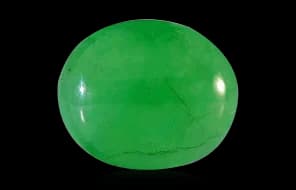
Jadeite
Jadeite is a prized jade variety known for exceptional toughness, rich color and fine texture, with vivid green material among the most valuable for jewelry and carving.
Jadeite is a pyroxene mineral and one of the two minerals traditionally known as jade, the other being nephrite. Unlike nephrite, jadeite is a sodium aluminium silicate with the chemical formula NaAlSi2O6 and crystallizes in the monoclinic system. Natural jadeite commonly occurs as a fine-grained aggregate rather than as large, well-formed individual crystals. It has a Mohs hardness of 6.5 to 7, a specific gravity of about 3.34 and a refractive index generally around 1.666 to 1.680. Its luster can range from vitreous to greasy, while its exceptional toughness makes it highly resistant to breaking and chipping. Jadeite occurs in green, white, lavender, orange, yellow, black, pink and other hues. Green is the most commercially important color, particularly highly transparent, vivid green material known as imperial jadeite. Lavender jadeite is also especially sought after, while blue jadeite from Guatemala is a notable variety. Important jadeite sources include Myanmar, Guatemala, Japan and Russia, with Myanmar remaining the most important source of fine-quality jadeite. Jade has been worked by human cultures for thousands of years into tools, ornaments, carvings and jewelry, with particularly strong historical importance in China and other parts of East Asia. Today, jadeite is fashioned into bangles, beads, cabochons, pendants, earrings, rings and intricate carvings. Buyers value fine jadeite for its color, translucency, texture, craftsmanship, toughness and rarity. The term Jadeite meaning is therefore best understood in a modern jewelry and cultural context rather than as a claim of supernatural properties.
- Mineral Family
- Jade
- Chemical Formula
- NaAlSi2O6
- Mohs Hardness
- 6.5 - 7
- Refractive Index
- 1.666 - 1.680
- Specific Gravity
- 3.34
- Cleavage
- Good in two directions
- Crystal System
- Monoclinic
- Luster
- Vitreous
- Color Range
- Green, White, Orange, Yellow, Black, Pink, Cyan
When buying natural Jadeite, evaluate the material as a complete combination of color, transparency, texture, craftsmanship, size and treatment status rather than relying on a single characteristic. Color is usually the most important value factor. Vivid, evenly distributed green with attractive transparency is particularly prized, while lavender, orange, yellow, white and black jadeite can also be highly desirable. Transparency ranges from opaque to semi-transparent, and finer jadeite commonly shows better translucency. Texture is equally important: a fine, even-grained structure and smooth, high-quality polish can significantly increase appeal. Jadeite is often fashioned as cabochons, beads, bangles and carvings rather than traditional faceted gems, so symmetry, proportions, thickness, polish and workmanship should be examined carefully. Jadeite is commonly sold by the piece, especially in the jade trade, and small differences in size can have a substantial effect on the value of exceptional material. Origin can contribute to desirability, but it should not replace an assessment of the actual gem quality. Treatment disclosure is essential. In the trade classification commonly used for jadeite, A jade refers to natural or traditionally waxed material, B jade refers to jadeite that has been bleached and impregnated with a substance such as polymer or wax, and C jade refers to dyed material. Combinations can also occur. Because treatment can materially affect durability and value, buyers should request independent laboratory testing for significant purchases. A reputable gemological report can identify jadeite, document detectable treatments and help distinguish it from imitations or other jade materials. There is no single reliable visual test for authenticity, so high-value natural Jadeite should be evaluated by a qualified gemologist or independent laboratory. When comparing Jadeite prices, consider color, transparency, texture, size, workmanship, origin where reliably established, treatment status, rarity and laboratory documentation rather than using a fixed price-per-carat rule.
Jadeite is tough and well suited to jewelry, but its 6.5 to 7 Mohs hardness means it can still be scratched by harder materials. For routine cleaning, use warm water, mild soap and a soft cloth or soft brush, then rinse and dry thoroughly. Store Jadeite jewelry separately from harder gemstones and abrasive metal surfaces to reduce scratching. Bangles and carved pieces are tough, but avoid unnecessary impacts and prolonged exposure to high heat. Heat from a jeweler's torch can damage jadeite, and treated jadeite may require additional care. Avoid harsh chemicals, strong acids and unverified cleaning solutions. Ultrasonic and steam cleaning should not be assumed safe for treated jadeite; warm soapy water is the safest general approach when treatment status is unknown. For valuable or treated pieces, follow the care recommendations provided by the independent gemological laboratory or a qualified jeweler.
Jadeite is a pyroxene mineral and one of the two minerals traditionally known as jade, the other being nephrite. Unlike nephrite, jadeite is a sodium aluminium silicate with the chemical formula NaAlSi2O6 and crystallizes in the monoclinic system. Natural jadeite commonly occurs as a fine-grained aggregate rather than as large, well-formed individual crystals. It has a Mohs hardness of 6.5 to 7, a specific gravity of about 3.34 and a refractive index generally around 1.666 to 1.680. Its luster can range from vitreous to greasy, while its exceptional toughness makes it highly resistant to breaking and chipping. Jadeite occurs in green, white, lavender, orange, yellow, black, pink and other hues. Green is the most commercially important color, particularly highly transparent, vivid green material known as imperial jadeite. Lavender jadeite is also especially sought after, while blue jadeite from Guatemala is a notable variety. Important jadeite sources include Myanmar, Guatemala, Japan and Russia, with Myanmar remaining the most important source of fine-quality jadeite. Jade has been worked by human cultures for thousands of years into tools, ornaments, carvings and jewelry, with particularly strong historical importance in China and other parts of East Asia. Today, jadeite is fashioned into bangles, beads, cabochons, pendants, earrings, rings and intricate carvings. Buyers value fine jadeite for its color, translucency, texture, craftsmanship, toughness and rarity. The term Jadeite meaning is therefore best understood in a modern jewelry and cultural context rather than as a claim of supernatural properties.
- Mineral Family
- Jade
- Chemical Formula
- NaAlSi2O6
- Mohs Hardness
- 6.5 - 7
- Refractive Index
- 1.666 - 1.680
- Specific Gravity
- 3.34
- Cleavage
- Good in two directions
- Crystal System
- Monoclinic
- Luster
- Vitreous
- Color Range
- Green, White, Orange, Yellow, Black, Pink, Cyan
When buying natural Jadeite, evaluate the material as a complete combination of color, transparency, texture, craftsmanship, size and treatment status rather than relying on a single characteristic. Color is usually the most important value factor. Vivid, evenly distributed green with attractive transparency is particularly prized, while lavender, orange, yellow, white and black jadeite can also be highly desirable. Transparency ranges from opaque to semi-transparent, and finer jadeite commonly shows better translucency. Texture is equally important: a fine, even-grained structure and smooth, high-quality polish can significantly increase appeal. Jadeite is often fashioned as cabochons, beads, bangles and carvings rather than traditional faceted gems, so symmetry, proportions, thickness, polish and workmanship should be examined carefully. Jadeite is commonly sold by the piece, especially in the jade trade, and small differences in size can have a substantial effect on the value of exceptional material. Origin can contribute to desirability, but it should not replace an assessment of the actual gem quality. Treatment disclosure is essential. In the trade classification commonly used for jadeite, A jade refers to natural or traditionally waxed material, B jade refers to jadeite that has been bleached and impregnated with a substance such as polymer or wax, and C jade refers to dyed material. Combinations can also occur. Because treatment can materially affect durability and value, buyers should request independent laboratory testing for significant purchases. A reputable gemological report can identify jadeite, document detectable treatments and help distinguish it from imitations or other jade materials. There is no single reliable visual test for authenticity, so high-value natural Jadeite should be evaluated by a qualified gemologist or independent laboratory. When comparing Jadeite prices, consider color, transparency, texture, size, workmanship, origin where reliably established, treatment status, rarity and laboratory documentation rather than using a fixed price-per-carat rule.
Jadeite is tough and well suited to jewelry, but its 6.5 to 7 Mohs hardness means it can still be scratched by harder materials. For routine cleaning, use warm water, mild soap and a soft cloth or soft brush, then rinse and dry thoroughly. Store Jadeite jewelry separately from harder gemstones and abrasive metal surfaces to reduce scratching. Bangles and carved pieces are tough, but avoid unnecessary impacts and prolonged exposure to high heat. Heat from a jeweler's torch can damage jadeite, and treated jadeite may require additional care. Avoid harsh chemicals, strong acids and unverified cleaning solutions. Ultrasonic and steam cleaning should not be assumed safe for treated jadeite; warm soapy water is the safest general approach when treatment status is unknown. For valuable or treated pieces, follow the care recommendations provided by the independent gemological laboratory or a qualified jeweler.
Jadeite for Sale
No gems found
Try broadening your search or adjusting your filters.
Have a gem of your own? List it free - no fees