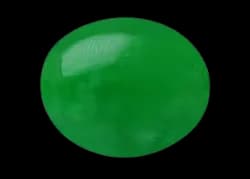
Green Jade
Green jade is prized for its rich color, exceptional toughness, fine texture, and enduring appeal in jewelry, carvings, bangles, and collectible pieces.
Green jade is a treasured gem material valued for its distinctive color, smooth texture, toughness, and remarkable carving potential. Importantly, jade is not a single mineral: the name primarily refers to jadeite and nephrite, with certain green omphacite materials also recognized as jade. Jadeite is a pyroxene mineral with the formula NaAlSi2O6, while nephrite is a fine-grained aggregate composed mainly of tremolite-actinolite amphiboles. Their interlocking microscopic structures give jade exceptional toughness even though its Mohs hardness is moderate compared with many transparent gemstones. Green is the most commercially prized jade color, particularly when the color is vivid, evenly distributed, and accompanied by good translucency and fine texture. The finest green jadeite is commonly described as imperial jade. Green jade can range from pale and muted greens to intense, saturated greens, with variations created by trace elements, mineral composition, texture, and the way light interacts with the material. Jade forms in metamorphic geological environments. Jadeite commonly forms in high-pressure, relatively low-temperature settings associated with subduction zones, while nephrite forms through metamorphic processes involving amphibole-rich rocks. Major jade sources and historic traditions include Myanmar, China, Guatemala, Japan, Russia, Canada, New Zealand, and other localities. Jade has an exceptionally long human history, having been shaped into tools, ornaments, carvings, and ceremonial objects for thousands of years. Its toughness made it particularly useful to early cultures, while its beauty and workability later established it as an important material for fine carving and jewelry. Today, natural green jade is used in rings, pendants, earrings, bracelets, bangles, cabochons, beads, and sculptural carvings. Buyers value it for its combination of saturated color, tactile texture, toughness, craftsmanship, provenance, and scarcity. Because the term jade can describe different materials and qualities, buyers should identify whether a piece is jadeite or nephrite and confirm any treatments before purchasing.
- Mineral Family
- Jade
- Chemical Formula
- NaAlSi2O6, Ca2(Mg,Fe)5Si8O22(OH)2
- Mohs Hardness
- 6.5 - 7, 6.0 - 6.5
- Refractive Index
- 1.666 - 1.680, 1.606 - 1.632
- Specific Gravity
- 3.34 - 2.95
- Cleavage
- Good cleavage in two directions or perfect amphibole cleavage
- Crystal System
- Monoclinic
- Luster
- Greasy
- Color Range
- Green
When buying green jade gemstone, evaluate the material as a whole rather than relying on carat weight alone. Color is one of the most important value factors. For high-quality green jadeite, buyers generally look for strong, attractive green color with good saturation and even distribution. Exceptional vivid green jadeite with fine texture and good translucency can command very high prices. Clarity in jade is assessed differently from transparent faceted gemstones. Fine texture, translucency, surface quality, and the absence of distracting fractures or undesirable inclusions are particularly important. Cut is also unusual because jade is commonly fashioned into cabochons, beads, bangles, plaques, and carvings rather than traditional faceted gems. In carved jade, proportions, symmetry, polish, material usage, and craftsmanship can strongly affect value. Carat weight should not be treated as the primary pricing measure because jadeite is often sold and valued by the individual piece, especially for important carvings and bangles. Origin can influence desirability and price, but geographic origin should be supported by reliable documentation rather than assumed from appearance alone. Treatments require special attention. Jade may be treated to alter color, improve apparent clarity, or enhance durability. Common commercial classifications include untreated material and treated material, and buyers should ask specifically about dyeing, bleaching, impregnation, polymer treatment, or other enhancements when relevant. Natural jadeite and nephrite are distinct from laboratory-grown synthetic materials and from simulants such as serpentine, glass, and other green materials. A reputable independent gemological laboratory report can help establish identity and disclose significant treatments. For expensive green jade, certification is strongly recommended. Authenticity should be assessed through professional gemological testing rather than simple visual checks or informal tests. When you buy green jade online, choose a seller that clearly states whether the material is jadeite or nephrite, describes treatments, provides detailed photographs, offers a reasonable return policy, and can supply an independent laboratory report for higher-value pieces. Price depends on the combination of color, translucency, texture, material quality, treatment status, size, craftsmanship, provenance, and market demand.
Green jade is exceptionally tough, making it well suited to jewelry and carved objects, but it can still be scratched, fractured, or damaged by harsh treatment. For routine cleaning, use lukewarm water, a small amount of mild soap, and a soft cloth or soft brush. Rinse thoroughly and dry with a clean, soft cloth. Avoid abrasive cleaners, strong chemicals, and rough brushes that may damage the polished surface or affect treated material. Although jade is tough, repeated impacts against hard surfaces can still cause fractures or chips, particularly around thin edges, drilled holes, or carved details. Remove jade jewelry before activities where it may receive strong knocks or abrasion. Keep individual pieces separated in a soft pouch or lined jewelry compartment to prevent contact with harder gemstones and metal components. Avoid unnecessary exposure to high heat, sudden temperature changes, and prolonged contact with chemicals such as household cleaners, cosmetics, and perfumes. Treated jade may require additional precautions, so always follow the care instructions associated with the specific piece. With gentle cleaning, sensible storage, and protection from impact and harsh chemicals, natural green jade can retain its polished surface and distinctive color for many years.
Green jade is a treasured gem material valued for its distinctive color, smooth texture, toughness, and remarkable carving potential. Importantly, jade is not a single mineral: the name primarily refers to jadeite and nephrite, with certain green omphacite materials also recognized as jade. Jadeite is a pyroxene mineral with the formula NaAlSi2O6, while nephrite is a fine-grained aggregate composed mainly of tremolite-actinolite amphiboles. Their interlocking microscopic structures give jade exceptional toughness even though its Mohs hardness is moderate compared with many transparent gemstones. Green is the most commercially prized jade color, particularly when the color is vivid, evenly distributed, and accompanied by good translucency and fine texture. The finest green jadeite is commonly described as imperial jade. Green jade can range from pale and muted greens to intense, saturated greens, with variations created by trace elements, mineral composition, texture, and the way light interacts with the material. Jade forms in metamorphic geological environments. Jadeite commonly forms in high-pressure, relatively low-temperature settings associated with subduction zones, while nephrite forms through metamorphic processes involving amphibole-rich rocks. Major jade sources and historic traditions include Myanmar, China, Guatemala, Japan, Russia, Canada, New Zealand, and other localities. Jade has an exceptionally long human history, having been shaped into tools, ornaments, carvings, and ceremonial objects for thousands of years. Its toughness made it particularly useful to early cultures, while its beauty and workability later established it as an important material for fine carving and jewelry. Today, natural green jade is used in rings, pendants, earrings, bracelets, bangles, cabochons, beads, and sculptural carvings. Buyers value it for its combination of saturated color, tactile texture, toughness, craftsmanship, provenance, and scarcity. Because the term jade can describe different materials and qualities, buyers should identify whether a piece is jadeite or nephrite and confirm any treatments before purchasing.
- Mineral Family
- Jade
- Chemical Formula
- NaAlSi2O6, Ca2(Mg,Fe)5Si8O22(OH)2
- Mohs Hardness
- 6.5 - 7, 6.0 - 6.5
- Refractive Index
- 1.666 - 1.680, 1.606 - 1.632
- Specific Gravity
- 3.34 - 2.95
- Cleavage
- Good cleavage in two directions or perfect amphibole cleavage
- Crystal System
- Monoclinic
- Luster
- Greasy
- Color Range
- Green
When buying green jade gemstone, evaluate the material as a whole rather than relying on carat weight alone. Color is one of the most important value factors. For high-quality green jadeite, buyers generally look for strong, attractive green color with good saturation and even distribution. Exceptional vivid green jadeite with fine texture and good translucency can command very high prices. Clarity in jade is assessed differently from transparent faceted gemstones. Fine texture, translucency, surface quality, and the absence of distracting fractures or undesirable inclusions are particularly important. Cut is also unusual because jade is commonly fashioned into cabochons, beads, bangles, plaques, and carvings rather than traditional faceted gems. In carved jade, proportions, symmetry, polish, material usage, and craftsmanship can strongly affect value. Carat weight should not be treated as the primary pricing measure because jadeite is often sold and valued by the individual piece, especially for important carvings and bangles. Origin can influence desirability and price, but geographic origin should be supported by reliable documentation rather than assumed from appearance alone. Treatments require special attention. Jade may be treated to alter color, improve apparent clarity, or enhance durability. Common commercial classifications include untreated material and treated material, and buyers should ask specifically about dyeing, bleaching, impregnation, polymer treatment, or other enhancements when relevant. Natural jadeite and nephrite are distinct from laboratory-grown synthetic materials and from simulants such as serpentine, glass, and other green materials. A reputable independent gemological laboratory report can help establish identity and disclose significant treatments. For expensive green jade, certification is strongly recommended. Authenticity should be assessed through professional gemological testing rather than simple visual checks or informal tests. When you buy green jade online, choose a seller that clearly states whether the material is jadeite or nephrite, describes treatments, provides detailed photographs, offers a reasonable return policy, and can supply an independent laboratory report for higher-value pieces. Price depends on the combination of color, translucency, texture, material quality, treatment status, size, craftsmanship, provenance, and market demand.
Green jade is exceptionally tough, making it well suited to jewelry and carved objects, but it can still be scratched, fractured, or damaged by harsh treatment. For routine cleaning, use lukewarm water, a small amount of mild soap, and a soft cloth or soft brush. Rinse thoroughly and dry with a clean, soft cloth. Avoid abrasive cleaners, strong chemicals, and rough brushes that may damage the polished surface or affect treated material. Although jade is tough, repeated impacts against hard surfaces can still cause fractures or chips, particularly around thin edges, drilled holes, or carved details. Remove jade jewelry before activities where it may receive strong knocks or abrasion. Keep individual pieces separated in a soft pouch or lined jewelry compartment to prevent contact with harder gemstones and metal components. Avoid unnecessary exposure to high heat, sudden temperature changes, and prolonged contact with chemicals such as household cleaners, cosmetics, and perfumes. Treated jade may require additional precautions, so always follow the care instructions associated with the specific piece. With gentle cleaning, sensible storage, and protection from impact and harsh chemicals, natural green jade can retain its polished surface and distinctive color for many years.
Green Jade for Sale
No gems found
Try broadening your search or adjusting your filters.
Have a gem of your own? List it free - no fees