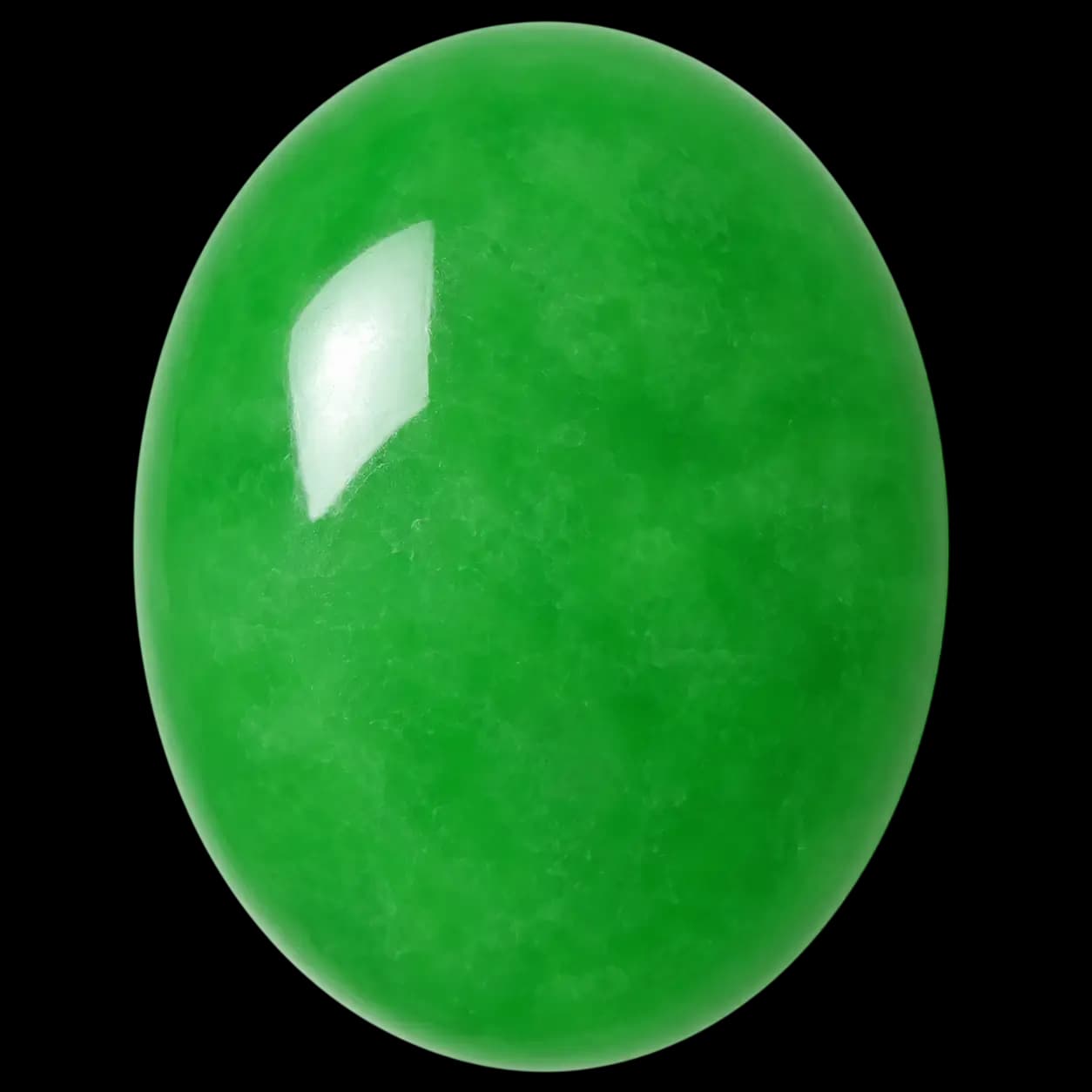
Jade
Jade is a timeless gemstone admired for its smooth texture, rich colors, and cultural heritage. From fine jewelry to collectible carvings, natural Jade remains a treasured gem worldwide.
Jade is a highly valued gemstone known for its exceptional toughness, beautiful colors, and centuries of craftsmanship. The name Jade refers to two different minerals: jadeite and nephrite. Jadeite is the rarer and more valuable variety, while nephrite is more commonly found and widely used in jewelry and carvings.
Jadeite belongs to the pyroxene mineral group and has the chemical composition NaAlSi2O6. Nephrite is a variety of amphibole with the composition Ca2(Mg,Fe)5Si8O22(OH)2. These minerals form through geological processes involving high pressure and metamorphic conditions over millions of years.
The most famous variety is imperial jadeite, recognized for its vivid emerald-green color and fine translucency. However, Jade is also found in attractive shades including lavender, white, yellow, orange, black, and various green tones. The finest jade displays even color distribution, excellent texture, and a smooth, glowing appearance.
Myanmar is the world's most important source of high-quality jadeite, especially the exceptional imperial green variety. Other significant sources of jade include China, Guatemala, Russia, Canada, and the United States. Jade has played an important role in Chinese art, sculpture, and jewelry for thousands of years, where master artisans created intricate carvings, ornaments, and ceremonial objects.
Today, natural Jade gemstone is popular in rings, bracelets, pendants, earrings, and collector pieces. Buyers value Jade for its unique appearance, durability, artistic significance, and rarity. Whether used in modern jewelry designs or traditional creations, Jade continues to represent refined craftsmanship and timeless elegance.
- Mineral Family
- Jade
- Chemical Formula
- NaAlSi2O6 / Ca2(Mg,Fe)5Si8O22(OH)2
- Mohs Hardness
- 6 - 7
- Refractive Index
- 1.645 - 1.667 / 1.600 - 1.640
- Specific Gravity
- 3.30 - 3.38 / 2.90 - 3.10
- Cleavage
- None
- Crystal System
- Monoclinic
- Luster
- Waxy
- Color Range
- Green, White, Yellow, Purple, Black, Orange
Buying a natural Jade gemstone requires understanding quality factors that influence beauty, rarity, and value.
Color: Color is one of the most important factors in Jade evaluation. Imperial green jadeite with strong saturation, even distribution, and good translucency is among the most valuable. Other desirable colors include lavender, white, yellow, and fine-quality green shades.
Clarity and Texture: Unlike transparent gemstones, Jade is valued for its texture and translucency. Premium Jade has a fine-grained structure, smooth appearance, and a soft glowing effect. Visible cracks, uneven texture, or excessive cloudiness may reduce value.
Cut and Craftsmanship: Jade is commonly shaped into cabochons, beads, bangles, and artistic carvings rather than faceted cuts. Expert carving and polishing can significantly enhance the beauty and desirability of a piece.
Carat and Size: Jade is often sold by the piece rather than strictly by carat. Larger pieces with exceptional color, quality, and craftsmanship are especially rare and valuable.
Origin: Myanmar jadeite is highly sought after, particularly for premium-quality imperial jade. However, origin alone does not determine value; quality characteristics remain the most important factors.
Treatments: Jade may undergo treatments such as dyeing, bleaching, or polymer impregnation to improve appearance. Untreated natural Jade generally commands higher value and should be accurately disclosed.
Natural vs Lab-Grown: Natural Jade is formed through geological processes, while laboratory-created materials may imitate its appearance. Buyers should request detailed information about authenticity and any treatments.
Certification: A reputable gemological certificate can confirm jade type, treatment status, and authenticity. Professional reports from recognized gemological laboratories provide confidence when purchasing valuable Jade jewelry.
Price Factors: Jade gemstone prices vary widely depending on mineral type, color quality, translucency, size, craftsmanship, origin, and treatment status.
Jade is a durable gemstone suitable for many jewelry styles, but proper care helps maintain its beauty for generations.
Clean Jade jewelry using lukewarm water, mild soap, and a soft cloth. Gently remove dirt and oils, then dry completely with a microfiber cloth.
Avoid ultrasonic and steam cleaners, especially for treated Jade, as heat and vibration may affect the stone or its treatments.
Store Jade separately from harder gemstones such as diamonds to prevent surface scratches. Keep pieces in a soft-lined jewelry box or pouch when not being worn.
Avoid exposing Jade jewelry to harsh chemicals, household cleaners, perfumes, and prolonged heat. Remove Jade pieces before activities that may cause strong impacts or accidental damage.
Regularly inspect settings in Jade rings and pendants to ensure the stone remains secure. Professional cleaning and inspection can help preserve valuable Jade jewelry.
Jade is a highly valued gemstone known for its exceptional toughness, beautiful colors, and centuries of craftsmanship. The name Jade refers to two different minerals: jadeite and nephrite. Jadeite is the rarer and more valuable variety, while nephrite is more commonly found and widely used in jewelry and carvings.
Jadeite belongs to the pyroxene mineral group and has the chemical composition NaAlSi2O6. Nephrite is a variety of amphibole with the composition Ca2(Mg,Fe)5Si8O22(OH)2. These minerals form through geological processes involving high pressure and metamorphic conditions over millions of years.
The most famous variety is imperial jadeite, recognized for its vivid emerald-green color and fine translucency. However, Jade is also found in attractive shades including lavender, white, yellow, orange, black, and various green tones. The finest jade displays even color distribution, excellent texture, and a smooth, glowing appearance.
Myanmar is the world's most important source of high-quality jadeite, especially the exceptional imperial green variety. Other significant sources of jade include China, Guatemala, Russia, Canada, and the United States. Jade has played an important role in Chinese art, sculpture, and jewelry for thousands of years, where master artisans created intricate carvings, ornaments, and ceremonial objects.
Today, natural Jade gemstone is popular in rings, bracelets, pendants, earrings, and collector pieces. Buyers value Jade for its unique appearance, durability, artistic significance, and rarity. Whether used in modern jewelry designs or traditional creations, Jade continues to represent refined craftsmanship and timeless elegance.
- Mineral Family
- Jade
- Chemical Formula
- NaAlSi2O6 / Ca2(Mg,Fe)5Si8O22(OH)2
- Mohs Hardness
- 6 - 7
- Refractive Index
- 1.645 - 1.667 / 1.600 - 1.640
- Specific Gravity
- 3.30 - 3.38 / 2.90 - 3.10
- Cleavage
- None
- Crystal System
- Monoclinic
- Luster
- Waxy
- Color Range
- Green, White, Yellow, Purple, Black, Orange
Buying a natural Jade gemstone requires understanding quality factors that influence beauty, rarity, and value.
Color: Color is one of the most important factors in Jade evaluation. Imperial green jadeite with strong saturation, even distribution, and good translucency is among the most valuable. Other desirable colors include lavender, white, yellow, and fine-quality green shades.
Clarity and Texture: Unlike transparent gemstones, Jade is valued for its texture and translucency. Premium Jade has a fine-grained structure, smooth appearance, and a soft glowing effect. Visible cracks, uneven texture, or excessive cloudiness may reduce value.
Cut and Craftsmanship: Jade is commonly shaped into cabochons, beads, bangles, and artistic carvings rather than faceted cuts. Expert carving and polishing can significantly enhance the beauty and desirability of a piece.
Carat and Size: Jade is often sold by the piece rather than strictly by carat. Larger pieces with exceptional color, quality, and craftsmanship are especially rare and valuable.
Origin: Myanmar jadeite is highly sought after, particularly for premium-quality imperial jade. However, origin alone does not determine value; quality characteristics remain the most important factors.
Treatments: Jade may undergo treatments such as dyeing, bleaching, or polymer impregnation to improve appearance. Untreated natural Jade generally commands higher value and should be accurately disclosed.
Natural vs Lab-Grown: Natural Jade is formed through geological processes, while laboratory-created materials may imitate its appearance. Buyers should request detailed information about authenticity and any treatments.
Certification: A reputable gemological certificate can confirm jade type, treatment status, and authenticity. Professional reports from recognized gemological laboratories provide confidence when purchasing valuable Jade jewelry.
Price Factors: Jade gemstone prices vary widely depending on mineral type, color quality, translucency, size, craftsmanship, origin, and treatment status.
Jade is a durable gemstone suitable for many jewelry styles, but proper care helps maintain its beauty for generations.
Clean Jade jewelry using lukewarm water, mild soap, and a soft cloth. Gently remove dirt and oils, then dry completely with a microfiber cloth.
Avoid ultrasonic and steam cleaners, especially for treated Jade, as heat and vibration may affect the stone or its treatments.
Store Jade separately from harder gemstones such as diamonds to prevent surface scratches. Keep pieces in a soft-lined jewelry box or pouch when not being worn.
Avoid exposing Jade jewelry to harsh chemicals, household cleaners, perfumes, and prolonged heat. Remove Jade pieces before activities that may cause strong impacts or accidental damage.
Regularly inspect settings in Jade rings and pendants to ensure the stone remains secure. Professional cleaning and inspection can help preserve valuable Jade jewelry.
Jade for Sale
No gems found
Try broadening your search or adjusting your filters.
Have a gem of your own? List it free - no fees