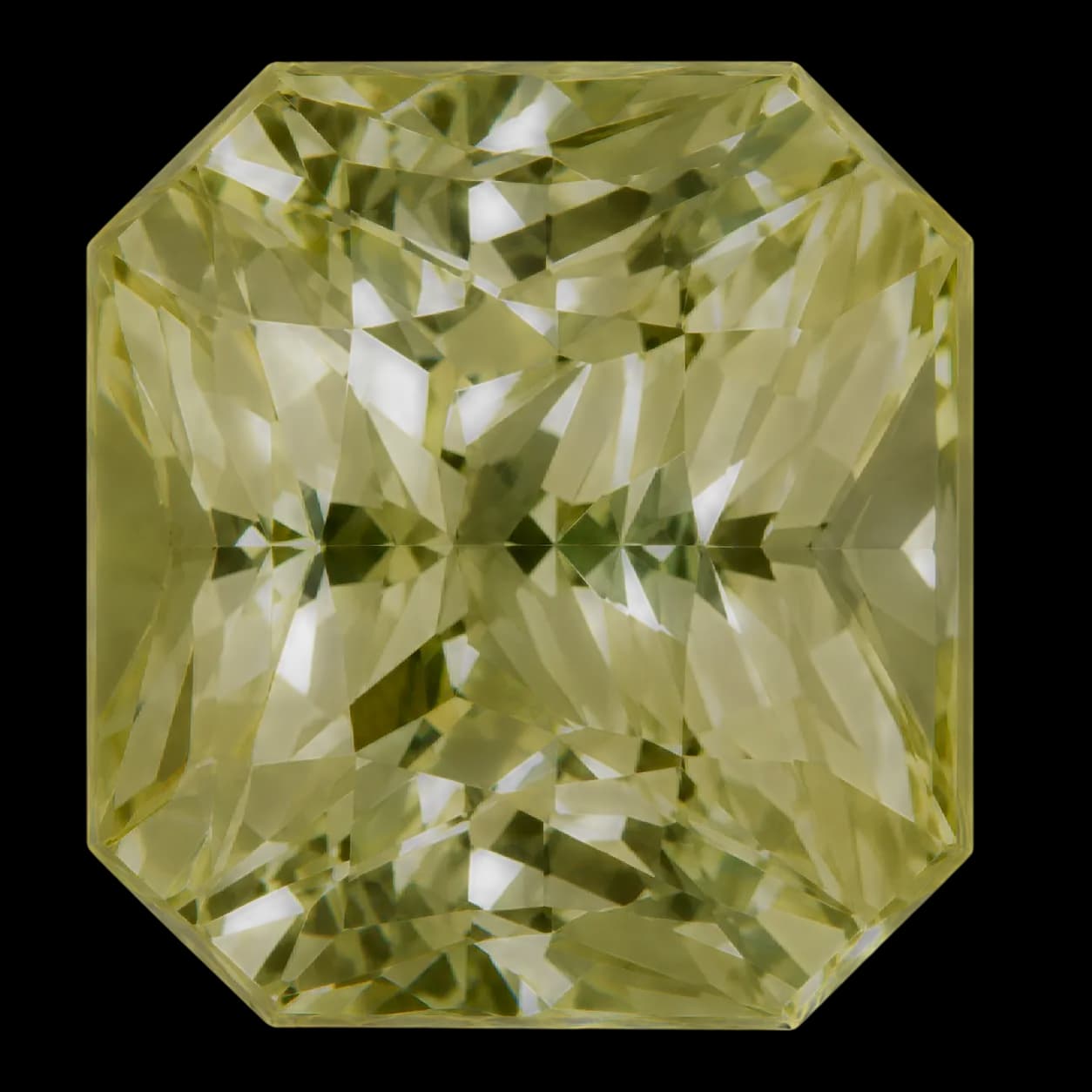
Chrysoberyl
Natural Chrysoberyl is a durable and highly prized gemstone admired for its exceptional brilliance, rarity, and unique varieties including Alexandrite and Cat's Eye, making it an outstanding choice for collectors and fine jewelry.
Chrysoberyl is a rare beryllium aluminium oxide gemstone renowned for its remarkable durability, bright luster, and excellent optical qualities. Although its name resembles beryl, Chrysoberyl belongs to an entirely different mineral group. The name originates from the Greek words 'chrysos' meaning golden and 'beryllos', referring to its commonly occurring golden-yellow appearance.
This gemstone forms under high-temperature geological conditions in pegmatites and metamorphic rocks and is often recovered from alluvial deposits after weathering. Its chemical formula is BeAl2O4, and its impressive Mohs hardness of 8.5 makes it one of the hardest natural gemstones suitable for everyday jewelry.
Natural Chrysoberyl occurs in yellow, greenish-yellow, olive green, brownish-yellow, and grayish shades. Two extraordinary varieties have earned worldwide recognition. Alexandrite displays a dramatic color-change effect from greenish tones in daylight to reddish or purplish hues under incandescent light. Cat's Eye Chrysoberyl, also known as Cymophane, exhibits a sharp chatoyancy effect resembling the eye of a cat when properly cut as a cabochon.
Important sources include Sri Lanka, Brazil, Madagascar, Tanzania, Zimbabwe, Russia, India, Myanmar, and parts of East Africa. Russian Alexandrite and Sri Lankan Cat's Eye Chrysoberyl are especially valued by collectors.
Because of its rarity, durability, excellent brilliance, and unique optical phenomena, Chrysoberyl remains one of the world's most desirable collector gemstones and an elegant choice for rings, pendants, earrings, bracelets, and bespoke jewelry.
- Mineral Family
- Chrysoberyl
- Chemical Formula
- BeAl2O4
- Mohs Hardness
- 8.5
- Refractive Index
- 1.746 - 1.755
- Specific Gravity
- 3.70 - 3.78
- Cleavage
- Distinct in one direction
- Crystal System
- Orthorhombic
- Luster
- Vitreous
- Color Range
- Yellow, Green, Gray
When buying Chrysoberyl, color is the most important quality factor. Bright yellow, greenish-yellow, golden, and vivid green stones with strong saturation are generally the most desirable. Alexandrite is valued primarily for a distinct color-change effect, while Cat's Eye Chrysoberyl commands premium prices when it displays a sharp, centered, well-defined eye.
Clarity is another important consideration. Transparent faceted Chrysoberyl should have minimal visible inclusions, although minor natural inclusions are common. For Cat's Eye stones, fine parallel inclusions are essential because they produce the chatoyancy phenomenon.
The cut should maximize brilliance or optical effects. Faceted cuts such as oval, cushion, emerald, and round are common for transparent Chrysoberyl, while Cat's Eye gemstones should always be cut into smooth cabochons.
Larger gemstones with excellent color and clarity become increasingly rare and valuable. Origin can also influence value, particularly for Russian Alexandrite, Sri Lankan Cat's Eye, and fine Brazilian material.
Most Chrysoberyl is untreated, making untreated natural specimens especially attractive to collectors. Always request disclosure of any enhancements if present. Lab-grown Chrysoberyl exists but remains uncommon in the jewelry market. Buyers seeking long-term value should choose natural Chrysoberyl accompanied by certification from respected gemological laboratories such as GIA, IGI, GRS, SSEF, Gübelin, or AGL.
Always verify authenticity through an independent laboratory report, especially when purchasing high-value Alexandrite or Cat's Eye Chrysoberyl online.
Chrysoberyl is highly durable and well suited for regular wear, but proper care helps preserve its beauty for generations. Clean the gemstone using warm water, mild soap, and a soft brush before drying it with a lint-free cloth.
Avoid prolonged exposure to harsh chemicals, strong acids, bleach, or sudden temperature changes. Store Chrysoberyl separately from softer gemstones to prevent scratches, preferably inside a fabric-lined jewelry box or individual pouch. While most Chrysoberyl can tolerate normal daily wear, removing jewelry during heavy manual work or sports helps minimize accidental impacts and preserves the setting.
Chrysoberyl is a rare beryllium aluminium oxide gemstone renowned for its remarkable durability, bright luster, and excellent optical qualities. Although its name resembles beryl, Chrysoberyl belongs to an entirely different mineral group. The name originates from the Greek words 'chrysos' meaning golden and 'beryllos', referring to its commonly occurring golden-yellow appearance.
This gemstone forms under high-temperature geological conditions in pegmatites and metamorphic rocks and is often recovered from alluvial deposits after weathering. Its chemical formula is BeAl2O4, and its impressive Mohs hardness of 8.5 makes it one of the hardest natural gemstones suitable for everyday jewelry.
Natural Chrysoberyl occurs in yellow, greenish-yellow, olive green, brownish-yellow, and grayish shades. Two extraordinary varieties have earned worldwide recognition. Alexandrite displays a dramatic color-change effect from greenish tones in daylight to reddish or purplish hues under incandescent light. Cat's Eye Chrysoberyl, also known as Cymophane, exhibits a sharp chatoyancy effect resembling the eye of a cat when properly cut as a cabochon.
Important sources include Sri Lanka, Brazil, Madagascar, Tanzania, Zimbabwe, Russia, India, Myanmar, and parts of East Africa. Russian Alexandrite and Sri Lankan Cat's Eye Chrysoberyl are especially valued by collectors.
Because of its rarity, durability, excellent brilliance, and unique optical phenomena, Chrysoberyl remains one of the world's most desirable collector gemstones and an elegant choice for rings, pendants, earrings, bracelets, and bespoke jewelry.
- Mineral Family
- Chrysoberyl
- Chemical Formula
- BeAl2O4
- Mohs Hardness
- 8.5
- Refractive Index
- 1.746 - 1.755
- Specific Gravity
- 3.70 - 3.78
- Cleavage
- Distinct in one direction
- Crystal System
- Orthorhombic
- Luster
- Vitreous
- Color Range
- Yellow, Green, Gray
When buying Chrysoberyl, color is the most important quality factor. Bright yellow, greenish-yellow, golden, and vivid green stones with strong saturation are generally the most desirable. Alexandrite is valued primarily for a distinct color-change effect, while Cat's Eye Chrysoberyl commands premium prices when it displays a sharp, centered, well-defined eye.
Clarity is another important consideration. Transparent faceted Chrysoberyl should have minimal visible inclusions, although minor natural inclusions are common. For Cat's Eye stones, fine parallel inclusions are essential because they produce the chatoyancy phenomenon.
The cut should maximize brilliance or optical effects. Faceted cuts such as oval, cushion, emerald, and round are common for transparent Chrysoberyl, while Cat's Eye gemstones should always be cut into smooth cabochons.
Larger gemstones with excellent color and clarity become increasingly rare and valuable. Origin can also influence value, particularly for Russian Alexandrite, Sri Lankan Cat's Eye, and fine Brazilian material.
Most Chrysoberyl is untreated, making untreated natural specimens especially attractive to collectors. Always request disclosure of any enhancements if present. Lab-grown Chrysoberyl exists but remains uncommon in the jewelry market. Buyers seeking long-term value should choose natural Chrysoberyl accompanied by certification from respected gemological laboratories such as GIA, IGI, GRS, SSEF, Gübelin, or AGL.
Always verify authenticity through an independent laboratory report, especially when purchasing high-value Alexandrite or Cat's Eye Chrysoberyl online.
Chrysoberyl is highly durable and well suited for regular wear, but proper care helps preserve its beauty for generations. Clean the gemstone using warm water, mild soap, and a soft brush before drying it with a lint-free cloth.
Avoid prolonged exposure to harsh chemicals, strong acids, bleach, or sudden temperature changes. Store Chrysoberyl separately from softer gemstones to prevent scratches, preferably inside a fabric-lined jewelry box or individual pouch. While most Chrysoberyl can tolerate normal daily wear, removing jewelry during heavy manual work or sports helps minimize accidental impacts and preserves the setting.
Chrysoberyl for Sale
No gems found
Try broadening your search or adjusting your filters.
Have a gem of your own? List it free - no fees