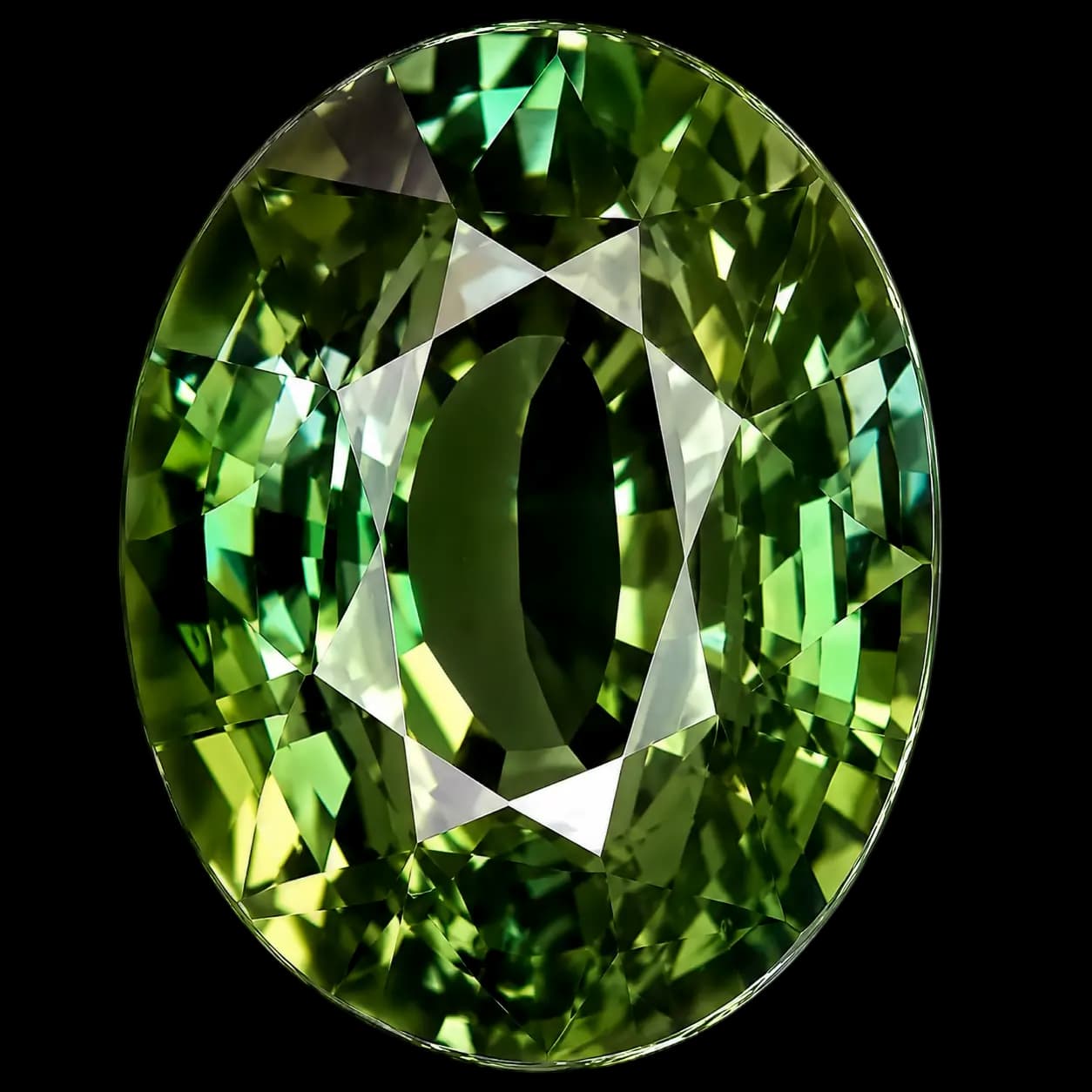
Alexandrite
Natural Alexandrite is one of the world's rarest gemstones, celebrated for its remarkable colour change from green in daylight to red or purplish-red under warm light, making it a prized choice for fine jewellery and collectors.
Alexandrite is an exceptionally rare variety of chrysoberyl admired for its dramatic colour-change phenomenon, often described as 'emerald by day, ruby by night.' This optical effect is caused by trace amounts of chromium within the crystal structure, which selectively absorbs different wavelengths of light. Chemically composed of beryllium aluminium oxide (BeAl2O4), Alexandrite crystallizes in the orthorhombic system and has an impressive Mohs hardness of 8.5, making it suitable for everyday jewellery with reasonable care. Fine Alexandrite displays vivid green, bluish-green, or teal hues in daylight that transform into red, purplish-red, or raspberry tones under incandescent lighting. Stones showing a strong and distinct colour change command the highest value. The gemstone was first discovered in Russia's Ural Mountains during the 1830s and named after the future Tsar Alexander II. While Russian material remains legendary, natural Alexandrite is also mined in Sri Lanka, Brazil, Tanzania, Madagascar, India, Zimbabwe, and Myanmar. Today, Alexandrite is highly sought after by collectors and luxury jewellery buyers because of its rarity, durability, fascinating optical properties, and limited natural supply. It is also recognized as one of the official birthstones for June and is traditionally associated with the 55th wedding anniversary.
- Mineral Family
- Chrysoberyl
- Chemical Formula
- BeAl2O4
- Mohs Hardness
- 8.5
- Refractive Index
- 1.741 - 1.760
- Specific Gravity
- 3.70 - 3.78
- Cleavage
- No distinct or easy cleavage
- Crystal System
- Orthorhombic
- Luster
- Vitreous
- Color Range
- Green, Red, Purple
The most important quality factor when purchasing Alexandrite is the strength and attractiveness of its colour change. Premium stones display a vivid green or bluish-green appearance in daylight and a rich red or purplish-red appearance under incandescent light. Colour change approaching 100% is exceptionally rare and highly valuable. Clarity is also important, although minor natural inclusions are expected because Alexandrite belongs to the Type II clarity category. Well-cut stones maximize brilliance while showcasing the colour change evenly from multiple viewing angles. Larger natural Alexandrite gemstones become exponentially rarer as carat weight increases, causing prices to rise significantly above one carat. Origin may influence value, with historical Russian stones being especially desirable, while fine gems from Brazil and Sri Lanka are also highly respected. Natural Alexandrite may occasionally receive clarity enhancement, but untreated stones are generally preferred. Lab-grown Alexandrite offers the same chemical composition and optical behaviour but differs greatly in rarity and market value. Always request an independent laboratory certificate from respected gemological laboratories such as GIA, IGI, AGL, GRS or SSEF when purchasing valuable Alexandrite. Certification confirms whether the gemstone is natural or laboratory-grown and discloses any treatments, giving buyers greater confidence. When planning to buy Alexandrite online, choose reputable sellers who provide high-quality photographs under multiple lighting conditions, detailed gem specifications, and transparent return policies.
Alexandrite is highly durable and suitable for rings, pendants, earrings, and bracelets. Clean the gemstone using warm water, mild soap, and a soft brush before rinsing thoroughly and drying with a lint-free cloth. Store Alexandrite separately from other jewellery to prevent scratches, preferably inside a soft pouch or fabric-lined jewellery box. Although resistant to everyday wear, avoid sudden impacts, harsh chemicals, bleach, and abrasive household cleaners. Remove Alexandrite jewellery before heavy manual work, sports, or gardening to preserve its polish and secure settings. Periodically inspect jewellery settings, especially rings worn daily, to ensure the gemstone remains safely mounted.
Alexandrite is an exceptionally rare variety of chrysoberyl admired for its dramatic colour-change phenomenon, often described as 'emerald by day, ruby by night.' This optical effect is caused by trace amounts of chromium within the crystal structure, which selectively absorbs different wavelengths of light. Chemically composed of beryllium aluminium oxide (BeAl2O4), Alexandrite crystallizes in the orthorhombic system and has an impressive Mohs hardness of 8.5, making it suitable for everyday jewellery with reasonable care. Fine Alexandrite displays vivid green, bluish-green, or teal hues in daylight that transform into red, purplish-red, or raspberry tones under incandescent lighting. Stones showing a strong and distinct colour change command the highest value. The gemstone was first discovered in Russia's Ural Mountains during the 1830s and named after the future Tsar Alexander II. While Russian material remains legendary, natural Alexandrite is also mined in Sri Lanka, Brazil, Tanzania, Madagascar, India, Zimbabwe, and Myanmar. Today, Alexandrite is highly sought after by collectors and luxury jewellery buyers because of its rarity, durability, fascinating optical properties, and limited natural supply. It is also recognized as one of the official birthstones for June and is traditionally associated with the 55th wedding anniversary.
- Mineral Family
- Chrysoberyl
- Chemical Formula
- BeAl2O4
- Mohs Hardness
- 8.5
- Refractive Index
- 1.741 - 1.760
- Specific Gravity
- 3.70 - 3.78
- Cleavage
- No distinct or easy cleavage
- Crystal System
- Orthorhombic
- Luster
- Vitreous
- Color Range
- Green, Red, Purple
The most important quality factor when purchasing Alexandrite is the strength and attractiveness of its colour change. Premium stones display a vivid green or bluish-green appearance in daylight and a rich red or purplish-red appearance under incandescent light. Colour change approaching 100% is exceptionally rare and highly valuable. Clarity is also important, although minor natural inclusions are expected because Alexandrite belongs to the Type II clarity category. Well-cut stones maximize brilliance while showcasing the colour change evenly from multiple viewing angles. Larger natural Alexandrite gemstones become exponentially rarer as carat weight increases, causing prices to rise significantly above one carat. Origin may influence value, with historical Russian stones being especially desirable, while fine gems from Brazil and Sri Lanka are also highly respected. Natural Alexandrite may occasionally receive clarity enhancement, but untreated stones are generally preferred. Lab-grown Alexandrite offers the same chemical composition and optical behaviour but differs greatly in rarity and market value. Always request an independent laboratory certificate from respected gemological laboratories such as GIA, IGI, AGL, GRS or SSEF when purchasing valuable Alexandrite. Certification confirms whether the gemstone is natural or laboratory-grown and discloses any treatments, giving buyers greater confidence. When planning to buy Alexandrite online, choose reputable sellers who provide high-quality photographs under multiple lighting conditions, detailed gem specifications, and transparent return policies.
Alexandrite is highly durable and suitable for rings, pendants, earrings, and bracelets. Clean the gemstone using warm water, mild soap, and a soft brush before rinsing thoroughly and drying with a lint-free cloth. Store Alexandrite separately from other jewellery to prevent scratches, preferably inside a soft pouch or fabric-lined jewellery box. Although resistant to everyday wear, avoid sudden impacts, harsh chemicals, bleach, and abrasive household cleaners. Remove Alexandrite jewellery before heavy manual work, sports, or gardening to preserve its polish and secure settings. Periodically inspect jewellery settings, especially rings worn daily, to ensure the gemstone remains safely mounted.
Alexandrite for Sale
No gems found
Try broadening your search or adjusting your filters.
Have a gem of your own? List it free - no fees