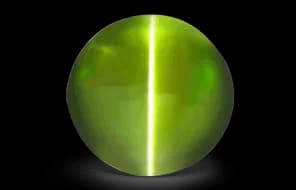
Alexandrite Cats Eye
Alexandrite Cats Eye is an exceptionally rare chrysoberyl that combines dramatic color change with a sharp cat’s-eye effect, making it prized for fine jewelry and collections.
Alexandrite Cats Eye is a rare phenomenal variety of chrysoberyl that displays two remarkable optical effects: alexandrite color change and chatoyancy, commonly called the cat’s-eye effect. Alexandrite is the color-change variety of chrysoberyl, while the cat’s-eye effect occurs when fine, parallel inclusions reflect light into a distinct band across a suitably cut cabochon. When both phenomena occur in one natural stone, the result is exceptionally scarce and highly collectible.
Chrysoberyl is a beryllium aluminum oxide mineral with the chemical formula BeAl₂O₄ and an orthorhombic crystal system. It has a Mohs hardness of 8.5, a refractive index of approximately 1.746–1.755, a specific gravity of about 3.73, vitreous luster, and no cleavage. These properties give Alexandrite Cats Eye good durability for jewelry when properly cut and set.
The most recognizable feature is its color change under different light sources. Fine alexandrite can appear green to bluish green in daylight or fluorescent illumination and shift toward red, purplish red, or related reddish tones under incandescent lighting. The strength and quality of this color change can vary considerably. The cat’s-eye effect is created by oriented needle-like or fibrous inclusions, with rutile documented in natural cat’s-eye alexandrite. The stone is generally fashioned as a cabochon so the reflected band can move across the curved surface.
Alexandrite was first discovered in Russia’s Ural Mountains in the 1830s. Historic Russian material is particularly famous, while modern alexandrite is also found in locations including Sri Lanka, Brazil, and East Africa. Sri Lankan stones can be relatively large, while Brazilian and East African material can produce attractive color-change qualities. Fine natural material with both strong color change and distinct chatoyancy is exceptionally difficult to find.
For jewelry, Alexandrite Cats Eye is especially suited to statement rings, pendants, earrings, and collector pieces. Its hardness and lack of cleavage make chrysoberyl a durable choice, although the exposed dome of a cabochon should still be protected from severe impact. Buyers value this gemstone for the combination of rarity, optical phenomena, durability, and individuality that makes every fine natural stone distinctive.
- Mineral Family
- Chrysoberyl
- Chemical Formula
- BeAl₂O₄
- Mohs Hardness
- 8.5
- Refractive Index
- 1.746 - 1.755
- Specific Gravity
- 3.73
- Cleavage
- None
- Crystal System
- Orthorhombic
- Luster
- Vitreous
- Color Range
- Green, Blue, Red, Purple
When buying Alexandrite Cats Eye, evaluate the stone as a phenomenal gemstone rather than relying only on conventional color and clarity grades. The most important factors are color-change quality, cat’s-eye sharpness, body color, clarity, cut, carat weight, origin, and whether the stone is natural or laboratory-grown.
Color: Fine alexandrite commonly shows green to bluish green in daylight and red to purplish red under incandescent light. Strong, attractive colors and a clearly visible change generally increase desirability. For Alexandrite Cats Eye, assess the body color together with both optical phenomena under appropriate lighting conditions.
Color change: The strength and character of the color transition are major value factors. Compare the gemstone under daylight or equivalent illumination and incandescent light rather than judging it under only one light source. A strong and attractive transition is generally more desirable than a weak or muddy change.
Cat’s-eye effect: Look for a single, sharp, continuous band that moves smoothly across the dome when the stone or light is moved. A well-defined eye is highly desirable. Uneven, broken, diffuse, or weak chatoyancy can reduce visual appeal. The effect depends on the orientation and concentration of internal inclusions and the quality of the cabochon cut.
Clarity: Unlike many transparent alexandrites, cat’s-eye alexandrite requires specific inclusions to create chatoyancy. Fine parallel needles or fibers can produce the optical effect. Clarity should therefore be assessed in relation to the strength and quality of the eye rather than simply seeking an inclusion-free stone.
Cut: Alexandrite Cats Eye is typically fashioned as an oval or round cabochon. The cutter must orient the stone carefully so the internal inclusions produce the strongest possible eye across the dome. A well-proportioned, smoothly polished dome can improve the appearance and optical performance of the gemstone.
Carat: Fine Alexandrite Cats Eye becomes increasingly rare as size increases. Carat weight should always be considered alongside color change, chatoyancy, clarity, cut quality, and overall beauty. A smaller stone with exceptional optical effects can be more desirable than a larger stone with weak phenomena.
Origin: Historic Russian alexandrite is highly regarded, while important modern sources include Sri Lanka, Brazil, and East Africa. Origin can influence value, but it should not automatically be treated as a guarantee of superior quality. Laboratory determination of geographic origin can be useful when origin carries a significant premium.
Natural vs laboratory-grown: Natural Alexandrite Cats Eye is exceptionally rare. Laboratory-grown alexandrite can have similar chemical and optical characteristics but is manufactured rather than naturally formed. The seller should clearly disclose whether a stone is natural, laboratory-grown, treated, or an imitation.
Certification and authenticity: For a valuable stone, an independent gemological laboratory report can help confirm species, natural or laboratory-grown status, detectable treatments, and, where available, geographic origin. Buyers should compare the report with the actual gemstone and purchase from a reputable seller with clear disclosure and return policies.
Price factors: Alexandrite Cats Eye prices can vary substantially. The strongest influences are natural status, color-change strength, quality of the cat’s-eye effect, color quality, clarity, cut, carat weight, origin, treatment status, and laboratory documentation. Avoid judging value from carat weight alone.
Alexandrite Cats Eye has a Mohs hardness of 8.5 and no cleavage, making it relatively durable for jewelry. Clean the gemstone gently with warm water, mild soap, and a soft brush or lint-free cloth. Rinse thoroughly and dry with a soft cloth.
For everyday jewelry, avoid hard impacts against metal, stone surfaces, or other jewelry, particularly because the raised cabochon dome can be exposed to knocks. Remove the gemstone before strenuous activities, heavy manual work, or situations where it could be scratched or struck.
Avoid harsh chemicals, abrasive cleaners, and prolonged exposure to high heat unless a qualified jeweler or gemologist confirms that the stone and its setting can safely tolerate them. Ultrasonic or steam cleaning should be avoided when the stone contains significant inclusions or when treatment status is uncertain.
Store Alexandrite Cats Eye separately from softer gemstones and jewelry to reduce scratching. A fabric-lined compartment or individual soft pouch is ideal. Keep the gemstone away from strong household chemicals and inspect its setting periodically to ensure the cabochon remains secure.
Alexandrite Cats Eye is a rare phenomenal variety of chrysoberyl that displays two remarkable optical effects: alexandrite color change and chatoyancy, commonly called the cat’s-eye effect. Alexandrite is the color-change variety of chrysoberyl, while the cat’s-eye effect occurs when fine, parallel inclusions reflect light into a distinct band across a suitably cut cabochon. When both phenomena occur in one natural stone, the result is exceptionally scarce and highly collectible.
Chrysoberyl is a beryllium aluminum oxide mineral with the chemical formula BeAl₂O₄ and an orthorhombic crystal system. It has a Mohs hardness of 8.5, a refractive index of approximately 1.746–1.755, a specific gravity of about 3.73, vitreous luster, and no cleavage. These properties give Alexandrite Cats Eye good durability for jewelry when properly cut and set.
The most recognizable feature is its color change under different light sources. Fine alexandrite can appear green to bluish green in daylight or fluorescent illumination and shift toward red, purplish red, or related reddish tones under incandescent lighting. The strength and quality of this color change can vary considerably. The cat’s-eye effect is created by oriented needle-like or fibrous inclusions, with rutile documented in natural cat’s-eye alexandrite. The stone is generally fashioned as a cabochon so the reflected band can move across the curved surface.
Alexandrite was first discovered in Russia’s Ural Mountains in the 1830s. Historic Russian material is particularly famous, while modern alexandrite is also found in locations including Sri Lanka, Brazil, and East Africa. Sri Lankan stones can be relatively large, while Brazilian and East African material can produce attractive color-change qualities. Fine natural material with both strong color change and distinct chatoyancy is exceptionally difficult to find.
For jewelry, Alexandrite Cats Eye is especially suited to statement rings, pendants, earrings, and collector pieces. Its hardness and lack of cleavage make chrysoberyl a durable choice, although the exposed dome of a cabochon should still be protected from severe impact. Buyers value this gemstone for the combination of rarity, optical phenomena, durability, and individuality that makes every fine natural stone distinctive.
- Mineral Family
- Chrysoberyl
- Chemical Formula
- BeAl₂O₄
- Mohs Hardness
- 8.5
- Refractive Index
- 1.746 - 1.755
- Specific Gravity
- 3.73
- Cleavage
- None
- Crystal System
- Orthorhombic
- Luster
- Vitreous
- Color Range
- Green, Blue, Red, Purple
When buying Alexandrite Cats Eye, evaluate the stone as a phenomenal gemstone rather than relying only on conventional color and clarity grades. The most important factors are color-change quality, cat’s-eye sharpness, body color, clarity, cut, carat weight, origin, and whether the stone is natural or laboratory-grown.
Color: Fine alexandrite commonly shows green to bluish green in daylight and red to purplish red under incandescent light. Strong, attractive colors and a clearly visible change generally increase desirability. For Alexandrite Cats Eye, assess the body color together with both optical phenomena under appropriate lighting conditions.
Color change: The strength and character of the color transition are major value factors. Compare the gemstone under daylight or equivalent illumination and incandescent light rather than judging it under only one light source. A strong and attractive transition is generally more desirable than a weak or muddy change.
Cat’s-eye effect: Look for a single, sharp, continuous band that moves smoothly across the dome when the stone or light is moved. A well-defined eye is highly desirable. Uneven, broken, diffuse, or weak chatoyancy can reduce visual appeal. The effect depends on the orientation and concentration of internal inclusions and the quality of the cabochon cut.
Clarity: Unlike many transparent alexandrites, cat’s-eye alexandrite requires specific inclusions to create chatoyancy. Fine parallel needles or fibers can produce the optical effect. Clarity should therefore be assessed in relation to the strength and quality of the eye rather than simply seeking an inclusion-free stone.
Cut: Alexandrite Cats Eye is typically fashioned as an oval or round cabochon. The cutter must orient the stone carefully so the internal inclusions produce the strongest possible eye across the dome. A well-proportioned, smoothly polished dome can improve the appearance and optical performance of the gemstone.
Carat: Fine Alexandrite Cats Eye becomes increasingly rare as size increases. Carat weight should always be considered alongside color change, chatoyancy, clarity, cut quality, and overall beauty. A smaller stone with exceptional optical effects can be more desirable than a larger stone with weak phenomena.
Origin: Historic Russian alexandrite is highly regarded, while important modern sources include Sri Lanka, Brazil, and East Africa. Origin can influence value, but it should not automatically be treated as a guarantee of superior quality. Laboratory determination of geographic origin can be useful when origin carries a significant premium.
Natural vs laboratory-grown: Natural Alexandrite Cats Eye is exceptionally rare. Laboratory-grown alexandrite can have similar chemical and optical characteristics but is manufactured rather than naturally formed. The seller should clearly disclose whether a stone is natural, laboratory-grown, treated, or an imitation.
Certification and authenticity: For a valuable stone, an independent gemological laboratory report can help confirm species, natural or laboratory-grown status, detectable treatments, and, where available, geographic origin. Buyers should compare the report with the actual gemstone and purchase from a reputable seller with clear disclosure and return policies.
Price factors: Alexandrite Cats Eye prices can vary substantially. The strongest influences are natural status, color-change strength, quality of the cat’s-eye effect, color quality, clarity, cut, carat weight, origin, treatment status, and laboratory documentation. Avoid judging value from carat weight alone.
Alexandrite Cats Eye has a Mohs hardness of 8.5 and no cleavage, making it relatively durable for jewelry. Clean the gemstone gently with warm water, mild soap, and a soft brush or lint-free cloth. Rinse thoroughly and dry with a soft cloth.
For everyday jewelry, avoid hard impacts against metal, stone surfaces, or other jewelry, particularly because the raised cabochon dome can be exposed to knocks. Remove the gemstone before strenuous activities, heavy manual work, or situations where it could be scratched or struck.
Avoid harsh chemicals, abrasive cleaners, and prolonged exposure to high heat unless a qualified jeweler or gemologist confirms that the stone and its setting can safely tolerate them. Ultrasonic or steam cleaning should be avoided when the stone contains significant inclusions or when treatment status is uncertain.
Store Alexandrite Cats Eye separately from softer gemstones and jewelry to reduce scratching. A fabric-lined compartment or individual soft pouch is ideal. Keep the gemstone away from strong household chemicals and inspect its setting periodically to ensure the cabochon remains secure.
Alexandrite Cats Eye for Sale
No gems found
Try broadening your search or adjusting your filters.
Have a gem of your own? List it free - no fees