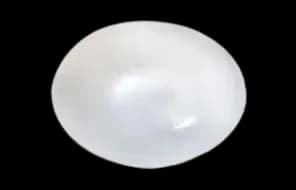
Ceylon Moonstone
Ceylon Moonstone is prized for its luminous blue adularescence, clear to white body, and Sri Lankan heritage, making it an elegant choice for distinctive jewelry and collectors.
Ceylon Moonstone is a gem-quality variety of feldspar traditionally associated with Sri Lanka, where fine material is especially valued for its attractive blue adularescence. In modern gemological terms, moonstone is primarily associated with orthoclase feldspar and its intergrowth with albite. Its characteristic glow occurs when light interacts with microscopic alternating layers within the feldspar, producing the floating sheen known as adularescence. The standard chemical composition of orthoclase moonstone is KAlSi3O8. Ceylon Moonstone commonly has a colorless to white body, sometimes with grayish tones, while the most desirable examples can display a vivid, mobile blue sheen. The blue effect is an optical phenomenon rather than the body color of the gemstone. Moonstone forms through geological processes involving feldspar-rich rocks, including pegmatitic environments. Sri Lanka is an important historical source, with Meetiyagoda in the south of the country being particularly famous for its moonstone deposits. The locality has been associated with blue-sheen moonstone for more than a century and remains an important part of Sri Lanka's gem-mining heritage. Fine Ceylon Moonstone is usually fashioned as a cabochon because the smooth, domed surface allows the adularescence to move visibly across the stone. Oval, round, cushion, pear and sugarloaf cabochons are popular, while transparent material may also be faceted. Moonstone has a long history in jewelry and decorative arts, and its distinctive appearance continues to appeal to contemporary designers. It works especially well in pendants, earrings, brooches and carefully protected rings, often paired with gold, silver, platinum or white-metal settings. Buyers value Ceylon Moonstone for the combination of Sri Lankan provenance, natural optical character, elegant neutral body color and the rarity of strong blue adularescence. In modern gemstone culture, the name may also carry symbolic associations with calmness, reflection and new beginnings, but these are cultural interpretations rather than scientific properties.
- Mineral Family
- Feldspar
- Chemical Formula
- KAlSi3O8
- Mohs Hardness
- 6.0 - 6.5
- Refractive Index
- 1.518 - 1.526
- Specific Gravity
- 2.58
- Cleavage
- Two directions
- Crystal System
- Monoclinic
- Luster
- Pearly
- Color Range
- White, Gray
When buying Ceylon Moonstone online, evaluate the gemstone as a combination of optical quality, clarity, cut, size, provenance and documentation rather than relying on the name alone. Color and adularescence: The most sought-after material generally has a near-colorless to white body with a strong, attractive blue sheen. The adularescence should be mobile, well centered and visible across a useful range of viewing angles. Clarity: Fine moonstone is often transparent to translucent and relatively free of inclusions that interfere with the sheen. Some natural inclusions and internal features are normal, but prominent cracks can affect both appearance and durability. Cut: A well-proportioned cabochon is the classic choice because it maximizes adularescence. A very flat cabochon may display a weaker effect, while a well-shaped dome can show the sheen more effectively. Carat: Larger stones with strong blue adularescence, good transparency and attractive proportions are less common and can command a premium. Compare quality rather than purchasing solely by carat weight. Origin: Sri Lanka, particularly the Meetiyagoda area, is strongly associated with fine blue-sheen moonstone. However, geographic origin should be supported by credible documentation when origin is important to the purchase. Treatments: Ask whether the stone has undergone any treatment intended to alter color, clarity or durability. Untreated natural material should be clearly described as such. Natural vs lab-grown: A natural Ceylon Moonstone should be a mined gemstone from Sri Lanka. Any synthetic, laboratory-grown or imitation material should be explicitly disclosed rather than presented simply as natural Ceylon Moonstone. Certification: For higher-value stones, consider an independent gemological report identifying the material and documenting relevant treatments. An origin opinion may be available from some laboratories when the evidence permits. Authenticity: Review sharp, natural photographs or videos from several angles, inspect the movement of the adularescence, request treatment and origin information, and buy from a seller with transparent product details and a clear return policy. Price factors: Value is influenced primarily by the strength and quality of adularescence, body color, transparency, clarity, cut, size, condition, provenance, treatment status, laboratory documentation and overall visual appeal. There is no reliable single price per carat for all Ceylon Moonstone.
Ceylon Moonstone requires more care than harder gemstones because it has a Mohs hardness of 6.0–6.5 and relatively poor toughness. Clean it gently with lukewarm water, mild soap and a soft cloth or very soft brush. Rinse thoroughly and dry with a soft cloth. Avoid ultrasonic and steam cleaners, which are not recommended for moonstone. Protect the gemstone from hard impacts because its cleavage can increase the risk of breakage. Avoid sudden temperature changes and high heat, which can cause fractures. Keep moonstone away from abrasive materials, harsh chemicals and prolonged contact with substances that could damage the surface. Store each piece separately in a soft pouch or lined compartment so it cannot be scratched by harder gemstones such as sapphire or diamond. For everyday jewelry, pendants and earrings are generally safer choices than rings because they receive fewer impacts. If wearing a Ceylon Moonstone ring, remove it before sports, heavy manual work, gardening or other activities where the stone could be struck. Apply perfumes, cosmetics and household chemicals before putting on the jewelry and wipe the piece gently after wear.
Ceylon Moonstone is a gem-quality variety of feldspar traditionally associated with Sri Lanka, where fine material is especially valued for its attractive blue adularescence. In modern gemological terms, moonstone is primarily associated with orthoclase feldspar and its intergrowth with albite. Its characteristic glow occurs when light interacts with microscopic alternating layers within the feldspar, producing the floating sheen known as adularescence. The standard chemical composition of orthoclase moonstone is KAlSi3O8. Ceylon Moonstone commonly has a colorless to white body, sometimes with grayish tones, while the most desirable examples can display a vivid, mobile blue sheen. The blue effect is an optical phenomenon rather than the body color of the gemstone. Moonstone forms through geological processes involving feldspar-rich rocks, including pegmatitic environments. Sri Lanka is an important historical source, with Meetiyagoda in the south of the country being particularly famous for its moonstone deposits. The locality has been associated with blue-sheen moonstone for more than a century and remains an important part of Sri Lanka's gem-mining heritage. Fine Ceylon Moonstone is usually fashioned as a cabochon because the smooth, domed surface allows the adularescence to move visibly across the stone. Oval, round, cushion, pear and sugarloaf cabochons are popular, while transparent material may also be faceted. Moonstone has a long history in jewelry and decorative arts, and its distinctive appearance continues to appeal to contemporary designers. It works especially well in pendants, earrings, brooches and carefully protected rings, often paired with gold, silver, platinum or white-metal settings. Buyers value Ceylon Moonstone for the combination of Sri Lankan provenance, natural optical character, elegant neutral body color and the rarity of strong blue adularescence. In modern gemstone culture, the name may also carry symbolic associations with calmness, reflection and new beginnings, but these are cultural interpretations rather than scientific properties.
- Mineral Family
- Feldspar
- Chemical Formula
- KAlSi3O8
- Mohs Hardness
- 6.0 - 6.5
- Refractive Index
- 1.518 - 1.526
- Specific Gravity
- 2.58
- Cleavage
- Two directions
- Crystal System
- Monoclinic
- Luster
- Pearly
- Color Range
- White, Gray
When buying Ceylon Moonstone online, evaluate the gemstone as a combination of optical quality, clarity, cut, size, provenance and documentation rather than relying on the name alone. Color and adularescence: The most sought-after material generally has a near-colorless to white body with a strong, attractive blue sheen. The adularescence should be mobile, well centered and visible across a useful range of viewing angles. Clarity: Fine moonstone is often transparent to translucent and relatively free of inclusions that interfere with the sheen. Some natural inclusions and internal features are normal, but prominent cracks can affect both appearance and durability. Cut: A well-proportioned cabochon is the classic choice because it maximizes adularescence. A very flat cabochon may display a weaker effect, while a well-shaped dome can show the sheen more effectively. Carat: Larger stones with strong blue adularescence, good transparency and attractive proportions are less common and can command a premium. Compare quality rather than purchasing solely by carat weight. Origin: Sri Lanka, particularly the Meetiyagoda area, is strongly associated with fine blue-sheen moonstone. However, geographic origin should be supported by credible documentation when origin is important to the purchase. Treatments: Ask whether the stone has undergone any treatment intended to alter color, clarity or durability. Untreated natural material should be clearly described as such. Natural vs lab-grown: A natural Ceylon Moonstone should be a mined gemstone from Sri Lanka. Any synthetic, laboratory-grown or imitation material should be explicitly disclosed rather than presented simply as natural Ceylon Moonstone. Certification: For higher-value stones, consider an independent gemological report identifying the material and documenting relevant treatments. An origin opinion may be available from some laboratories when the evidence permits. Authenticity: Review sharp, natural photographs or videos from several angles, inspect the movement of the adularescence, request treatment and origin information, and buy from a seller with transparent product details and a clear return policy. Price factors: Value is influenced primarily by the strength and quality of adularescence, body color, transparency, clarity, cut, size, condition, provenance, treatment status, laboratory documentation and overall visual appeal. There is no reliable single price per carat for all Ceylon Moonstone.
Ceylon Moonstone requires more care than harder gemstones because it has a Mohs hardness of 6.0–6.5 and relatively poor toughness. Clean it gently with lukewarm water, mild soap and a soft cloth or very soft brush. Rinse thoroughly and dry with a soft cloth. Avoid ultrasonic and steam cleaners, which are not recommended for moonstone. Protect the gemstone from hard impacts because its cleavage can increase the risk of breakage. Avoid sudden temperature changes and high heat, which can cause fractures. Keep moonstone away from abrasive materials, harsh chemicals and prolonged contact with substances that could damage the surface. Store each piece separately in a soft pouch or lined compartment so it cannot be scratched by harder gemstones such as sapphire or diamond. For everyday jewelry, pendants and earrings are generally safer choices than rings because they receive fewer impacts. If wearing a Ceylon Moonstone ring, remove it before sports, heavy manual work, gardening or other activities where the stone could be struck. Apply perfumes, cosmetics and household chemicals before putting on the jewelry and wipe the piece gently after wear.
Ceylon Moonstone for Sale
No gems found
Try broadening your search or adjusting your filters.
Have a gem of your own? List it free - no fees