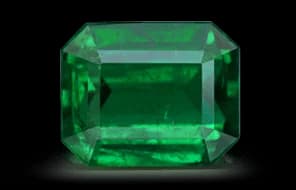
Zambian Emerald
Natural Zambian emeralds are prized for rich green to bluish-green color, distinctive character and strong jewelry appeal, making them a compelling choice for collectors and fine jewelry.
Zambian emerald is the green variety of beryl, a beryllium aluminum cyclosilicate mineral. Its chemical composition is Be₃Al₂Si₆O₁₈, and its hexagonal crystal structure is shared with other members of the beryl family. Emeralds from Zambia are particularly known for green to bluish-green hues, with some stones showing attractive saturated color and good transparency. Gemological studies of Zambian material show that its refractive index and specific gravity can be somewhat higher than typical emerald reference values, depending on the deposit. Color is produced primarily by trace elements such as chromium and vanadium, with iron also influencing appearance in some Zambian material. Zambian emeralds form through complex geological processes involving beryllium-rich fluids interacting with suitable host rocks. Important producing areas include the Kafubu emerald belt, where deposits such as Kagem and Kamakanga have yielded significant gem-quality material. Emerald has a long history as a prized gem, while Zambia has become one of the world's important modern emerald sources. Two celebrated Zambian crystals are Inkalamu, a 5,655-carat emerald discovered at Kagem in 2018, and Insofu, a remarkable 6,225-carat crystal reported from the same mine in 2020. In modern jewelry, Zambian emerald is used for rings, earrings, pendants, bracelets and statement pieces. Its rich color works beautifully with yellow gold, white gold and platinum. Buyers value Zambian emerald for the combination of saturated color, distinctive bluish-green tones, availability across a broad range of qualities and the rarity of fine, well-cut stones with strong transparency. Like other emeralds, natural Zambian material commonly contains inclusions and fractures, which are part of its natural character rather than evidence of poor quality by themselves.
- Mineral Family
- Beryl
- Chemical Formula
- Be₃Al₂Si₆O₁₈
- Mohs Hardness
- 7.5 - 8
- Refractive Index
- 1.577 - 1.583
- Specific Gravity
- 2.72
- Cleavage
- Indistinct
- Crystal System
- Hexagonal
- Luster
- Vitreous
- Color Range
- Green, Cyan
When buying a Zambian emerald gemstone, evaluate the complete combination of color, clarity, cut, carat weight, origin and treatment rather than relying on size alone. Color is usually the most important visual consideration. Look for attractive, well-saturated green to bluish-green hues with good brightness; extremely dark or overly gray stones can appear less lively. Clarity should be assessed in context because natural emeralds commonly contain inclusions and surface-reaching fractures. A stone with good transparency and an attractive inclusion pattern can be more desirable than an unusually clean stone with weak color. Cut should maximize color, brilliance and weight while protecting the gem from damage. Emerald cuts are traditional, but oval, cushion, pear and other shapes can also be attractive when properly proportioned. Carat weight affects price, but fine color, clarity, transparency and cut can have a much greater impact than size alone. Origin can add value when supported by a reputable laboratory report, but a Zambian origin should not automatically be treated as a quality grade. Treatment disclosure is essential. Emeralds are frequently clarity enhanced with oils, waxes or resins introduced into surface-reaching fractures, and the type and extent of enhancement can affect care requirements and value. Ask whether the stone is natural, treated or laboratory-grown. Natural emerald and laboratory-grown emerald are different materials in terms of origin, although synthetic emerald has essentially the same chemical and physical properties as natural emerald. Imitations may instead be glass, assembled materials or other substances. For higher-value purchases, request an independent laboratory report identifying the gemstone as emerald and, where relevant, documenting geographic origin and treatment. Certification does not replace careful inspection, but it provides important independent information. Authenticity should be established through professional gemological testing, especially for expensive stones or unusually clean material. Price depends on color, clarity, transparency, cut, carat weight, treatment, origin documentation and overall beauty. There is no reliable single price per carat for all Zambian emeralds, so compare stones of genuinely similar quality and disclosed treatment.
Zambian emerald jewelry should be cleaned gently with lukewarm water, mild soap and a soft brush. Rinse carefully and dry with a soft cloth. Because emerald commonly contains fractures and may have been clarity enhanced, avoid steam cleaners, ultrasonic cleaners and sudden temperature changes unless a qualified jeweler confirms they are safe for the specific stone. Avoid strong chemicals, solvents, acids, harsh detergents and prolonged exposure to heat. Perfume, cosmetics and household chemicals should be kept away from the gemstone. For daily wear, protective settings are preferable, particularly for rings that receive frequent impacts. Remove emerald jewelry before sports, heavy manual work, gardening or activities where the stone could be struck. Store each piece separately in a soft pouch or fabric-lined compartment to prevent contact with harder gemstones. If the emerald has been fracture-filled, ask your jeweler about the filler before cleaning, repairing or resetting the jewelry, as some treatments can be sensitive to heat and chemicals.
Zambian emerald is the green variety of beryl, a beryllium aluminum cyclosilicate mineral. Its chemical composition is Be₃Al₂Si₆O₁₈, and its hexagonal crystal structure is shared with other members of the beryl family. Emeralds from Zambia are particularly known for green to bluish-green hues, with some stones showing attractive saturated color and good transparency. Gemological studies of Zambian material show that its refractive index and specific gravity can be somewhat higher than typical emerald reference values, depending on the deposit. Color is produced primarily by trace elements such as chromium and vanadium, with iron also influencing appearance in some Zambian material. Zambian emeralds form through complex geological processes involving beryllium-rich fluids interacting with suitable host rocks. Important producing areas include the Kafubu emerald belt, where deposits such as Kagem and Kamakanga have yielded significant gem-quality material. Emerald has a long history as a prized gem, while Zambia has become one of the world's important modern emerald sources. Two celebrated Zambian crystals are Inkalamu, a 5,655-carat emerald discovered at Kagem in 2018, and Insofu, a remarkable 6,225-carat crystal reported from the same mine in 2020. In modern jewelry, Zambian emerald is used for rings, earrings, pendants, bracelets and statement pieces. Its rich color works beautifully with yellow gold, white gold and platinum. Buyers value Zambian emerald for the combination of saturated color, distinctive bluish-green tones, availability across a broad range of qualities and the rarity of fine, well-cut stones with strong transparency. Like other emeralds, natural Zambian material commonly contains inclusions and fractures, which are part of its natural character rather than evidence of poor quality by themselves.
- Mineral Family
- Beryl
- Chemical Formula
- Be₃Al₂Si₆O₁₈
- Mohs Hardness
- 7.5 - 8
- Refractive Index
- 1.577 - 1.583
- Specific Gravity
- 2.72
- Cleavage
- Indistinct
- Crystal System
- Hexagonal
- Luster
- Vitreous
- Color Range
- Green, Cyan
When buying a Zambian emerald gemstone, evaluate the complete combination of color, clarity, cut, carat weight, origin and treatment rather than relying on size alone. Color is usually the most important visual consideration. Look for attractive, well-saturated green to bluish-green hues with good brightness; extremely dark or overly gray stones can appear less lively. Clarity should be assessed in context because natural emeralds commonly contain inclusions and surface-reaching fractures. A stone with good transparency and an attractive inclusion pattern can be more desirable than an unusually clean stone with weak color. Cut should maximize color, brilliance and weight while protecting the gem from damage. Emerald cuts are traditional, but oval, cushion, pear and other shapes can also be attractive when properly proportioned. Carat weight affects price, but fine color, clarity, transparency and cut can have a much greater impact than size alone. Origin can add value when supported by a reputable laboratory report, but a Zambian origin should not automatically be treated as a quality grade. Treatment disclosure is essential. Emeralds are frequently clarity enhanced with oils, waxes or resins introduced into surface-reaching fractures, and the type and extent of enhancement can affect care requirements and value. Ask whether the stone is natural, treated or laboratory-grown. Natural emerald and laboratory-grown emerald are different materials in terms of origin, although synthetic emerald has essentially the same chemical and physical properties as natural emerald. Imitations may instead be glass, assembled materials or other substances. For higher-value purchases, request an independent laboratory report identifying the gemstone as emerald and, where relevant, documenting geographic origin and treatment. Certification does not replace careful inspection, but it provides important independent information. Authenticity should be established through professional gemological testing, especially for expensive stones or unusually clean material. Price depends on color, clarity, transparency, cut, carat weight, treatment, origin documentation and overall beauty. There is no reliable single price per carat for all Zambian emeralds, so compare stones of genuinely similar quality and disclosed treatment.
Zambian emerald jewelry should be cleaned gently with lukewarm water, mild soap and a soft brush. Rinse carefully and dry with a soft cloth. Because emerald commonly contains fractures and may have been clarity enhanced, avoid steam cleaners, ultrasonic cleaners and sudden temperature changes unless a qualified jeweler confirms they are safe for the specific stone. Avoid strong chemicals, solvents, acids, harsh detergents and prolonged exposure to heat. Perfume, cosmetics and household chemicals should be kept away from the gemstone. For daily wear, protective settings are preferable, particularly for rings that receive frequent impacts. Remove emerald jewelry before sports, heavy manual work, gardening or activities where the stone could be struck. Store each piece separately in a soft pouch or fabric-lined compartment to prevent contact with harder gemstones. If the emerald has been fracture-filled, ask your jeweler about the filler before cleaning, repairing or resetting the jewelry, as some treatments can be sensitive to heat and chemicals.
Zambian Emerald for Sale
No gems found
Try broadening your search or adjusting your filters.
Have a gem of your own? List it free - no fees