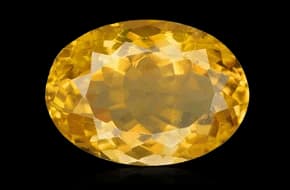
Yellow Beryl
Yellow beryl is a luminous beryl gemstone prized for its warm yellow to golden color, good durability, and elegant appeal in fine jewelry.
Yellow beryl is a yellow variety of the mineral beryl, the same mineral family that includes emerald, aquamarine and morganite. Its ideal chemical composition is Be3Al2(Si6O18), and it crystallizes in the hexagonal crystal system. Beryl typically forms in cavities and pockets of granitic pegmatites, where mineral-rich fluids allow crystals to grow over long periods. Yellow coloration can be associated with iron and other trace elements within the crystal structure. The color ranges from pale yellow and lemon yellow to richer golden and yellow-orange shades; strongly golden material is often marketed as heliodor. Yellow beryl commonly has a vitreous luster, a Mohs hardness of 7.5–8, and a refractive index generally within the range expected for gem beryl. Transparent material is particularly suitable for faceting because its clarity and color can produce attractive brilliance. Notable yellow beryl and heliodor have been found in countries including Brazil, Ukraine, Namibia, Madagascar and other beryl-producing regions. Beryl has a long history as a valued gemstone mineral, while yellow varieties have become appreciated in modern jewelry for their warm color and relative rarity compared with more familiar yellow gems. Yellow beryl jewelry is well suited to rings, pendants, earrings and statement pieces. Buyers value fine stones for attractive color, transparency, clean appearance, quality cutting and natural origin.
- Mineral Family
- Beryl
- Chemical Formula
- Be3Al2(Si6O18)
- Mohs Hardness
- 7.5 - 8
- Refractive Index
- 1.568 - 1.586
- Specific Gravity
- 2.63 - 2.92
- Cleavage
- Indistinct
- Crystal System
- Hexagonal
- Luster
- Vitreous
- Color Range
- Yellow, Orange, Green
When buying yellow beryl, start with color. Strong, attractive yellow to golden-yellow tones are generally more desirable than very pale material, although personal preference remains important. Clarity matters because transparent stones allow more light to return through the crown; eye-clean examples can be especially appealing. Cut should maximize brilliance, color presentation and overall symmetry. Because beryl is available in larger crystals, carat weight can increase substantially without the dramatic size premium seen in some rarer gemstones. Origin may add interest and provenance, but it should not be treated as a guarantee of quality. Ask whether the stone has been treated, particularly if the color is unusually intense or the seller makes specific enhancement claims. Natural yellow beryl should be clearly distinguished from laboratory-grown material and imitations. A reputable independent gemological report is valuable for higher-priced stones because it can confirm gemstone identity, natural or laboratory-grown status when determinable, and disclose detectable treatments. For authenticity, buy from established sellers, request detailed photographs and measurements, and compare the stated properties with professional gemological data. Price depends mainly on color quality, clarity, cut, size, transparency, origin, treatment status and overall rarity rather than carat weight alone.
Yellow beryl is durable enough for many types of jewelry, but sensible care will preserve its polish and appearance. Clean it with lukewarm water, mild soap and a soft brush or cloth, then rinse and dry thoroughly. Store it separately from harder gemstones to reduce the risk of scratches. Although its hardness is good, avoid sharp impacts, especially around corners and facet edges. Remove yellow beryl jewelry before strenuous activities, household work or situations where the stone could be struck. Avoid harsh chemicals, abrasive cleaners and sudden temperature changes. For valuable pieces, periodic professional inspection can help identify loose settings, chips or other damage before they become serious problems.
Yellow beryl is a yellow variety of the mineral beryl, the same mineral family that includes emerald, aquamarine and morganite. Its ideal chemical composition is Be3Al2(Si6O18), and it crystallizes in the hexagonal crystal system. Beryl typically forms in cavities and pockets of granitic pegmatites, where mineral-rich fluids allow crystals to grow over long periods. Yellow coloration can be associated with iron and other trace elements within the crystal structure. The color ranges from pale yellow and lemon yellow to richer golden and yellow-orange shades; strongly golden material is often marketed as heliodor. Yellow beryl commonly has a vitreous luster, a Mohs hardness of 7.5–8, and a refractive index generally within the range expected for gem beryl. Transparent material is particularly suitable for faceting because its clarity and color can produce attractive brilliance. Notable yellow beryl and heliodor have been found in countries including Brazil, Ukraine, Namibia, Madagascar and other beryl-producing regions. Beryl has a long history as a valued gemstone mineral, while yellow varieties have become appreciated in modern jewelry for their warm color and relative rarity compared with more familiar yellow gems. Yellow beryl jewelry is well suited to rings, pendants, earrings and statement pieces. Buyers value fine stones for attractive color, transparency, clean appearance, quality cutting and natural origin.
- Mineral Family
- Beryl
- Chemical Formula
- Be3Al2(Si6O18)
- Mohs Hardness
- 7.5 - 8
- Refractive Index
- 1.568 - 1.586
- Specific Gravity
- 2.63 - 2.92
- Cleavage
- Indistinct
- Crystal System
- Hexagonal
- Luster
- Vitreous
- Color Range
- Yellow, Orange, Green
When buying yellow beryl, start with color. Strong, attractive yellow to golden-yellow tones are generally more desirable than very pale material, although personal preference remains important. Clarity matters because transparent stones allow more light to return through the crown; eye-clean examples can be especially appealing. Cut should maximize brilliance, color presentation and overall symmetry. Because beryl is available in larger crystals, carat weight can increase substantially without the dramatic size premium seen in some rarer gemstones. Origin may add interest and provenance, but it should not be treated as a guarantee of quality. Ask whether the stone has been treated, particularly if the color is unusually intense or the seller makes specific enhancement claims. Natural yellow beryl should be clearly distinguished from laboratory-grown material and imitations. A reputable independent gemological report is valuable for higher-priced stones because it can confirm gemstone identity, natural or laboratory-grown status when determinable, and disclose detectable treatments. For authenticity, buy from established sellers, request detailed photographs and measurements, and compare the stated properties with professional gemological data. Price depends mainly on color quality, clarity, cut, size, transparency, origin, treatment status and overall rarity rather than carat weight alone.
Yellow beryl is durable enough for many types of jewelry, but sensible care will preserve its polish and appearance. Clean it with lukewarm water, mild soap and a soft brush or cloth, then rinse and dry thoroughly. Store it separately from harder gemstones to reduce the risk of scratches. Although its hardness is good, avoid sharp impacts, especially around corners and facet edges. Remove yellow beryl jewelry before strenuous activities, household work or situations where the stone could be struck. Avoid harsh chemicals, abrasive cleaners and sudden temperature changes. For valuable pieces, periodic professional inspection can help identify loose settings, chips or other damage before they become serious problems.
Yellow Beryl for Sale
No gems found
Try broadening your search or adjusting your filters.
Have a gem of your own? List it free - no fees