Trapiche Emerald
Trapiche Emerald is a rare emerald variety prized for its distinctive six-rayed wheel pattern, rich green color, Colombian origin, and collector appeal.
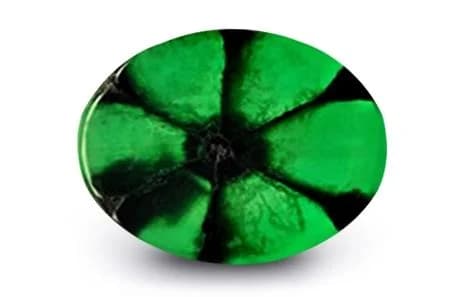
Trapiche Emerald is a rare variety of natural emerald, the green gem variety of beryl, recognized by its distinctive six-rayed pattern that resembles the spokes of a wheel. The pattern is created naturally during crystal growth by contrasting mineral and carbonaceous inclusions concentrated along specific growth sectors.
Mineral Family and Composition: Trapiche Emerald belongs to the beryl mineral family and has the chemical formula Be3Al2Si6O18. Its green color is primarily associated with trace amounts of chromium and/or vanadium. It crystallizes in the hexagonal crystal system and has a Mohs hardness of 7.5 to 8.
Formation and Origin: Colombia is the classic and most important source of Trapiche Emerald. Notable emerald-producing areas associated with Trapiche material include Muzo, Coscuez, Chivor, and La Peña. The characteristic pattern develops as the emerald crystal grows around contrasting inclusions, creating six distinct radial sectors.
Trapiche-like patterns have also been reported in beryl from other locations, but a patterned beryl should not automatically be described as Trapiche Emerald without confirming that the material is actually emerald.
Color and Appearance: Trapiche Emerald is typically green, with shades ranging from lighter yellowish green to vivid and deeper green. The most visually striking specimens often show strong contrast between the green emerald sectors and darker radial material. A clear, balanced, and symmetrical pattern is one of the defining features buyers look for.
Famous Sources and Examples: Colombia has the strongest historical association with Trapiche Emerald. Material from the Muzo region is particularly well known among collectors and gemstone specialists. Exceptional specimens are uncommon, and documented provenance can add interest when supported by reliable evidence.
History and Modern Jewelry Use: Trapiche Emerald has gained recognition among collectors because each natural crystal records its own distinctive growth history. Today, these gemstones are used in rings, pendants, earrings, bracelets, and statement jewelry. Cabochon cuts are especially effective for displaying the internal pattern, although other cutting styles are also possible.
Why Buyers Value Trapiche Emerald: Collectors and jewelry buyers value Trapiche Emerald for its rarity, unusual natural pattern, green color, Colombian heritage, and individuality. Since the characteristic pattern forms naturally within the crystal, every specimen can have a distinctive appearance. Buyers should consider the quality of the pattern, color, transparency, condition, treatment, and documentation when evaluating a stone.
- Mineral Family
- Beryl
- Chemical Formula
- Be3Al2Si6O18
- Mohs Hardness
- 7.5 - 8
- Refractive Index
- 1.565 - 1.602
- Specific Gravity
- 2.67 - 2.78
- Cleavage
- Poor to indistinct
- Crystal System
- Hexagonal
- Luster
- Vitreous
- Color Range
- Green, Yellow
Color: Look for attractive, well-saturated green color in the emerald sectors. Vivid green with good transparency is generally desirable, while excessively dark, grayish, or weakly colored material may have lower visual appeal.
Clarity: Inclusions are an essential part of the Trapiche pattern, so clarity should not be judged in exactly the same way as a conventional emerald. Instead, consider the balance between a well-defined pattern and the transparency and appearance of the green sectors. Natural emerald inclusions are common and do not automatically indicate poor quality.
Cut and Pattern: The natural pattern is one of the most important factors when buying Trapiche Emerald. Look for a clearly defined six-rayed design with good balance, symmetry, and contrast. Cabochon cuts can display the pattern particularly well, while other cuts may be selected to emphasize the crystal structure.
Carat Weight: Large Trapiche Emeralds with attractive and well-defined patterns are uncommon. Larger size can increase value, but carat weight should never be considered on its own. Compare stones based on size, color, transparency, pattern quality, condition, and overall appearance.
Origin: Colombia is the best-known source of Trapiche Emerald. If a seller claims a specific mine origin, ask whether the claim is supported by credible documentation. Mine-level origin determination is not always included in laboratory reports.
Treatments: Emeralds can commonly receive clarity enhancement using oils or other substances. Always ask whether the stone has been treated and check the treatment information on its laboratory report when available. A natural Trapiche pattern does not mean that the gemstone is necessarily untreated.
Natural vs Lab-Grown: A natural Trapiche Emerald formed in nature should be distinguished from laboratory-grown emerald, imitation material, and assembled stones. Because the characteristic pattern is unusual, an independent gemological examination is recommended for valuable specimens.
Certification: For an important purchase, request a report from a reputable independent gemological laboratory. The report should identify the material as natural emerald and provide treatment information where applicable. A report together with clear photographs, weight, dimensions, and transparent seller documentation provides stronger confidence when buying a rare gemstone.
Authenticity: Do not rely solely on photographs or the appearance of the radial pattern when determining authenticity. A qualified gemologist or independent laboratory can examine the gemstone's internal features, material identity, and treatment status.
Price Factors: Trapiche Emerald prices can vary substantially according to color, transparency, pattern definition, pattern symmetry, size, condition, origin documentation, treatment, and overall visual appeal. Exceptional specimens with rare and highly attractive patterns can command significant premiums. There is no single fixed price per carat that accurately represents every Trapiche Emerald.
Cleaning: Clean Trapiche Emerald gently using lukewarm water, mild soap, and a soft cloth or soft brush. Rinse thoroughly and dry with a soft, lint-free cloth.
Storage: Store Trapiche Emerald separately from harder gemstones and jewelry materials to reduce the risk of scratches. An individual soft pouch or a lined jewelry compartment is recommended.
Everyday Wear: Emerald has good hardness but may contain fractures and significant inclusions. Wear Trapiche Emerald jewelry with reasonable care and avoid strong impacts. Protective settings are particularly useful for rings that receive frequent contact.
Things to Avoid: Avoid harsh chemicals, abrasive cleaners, sudden temperature changes, and unnecessary heat. Ultrasonic and steam cleaning should not be used unless a qualified professional has confirmed that the particular gemstone and any treatment are suitable for these methods.
If the emerald has been clarity enhanced, extra care may be required because some treatments can be affected by heat, solvents, or aggressive cleaning.
Trapiche Emerald is a rare variety of natural emerald, the green gem variety of beryl, recognized by its distinctive six-rayed pattern that resembles the spokes of a wheel. The pattern is created naturally during crystal growth by contrasting mineral and carbonaceous inclusions concentrated along specific growth sectors.
Mineral Family and Composition: Trapiche Emerald belongs to the beryl mineral family and has the chemical formula Be3Al2Si6O18. Its green color is primarily associated with trace amounts of chromium and/or vanadium. It crystallizes in the hexagonal crystal system and has a Mohs hardness of 7.5 to 8.
Formation and Origin: Colombia is the classic and most important source of Trapiche Emerald. Notable emerald-producing areas associated with Trapiche material include Muzo, Coscuez, Chivor, and La Peña. The characteristic pattern develops as the emerald crystal grows around contrasting inclusions, creating six distinct radial sectors.
Trapiche-like patterns have also been reported in beryl from other locations, but a patterned beryl should not automatically be described as Trapiche Emerald without confirming that the material is actually emerald.
Color and Appearance: Trapiche Emerald is typically green, with shades ranging from lighter yellowish green to vivid and deeper green. The most visually striking specimens often show strong contrast between the green emerald sectors and darker radial material. A clear, balanced, and symmetrical pattern is one of the defining features buyers look for.
Famous Sources and Examples: Colombia has the strongest historical association with Trapiche Emerald. Material from the Muzo region is particularly well known among collectors and gemstone specialists. Exceptional specimens are uncommon, and documented provenance can add interest when supported by reliable evidence.
History and Modern Jewelry Use: Trapiche Emerald has gained recognition among collectors because each natural crystal records its own distinctive growth history. Today, these gemstones are used in rings, pendants, earrings, bracelets, and statement jewelry. Cabochon cuts are especially effective for displaying the internal pattern, although other cutting styles are also possible.
Why Buyers Value Trapiche Emerald: Collectors and jewelry buyers value Trapiche Emerald for its rarity, unusual natural pattern, green color, Colombian heritage, and individuality. Since the characteristic pattern forms naturally within the crystal, every specimen can have a distinctive appearance. Buyers should consider the quality of the pattern, color, transparency, condition, treatment, and documentation when evaluating a stone.
- Mineral Family
- Beryl
- Chemical Formula
- Be3Al2Si6O18
- Mohs Hardness
- 7.5 - 8
- Refractive Index
- 1.565 - 1.602
- Specific Gravity
- 2.67 - 2.78
- Cleavage
- Poor to indistinct
- Crystal System
- Hexagonal
- Luster
- Vitreous
- Color Range
- Green, Yellow
Color: Look for attractive, well-saturated green color in the emerald sectors. Vivid green with good transparency is generally desirable, while excessively dark, grayish, or weakly colored material may have lower visual appeal.
Clarity: Inclusions are an essential part of the Trapiche pattern, so clarity should not be judged in exactly the same way as a conventional emerald. Instead, consider the balance between a well-defined pattern and the transparency and appearance of the green sectors. Natural emerald inclusions are common and do not automatically indicate poor quality.
Cut and Pattern: The natural pattern is one of the most important factors when buying Trapiche Emerald. Look for a clearly defined six-rayed design with good balance, symmetry, and contrast. Cabochon cuts can display the pattern particularly well, while other cuts may be selected to emphasize the crystal structure.
Carat Weight: Large Trapiche Emeralds with attractive and well-defined patterns are uncommon. Larger size can increase value, but carat weight should never be considered on its own. Compare stones based on size, color, transparency, pattern quality, condition, and overall appearance.
Origin: Colombia is the best-known source of Trapiche Emerald. If a seller claims a specific mine origin, ask whether the claim is supported by credible documentation. Mine-level origin determination is not always included in laboratory reports.
Treatments: Emeralds can commonly receive clarity enhancement using oils or other substances. Always ask whether the stone has been treated and check the treatment information on its laboratory report when available. A natural Trapiche pattern does not mean that the gemstone is necessarily untreated.
Natural vs Lab-Grown: A natural Trapiche Emerald formed in nature should be distinguished from laboratory-grown emerald, imitation material, and assembled stones. Because the characteristic pattern is unusual, an independent gemological examination is recommended for valuable specimens.
Certification: For an important purchase, request a report from a reputable independent gemological laboratory. The report should identify the material as natural emerald and provide treatment information where applicable. A report together with clear photographs, weight, dimensions, and transparent seller documentation provides stronger confidence when buying a rare gemstone.
Authenticity: Do not rely solely on photographs or the appearance of the radial pattern when determining authenticity. A qualified gemologist or independent laboratory can examine the gemstone's internal features, material identity, and treatment status.
Price Factors: Trapiche Emerald prices can vary substantially according to color, transparency, pattern definition, pattern symmetry, size, condition, origin documentation, treatment, and overall visual appeal. Exceptional specimens with rare and highly attractive patterns can command significant premiums. There is no single fixed price per carat that accurately represents every Trapiche Emerald.
Cleaning: Clean Trapiche Emerald gently using lukewarm water, mild soap, and a soft cloth or soft brush. Rinse thoroughly and dry with a soft, lint-free cloth.
Storage: Store Trapiche Emerald separately from harder gemstones and jewelry materials to reduce the risk of scratches. An individual soft pouch or a lined jewelry compartment is recommended.
Everyday Wear: Emerald has good hardness but may contain fractures and significant inclusions. Wear Trapiche Emerald jewelry with reasonable care and avoid strong impacts. Protective settings are particularly useful for rings that receive frequent contact.
Things to Avoid: Avoid harsh chemicals, abrasive cleaners, sudden temperature changes, and unnecessary heat. Ultrasonic and steam cleaning should not be used unless a qualified professional has confirmed that the particular gemstone and any treatment are suitable for these methods.
If the emerald has been clarity enhanced, extra care may be required because some treatments can be affected by heat, solvents, or aggressive cleaning.
Trapiche Emerald for Sale
No gems found
Try broadening your search or adjusting your filters.
Have a gem of your own? List it free - no fees