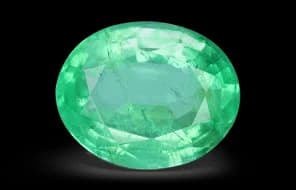
Russian Emerald
Russian Emerald is a distinctive Ural variety of natural emerald, prized for its green color, fascinating geological heritage, and appeal to collectors and fine jewelry buyers.
Russian Emerald is natural emerald from the Ural Mountains of Russia, particularly associated with the historic Malysheva emerald deposit. Emerald is the green gem variety of beryl, colored primarily by chromium and vanadium. Its chemical formula is Be3Al2Si6O18, with a hexagonal crystal system, vitreous luster, Mohs hardness of 7.5-8, refractive index of approximately 1.565-1.602, and specific gravity of about 2.67-2.78. Emerald also has poor basal cleavage, which contributes to its need for careful handling.
The Ural deposits are historically important in gemology. Emerald was discovered in the region in 1831, and the Malysheva deposit became one of Russia's best-known emerald sources. GIA records that Ural emerald mining became internationally significant during the nineteenth and early twentieth centuries, while modern production has continued at the deposit.
Russian Emeralds can range from lighter to strongly saturated green. Their appearance varies considerably according to individual crystal chemistry, clarity, cut, and treatment. Ural emeralds may contain characteristic phlogopite mica and other mineral or fluid inclusions, making their internal features interesting to collectors and useful in laboratory origin determination. Recent research on Malysheva material emphasizes that determining geographic origin can require advanced laboratory testing because Russian emerald shares characteristics with emerald from other deposits.
The combination of natural emerald beauty, documented Ural heritage, and limited market availability makes fine Russian Emerald attractive to collectors and jewelry buyers. High-quality material can be fashioned into faceted gemstones for rings, earrings, pendants, and other jewelry, while heavily included or unusual crystals may appeal to mineral collectors. Russian origin should be treated as a geographic characteristic rather than a guarantee of superior quality: color, clarity, transparency, cut, size, treatment, and laboratory-confirmed origin all matter.
- Mineral Family
- Beryl
- Chemical Formula
- Be3Al2Si6O18
- Mohs Hardness
- 7.5 - 8
- Refractive Index
- 1.565 - 1.602
- Specific Gravity
- 2.67 - 2.78
- Cleavage
- Poor basal cleavage
- Crystal System
- Hexagonal
- Luster
- Vitreous
- Color Range
- Green
When buying Russian Emerald online, evaluate the individual gemstone rather than relying on origin alone. Color is one of the most important factors. Look for an attractive, well-saturated green with good brightness and even distribution. Avoid judging color from heavily edited photographs; request videos or images under neutral lighting when possible.
Clarity is especially important for emerald because natural inclusions are common. A completely inclusion-free appearance can be unusual and should be investigated rather than automatically treated as a sign of superior natural material. Fine stones with attractive transparency and unobtrusive inclusions can command significant premiums.
Cut should maximize color, brilliance, and durability while working with the stone's inclusions and fractures. The classic emerald cut is common, but oval, cushion, pear, and other shapes can also produce beautiful results. Carat weight affects price, but price does not increase at a simple fixed rate per carat; larger stones of strong color and good clarity can command substantial premiums.
Origin is an important consideration for Russian Emerald. A seller's statement alone is not equivalent to laboratory determination. For a significant purchase, request an independent gemological report that identifies the stone as natural emerald and, where applicable, provides an opinion on geographic origin and records detectable treatments. Advanced laboratory analysis may be necessary for origin determination.
Treatments must also be disclosed. Emeralds are commonly clarity enhanced, including with oils or other filling materials. A natural Russian Emerald may therefore still have undergone treatment. Natural, untreated material can be especially desirable to collectors, but treatment status should be verified rather than assumed. Natural emerald and laboratory-grown emerald are different categories, so confirm that the report identifies the material appropriately.
Authenticity depends on more than appearance. Purchase from a transparent seller, compare the gemstone with its laboratory report, verify report details with the issuing laboratory when possible, and be cautious of unusually inexpensive stones presented as rare, untreated Russian material. For high-value purchases, an independent report is one of the strongest safeguards.
Emerald can be suitable for jewelry, but its inclusions and fractures can make it more vulnerable to damage than its Mohs hardness alone suggests. For routine cleaning, use lukewarm water, a small amount of mild soap, and a very soft cloth or brush. Rinse thoroughly and dry gently with a lint-free cloth.
Avoid harsh chemicals, abrasive cleaners, prolonged heat, and sudden temperature changes. Ultrasonic and steam cleaning should generally be avoided for emerald because heat, vibration, or pressure can worsen existing fractures or affect some clarity enhancements. If the stone has been treated, professional advice is especially important before cleaning.
For everyday wear, remove Russian Emerald jewelry before strenuous activities, sports, household cleaning, swimming, or work that could expose the stone to impact or chemicals. Store each piece separately in a soft pouch or fabric-lined compartment so it does not rub against harder gemstones such as diamond or sapphire.
Have the setting inspected periodically, especially for rings worn regularly. A qualified jeweler can check for loose prongs, damage, or changes in the stone and recommend an appropriate cleaning method.
Russian Emerald is natural emerald from the Ural Mountains of Russia, particularly associated with the historic Malysheva emerald deposit. Emerald is the green gem variety of beryl, colored primarily by chromium and vanadium. Its chemical formula is Be3Al2Si6O18, with a hexagonal crystal system, vitreous luster, Mohs hardness of 7.5-8, refractive index of approximately 1.565-1.602, and specific gravity of about 2.67-2.78. Emerald also has poor basal cleavage, which contributes to its need for careful handling.
The Ural deposits are historically important in gemology. Emerald was discovered in the region in 1831, and the Malysheva deposit became one of Russia's best-known emerald sources. GIA records that Ural emerald mining became internationally significant during the nineteenth and early twentieth centuries, while modern production has continued at the deposit.
Russian Emeralds can range from lighter to strongly saturated green. Their appearance varies considerably according to individual crystal chemistry, clarity, cut, and treatment. Ural emeralds may contain characteristic phlogopite mica and other mineral or fluid inclusions, making their internal features interesting to collectors and useful in laboratory origin determination. Recent research on Malysheva material emphasizes that determining geographic origin can require advanced laboratory testing because Russian emerald shares characteristics with emerald from other deposits.
The combination of natural emerald beauty, documented Ural heritage, and limited market availability makes fine Russian Emerald attractive to collectors and jewelry buyers. High-quality material can be fashioned into faceted gemstones for rings, earrings, pendants, and other jewelry, while heavily included or unusual crystals may appeal to mineral collectors. Russian origin should be treated as a geographic characteristic rather than a guarantee of superior quality: color, clarity, transparency, cut, size, treatment, and laboratory-confirmed origin all matter.
- Mineral Family
- Beryl
- Chemical Formula
- Be3Al2Si6O18
- Mohs Hardness
- 7.5 - 8
- Refractive Index
- 1.565 - 1.602
- Specific Gravity
- 2.67 - 2.78
- Cleavage
- Poor basal cleavage
- Crystal System
- Hexagonal
- Luster
- Vitreous
- Color Range
- Green
When buying Russian Emerald online, evaluate the individual gemstone rather than relying on origin alone. Color is one of the most important factors. Look for an attractive, well-saturated green with good brightness and even distribution. Avoid judging color from heavily edited photographs; request videos or images under neutral lighting when possible.
Clarity is especially important for emerald because natural inclusions are common. A completely inclusion-free appearance can be unusual and should be investigated rather than automatically treated as a sign of superior natural material. Fine stones with attractive transparency and unobtrusive inclusions can command significant premiums.
Cut should maximize color, brilliance, and durability while working with the stone's inclusions and fractures. The classic emerald cut is common, but oval, cushion, pear, and other shapes can also produce beautiful results. Carat weight affects price, but price does not increase at a simple fixed rate per carat; larger stones of strong color and good clarity can command substantial premiums.
Origin is an important consideration for Russian Emerald. A seller's statement alone is not equivalent to laboratory determination. For a significant purchase, request an independent gemological report that identifies the stone as natural emerald and, where applicable, provides an opinion on geographic origin and records detectable treatments. Advanced laboratory analysis may be necessary for origin determination.
Treatments must also be disclosed. Emeralds are commonly clarity enhanced, including with oils or other filling materials. A natural Russian Emerald may therefore still have undergone treatment. Natural, untreated material can be especially desirable to collectors, but treatment status should be verified rather than assumed. Natural emerald and laboratory-grown emerald are different categories, so confirm that the report identifies the material appropriately.
Authenticity depends on more than appearance. Purchase from a transparent seller, compare the gemstone with its laboratory report, verify report details with the issuing laboratory when possible, and be cautious of unusually inexpensive stones presented as rare, untreated Russian material. For high-value purchases, an independent report is one of the strongest safeguards.
Emerald can be suitable for jewelry, but its inclusions and fractures can make it more vulnerable to damage than its Mohs hardness alone suggests. For routine cleaning, use lukewarm water, a small amount of mild soap, and a very soft cloth or brush. Rinse thoroughly and dry gently with a lint-free cloth.
Avoid harsh chemicals, abrasive cleaners, prolonged heat, and sudden temperature changes. Ultrasonic and steam cleaning should generally be avoided for emerald because heat, vibration, or pressure can worsen existing fractures or affect some clarity enhancements. If the stone has been treated, professional advice is especially important before cleaning.
For everyday wear, remove Russian Emerald jewelry before strenuous activities, sports, household cleaning, swimming, or work that could expose the stone to impact or chemicals. Store each piece separately in a soft pouch or fabric-lined compartment so it does not rub against harder gemstones such as diamond or sapphire.
Have the setting inspected periodically, especially for rings worn regularly. A qualified jeweler can check for loose prongs, damage, or changes in the stone and recommend an appropriate cleaning method.
Russian Emerald for Sale
No gems found
Try broadening your search or adjusting your filters.
Have a gem of your own? List it free - no fees