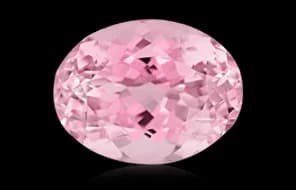
Pink Fluorite
Pink Fluorite is a delicate, translucent gemstone prized for its soft pink to rosy hues, distinctive crystal forms, and collector appeal.
Pink Fluorite is the pink color variety of fluorite, a calcium fluoride mineral belonging to the Fluorite Group. Its chemical composition is CaF₂, and it crystallizes in the isometric system. Fluorite has a Mohs hardness of 4, perfect octahedral cleavage, and typically a vitreous luster, making it beautiful but relatively delicate compared with harder jewelry gemstones. Its refractive index is approximately 1.433–1.448 and its specific gravity is generally around 3.175–3.56. Fluorite can occur in transparent to translucent crystals and is known for its broad range of natural colors, including pink, purple, blue, green, yellow, white, brown, red, and black. Pink material may appear pale pink, rosy, lilac-pink, or pinkish purple. Color in fluorite can be influenced by trace elements, structural defects, and irradiation. Fluorite commonly forms in hydrothermal veins and other mineral deposits, where crystals may occur alongside quartz, calcite, barite, and metallic ores. The mineral has a long history of use as an ornamental and decorative material as well as an important industrial source of fluorine. Today, attractive Pink Fluorite is particularly appreciated by mineral collectors and is also fashioned into cabochons, beads, carvings, display crystals, and occasional faceted gems. Because of its low hardness and perfect cleavage, Pink Fluorite jewelry requires more care than durable stones such as sapphire or quartz. Buyers value natural Pink Fluorite for its gentle color, transparency, crystal character, and the individuality of each natural specimen. Fluorite can also fluoresce under ultraviolet light, although the response varies between specimens and should not be used alone to identify a stone.
- Mineral Family
- Fluorite
- Chemical Formula
- CaF₂
- Mohs Hardness
- 4
- Refractive Index
- 1.433 - 1.448
- Specific Gravity
- 3.175 - 3.56
- Cleavage
- Perfect octahedral cleavage
- Crystal System
- Cubic
- Luster
- Vitreous
- Color Range
- Pink, Purple, White
When buying Pink Fluorite, begin with color, transparency, and overall condition. Attractive pink shades with good saturation and even distribution are generally more desirable, while unusual zoning or combinations of pink and purple can add collector interest. Clarity is important for transparent faceted material, although natural inclusions, fractures, and color zoning are common in fluorite and can contribute to a specimen's character. Cut quality matters because fluorite is soft and has perfect cleavage; a well-executed cut should maximize color and appearance while minimizing exposure to vulnerable edges and corners. Carat weight can vary widely, particularly in collector specimens, so price should not be judged from weight alone. Origin may influence collector value when a locality is known for distinctive crystals or color, but provenance should be documented rather than assumed to guarantee quality. Fluorite is generally encountered as natural material rather than a conventional laboratory-grown gemstone category. Treated or enhanced material can occur, including dyed fluorite, so buyers should ask whether any treatment has been applied. A reputable seller should clearly disclose treatments and provide an independent laboratory report when certification is important. A gemological report can help confirm that the material is fluorite and document relevant characteristics, but a report does not automatically mean the stone is high quality. For authenticity, compare the stone's appearance and disclosed properties with established fluorite characteristics and purchase from a transparent seller. Price depends on color, transparency, crystal quality, size, cut, condition, locality, rarity, and whether the piece is a fine collector specimen or a jewelry stone. For buyers searching for natural Pink Fluorite online, clear photography, accurate dimensions, treatment disclosure, and return policies are especially important.
Pink Fluorite requires gentle care because its Mohs hardness of 4 and perfect cleavage make it vulnerable to scratches, chips, and breakage. Clean it with lukewarm water, a soft cloth, and mild soap when necessary, then rinse and dry gently. Avoid ultrasonic and steam cleaners unless a qualified professional has confirmed that the specific piece can safely tolerate them. Keep Pink Fluorite away from harder gemstones and store it separately in a soft pouch or lined compartment. Avoid impacts, sudden temperature changes, harsh chemicals, and prolonged exposure to situations where the stone could be knocked or abraded. For rings and bracelets, protective settings are preferable, and Pink Fluorite is better suited to occasional or careful wear than demanding everyday use. Inspect the stone and setting periodically for chips, cleavage-related damage, or loose mounting.
Pink Fluorite is the pink color variety of fluorite, a calcium fluoride mineral belonging to the Fluorite Group. Its chemical composition is CaF₂, and it crystallizes in the isometric system. Fluorite has a Mohs hardness of 4, perfect octahedral cleavage, and typically a vitreous luster, making it beautiful but relatively delicate compared with harder jewelry gemstones. Its refractive index is approximately 1.433–1.448 and its specific gravity is generally around 3.175–3.56. Fluorite can occur in transparent to translucent crystals and is known for its broad range of natural colors, including pink, purple, blue, green, yellow, white, brown, red, and black. Pink material may appear pale pink, rosy, lilac-pink, or pinkish purple. Color in fluorite can be influenced by trace elements, structural defects, and irradiation. Fluorite commonly forms in hydrothermal veins and other mineral deposits, where crystals may occur alongside quartz, calcite, barite, and metallic ores. The mineral has a long history of use as an ornamental and decorative material as well as an important industrial source of fluorine. Today, attractive Pink Fluorite is particularly appreciated by mineral collectors and is also fashioned into cabochons, beads, carvings, display crystals, and occasional faceted gems. Because of its low hardness and perfect cleavage, Pink Fluorite jewelry requires more care than durable stones such as sapphire or quartz. Buyers value natural Pink Fluorite for its gentle color, transparency, crystal character, and the individuality of each natural specimen. Fluorite can also fluoresce under ultraviolet light, although the response varies between specimens and should not be used alone to identify a stone.
- Mineral Family
- Fluorite
- Chemical Formula
- CaF₂
- Mohs Hardness
- 4
- Refractive Index
- 1.433 - 1.448
- Specific Gravity
- 3.175 - 3.56
- Cleavage
- Perfect octahedral cleavage
- Crystal System
- Cubic
- Luster
- Vitreous
- Color Range
- Pink, Purple, White
When buying Pink Fluorite, begin with color, transparency, and overall condition. Attractive pink shades with good saturation and even distribution are generally more desirable, while unusual zoning or combinations of pink and purple can add collector interest. Clarity is important for transparent faceted material, although natural inclusions, fractures, and color zoning are common in fluorite and can contribute to a specimen's character. Cut quality matters because fluorite is soft and has perfect cleavage; a well-executed cut should maximize color and appearance while minimizing exposure to vulnerable edges and corners. Carat weight can vary widely, particularly in collector specimens, so price should not be judged from weight alone. Origin may influence collector value when a locality is known for distinctive crystals or color, but provenance should be documented rather than assumed to guarantee quality. Fluorite is generally encountered as natural material rather than a conventional laboratory-grown gemstone category. Treated or enhanced material can occur, including dyed fluorite, so buyers should ask whether any treatment has been applied. A reputable seller should clearly disclose treatments and provide an independent laboratory report when certification is important. A gemological report can help confirm that the material is fluorite and document relevant characteristics, but a report does not automatically mean the stone is high quality. For authenticity, compare the stone's appearance and disclosed properties with established fluorite characteristics and purchase from a transparent seller. Price depends on color, transparency, crystal quality, size, cut, condition, locality, rarity, and whether the piece is a fine collector specimen or a jewelry stone. For buyers searching for natural Pink Fluorite online, clear photography, accurate dimensions, treatment disclosure, and return policies are especially important.
Pink Fluorite requires gentle care because its Mohs hardness of 4 and perfect cleavage make it vulnerable to scratches, chips, and breakage. Clean it with lukewarm water, a soft cloth, and mild soap when necessary, then rinse and dry gently. Avoid ultrasonic and steam cleaners unless a qualified professional has confirmed that the specific piece can safely tolerate them. Keep Pink Fluorite away from harder gemstones and store it separately in a soft pouch or lined compartment. Avoid impacts, sudden temperature changes, harsh chemicals, and prolonged exposure to situations where the stone could be knocked or abraded. For rings and bracelets, protective settings are preferable, and Pink Fluorite is better suited to occasional or careful wear than demanding everyday use. Inspect the stone and setting periodically for chips, cleavage-related damage, or loose mounting.
Pink Fluorite for Sale
No gems found
Try broadening your search or adjusting your filters.
Have a gem of your own? List it free - no fees