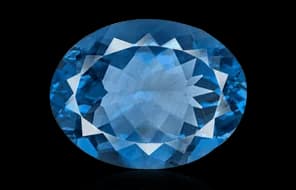
Blue Fluorite
Blue Fluorite is admired for its cool blue color, glassy luster and distinctive crystal character, making it an attractive choice for collectors and jewelry enthusiasts.
Blue Fluorite is a blue variety of fluorite, a calcium fluoride mineral belonging to the halide mineral group. Its chemical formula is CaF2, and it crystallizes in the cubic crystal system. Fluorite has a Mohs hardness of 4, perfect octahedral cleavage, a vitreous luster, a specific gravity of about 3.18, and a refractive index of approximately 1.433-1.448. Blue color can range from pale to deeper saturated blue, and some fluorite specimens display color zoning or combinations of blue with purple, green or other hues. The color of fluorite can result from trace elements, color centers and other geological factors depending on the material. Fluorite forms in hydrothermal environments and is commonly associated with mineral deposits containing quartz, calcite, barite and sulfide minerals. Important fluorite localities occur in China, Mongolia, Mexico, the United States, Canada, England, Morocco, Namibia and other regions. Derbyshire in England is particularly famous for its historically important Blue John fluorite, a distinctive banded material containing purple, blue, yellow and related tones. Fluorite has been collected and traded for centuries and has long been valued as an ornamental mineral as well as an important industrial source of fluorine. Today, natural Blue Fluorite is used primarily for mineral specimens, collector pieces, carvings, cabochons and selected jewelry designs. Because its hardness is relatively low and its cleavage is pronounced, it requires more care than durable jewelry gemstones such as sapphire or ruby. Buyers value Blue Fluorite for its attractive color, crystal forms, transparency, zoning and the individuality of natural specimens.
- Mineral Family
- Fluorite
- Chemical Formula
- CaF2
- Mohs Hardness
- 4
- Refractive Index
- 1.433 - 1.448
- Specific Gravity
- 3.18
- Cleavage
- Perfect octahedral
- Crystal System
- Cubic
- Luster
- Vitreous
- Color Range
- Blue
When buying Blue Fluorite, begin with color. Attractive material typically shows an appealing blue tone with good saturation and evenness, although natural zoning and color variation can add character and collector interest. Clarity is also important: transparent or translucent material with good visual cleanliness can be particularly attractive, while natural inclusions and internal features are common and may help distinguish a natural specimen. Cut should suit the material and its durability. Faceted Blue Fluorite can show attractive brilliance, while cabochons and polished forms are practical choices for more included material. Carat weight affects price, but value is generally driven more by color, transparency, quality, size, cutting, locality and overall visual appeal than by weight alone. Origin can add collector interest, especially when documented provenance is available, but locality should not automatically be treated as a guarantee of superior quality. Treatments and enhancements should always be disclosed. Buyers should ask whether the stone is natural and whether any treatment has been applied. Unlike many popular colored gemstones, laboratory-grown fluorite is not a major mainstream jewelry category, so sellers should clearly distinguish natural fluorite from any synthetic or imitation material. For higher-value specimens, an independent gemological or mineralogical report can help document identity, treatment status where determinable, and other relevant characteristics. Buy Blue Fluorite online from a seller who provides clear photographs, accurate measurements, treatment disclosure, return terms and reliable information about provenance and authenticity. Price is influenced by color, transparency, cutting, size, rarity, locality, specimen quality and market demand.
Blue Fluorite requires careful handling because its Mohs hardness of 4 makes it susceptible to scratches and its perfect octahedral cleavage makes it vulnerable to damage from sharp impact. Clean Blue Fluorite gently with lukewarm water, a soft cloth and mild soap when appropriate. Avoid ultrasonic cleaners, steam cleaners, harsh chemicals and abrasive cleaning materials. Store each stone separately in a soft pouch or lined compartment so it cannot rub against harder gemstones or jewelry. Blue Fluorite is better suited to earrings, pendants and occasional-wear pieces than rings or bracelets exposed to frequent knocks and abrasion. Remove Blue Fluorite jewelry before sports, manual work, cleaning or other activities where the stone may be struck. Avoid sudden impacts and prolonged exposure to unsuitable chemicals. With careful handling and proper storage, natural Blue Fluorite can retain its attractive color and polished appearance.
Blue Fluorite is a blue variety of fluorite, a calcium fluoride mineral belonging to the halide mineral group. Its chemical formula is CaF2, and it crystallizes in the cubic crystal system. Fluorite has a Mohs hardness of 4, perfect octahedral cleavage, a vitreous luster, a specific gravity of about 3.18, and a refractive index of approximately 1.433-1.448. Blue color can range from pale to deeper saturated blue, and some fluorite specimens display color zoning or combinations of blue with purple, green or other hues. The color of fluorite can result from trace elements, color centers and other geological factors depending on the material. Fluorite forms in hydrothermal environments and is commonly associated with mineral deposits containing quartz, calcite, barite and sulfide minerals. Important fluorite localities occur in China, Mongolia, Mexico, the United States, Canada, England, Morocco, Namibia and other regions. Derbyshire in England is particularly famous for its historically important Blue John fluorite, a distinctive banded material containing purple, blue, yellow and related tones. Fluorite has been collected and traded for centuries and has long been valued as an ornamental mineral as well as an important industrial source of fluorine. Today, natural Blue Fluorite is used primarily for mineral specimens, collector pieces, carvings, cabochons and selected jewelry designs. Because its hardness is relatively low and its cleavage is pronounced, it requires more care than durable jewelry gemstones such as sapphire or ruby. Buyers value Blue Fluorite for its attractive color, crystal forms, transparency, zoning and the individuality of natural specimens.
- Mineral Family
- Fluorite
- Chemical Formula
- CaF2
- Mohs Hardness
- 4
- Refractive Index
- 1.433 - 1.448
- Specific Gravity
- 3.18
- Cleavage
- Perfect octahedral
- Crystal System
- Cubic
- Luster
- Vitreous
- Color Range
- Blue
When buying Blue Fluorite, begin with color. Attractive material typically shows an appealing blue tone with good saturation and evenness, although natural zoning and color variation can add character and collector interest. Clarity is also important: transparent or translucent material with good visual cleanliness can be particularly attractive, while natural inclusions and internal features are common and may help distinguish a natural specimen. Cut should suit the material and its durability. Faceted Blue Fluorite can show attractive brilliance, while cabochons and polished forms are practical choices for more included material. Carat weight affects price, but value is generally driven more by color, transparency, quality, size, cutting, locality and overall visual appeal than by weight alone. Origin can add collector interest, especially when documented provenance is available, but locality should not automatically be treated as a guarantee of superior quality. Treatments and enhancements should always be disclosed. Buyers should ask whether the stone is natural and whether any treatment has been applied. Unlike many popular colored gemstones, laboratory-grown fluorite is not a major mainstream jewelry category, so sellers should clearly distinguish natural fluorite from any synthetic or imitation material. For higher-value specimens, an independent gemological or mineralogical report can help document identity, treatment status where determinable, and other relevant characteristics. Buy Blue Fluorite online from a seller who provides clear photographs, accurate measurements, treatment disclosure, return terms and reliable information about provenance and authenticity. Price is influenced by color, transparency, cutting, size, rarity, locality, specimen quality and market demand.
Blue Fluorite requires careful handling because its Mohs hardness of 4 makes it susceptible to scratches and its perfect octahedral cleavage makes it vulnerable to damage from sharp impact. Clean Blue Fluorite gently with lukewarm water, a soft cloth and mild soap when appropriate. Avoid ultrasonic cleaners, steam cleaners, harsh chemicals and abrasive cleaning materials. Store each stone separately in a soft pouch or lined compartment so it cannot rub against harder gemstones or jewelry. Blue Fluorite is better suited to earrings, pendants and occasional-wear pieces than rings or bracelets exposed to frequent knocks and abrasion. Remove Blue Fluorite jewelry before sports, manual work, cleaning or other activities where the stone may be struck. Avoid sudden impacts and prolonged exposure to unsuitable chemicals. With careful handling and proper storage, natural Blue Fluorite can retain its attractive color and polished appearance.
Blue Fluorite for Sale
No gems found
Try broadening your search or adjusting your filters.
Have a gem of your own? List it free - no fees