Color Change Fluorite
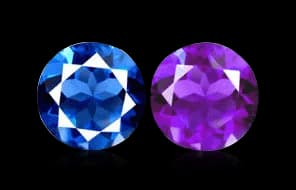
Color Change Fluorite is a captivating natural gemstone prized for its unusual shift between blue or green and purple or pink under different lighting.
Color Change Fluorite is a rare and visually distinctive variety of fluorite valued for its change in apparent body color under different light sources. Fluorite is a mineral composed of calcium fluoride (CaF2) and belongs to the halide mineral family. It crystallizes in the cubic crystal system and commonly forms cubic crystals, although other crystal habits occur. Its refractive index is approximately 1.433-1.448, specific gravity is about 3.18, Mohs hardness is 4, and its luster is typically vitreous. Fluorite also has perfect octahedral cleavage, making it considerably more vulnerable to impact than harder jewelry gemstones. Color Change Fluorite may show blue, blue-green, violet, purple, pink, or related hues, with the most interesting specimens displaying a noticeable shift between cooler daylight illumination and warmer incandescent or similar light. The effect is an optical color-change phenomenon caused by the interaction between the stone's spectral transmission characteristics and the spectrum of the light source; it should not be confused with fluorescence under ultraviolet light. Fluorite occurs worldwide in hydrothermal veins, cavities, replacement deposits, and other geological environments, often associated with minerals such as quartz and calcite. Notable fluorite localities include areas of England, Mexico, the United States, China, Spain, Switzerland, and other producing regions, although locality alone does not establish gemstone quality. Color-change fluorite has also been documented from several localities, including material from England and other deposits that can display striking changes between daylight and incandescent illumination. There is no single universally recognized famous faceted Color Change Fluorite specimen comparable to famous ruby or sapphire stones, so buyers should evaluate each gem on its own documented characteristics. In modern jewelry, fluorite is best suited to pieces where it receives reasonable protection, such as pendants, earrings, brooches, and carefully designed rings. Its relatively low hardness and perfect cleavage make it less suitable for rough everyday wear. Collectors and jewelry buyers value natural Color Change Fluorite primarily for the strength and attractiveness of its color change, transparency, clarity, cut, size, and provenance.
- Mineral Family
- Fluorite
- Chemical Formula
- CaF2
- Mohs Hardness
- 4
- Refractive Index
- 1.433-1.448
- Specific Gravity
- 3.18
- Cleavage
- Perfect octahedral cleavage
- Crystal System
- Cubic
- Luster
- Vitreous
- Color Range
- Blue, Purple, Pink, Green
When buying Color Change Fluorite, the color-change effect should be one of the first factors to evaluate. Ask to see the gemstone under clearly identified lighting conditions, ideally daylight and a warm incandescent-type light, because the apparent color depends strongly on the illumination. A desirable stone should show a distinct and attractive change rather than merely a subtle difference caused by photography or white balance. Color quality also matters: attractive blue, blue-green, violet, purple, and pink hues can contribute to desirability, but preference is subjective. Clarity should be assessed according to the size and visibility of inclusions, fractures, cavities, and other internal characteristics. Some inclusions are natural and can help confirm that a stone is not glass or another simulant, but significant fractures are especially important in fluorite because of its perfect cleavage. Cut should maximize transparency, color presentation, and the visible color-change effect while respecting the material's fragility. Well-proportioned faceting can make a fluorite gem lively, but cutting style alone does not guarantee value. Carat weight also influences price, although larger size should not compensate for weak color change, poor clarity, or damage. Origin can add interest and collector appeal when it is reliably documented, but a locality claim should not be treated as proof of superior quality. Treatments require particular attention. Fluorite can be affected by heat and irradiation, and color enhancement has been reported in the material, so sellers should disclose any known treatment history. Natural Color Change Fluorite should be distinguished from synthetic fluorite or other simulants where relevant; a laboratory report can be useful when the stone is expensive or the material's identity or treatment status is uncertain. For valuable purchases, choose a reputable seller and request an independent gemological report that identifies the material and states any detectable treatments. Authenticity is best assessed through a combination of gemological testing, careful observation, seller documentation, and transparent provenance rather than appearance alone. Price is influenced by the strength and attractiveness of the color change, body color, clarity, cut quality, carat weight, condition, provenance, treatment status, and overall rarity. Avoid buying solely from photographs because lighting and camera processing can exaggerate or suppress the color-change effect.
Color Change Fluorite requires more careful handling than many commonly worn gemstones because its Mohs hardness is only 4 and its perfect octahedral cleavage makes it susceptible to chipping and breakage. Clean it gently with lukewarm water, a small amount of mild soap, and a soft lint-free cloth. Rinse carefully and dry without vigorous rubbing. Avoid ultrasonic and steam cleaners, sudden temperature changes, harsh chemicals, abrasive materials, and prolonged exposure to intense heat. Fluorite can also be sensitive to prolonged light exposure in some circumstances, so store valuable colored pieces away from strong direct sunlight when not being worn. For storage, keep each gemstone separate from harder materials such as diamond, sapphire, ruby, and quartz to prevent scratching. A soft individual pouch or lined compartment is preferable. For everyday jewelry, pendants and earrings generally provide better protection than rings. If fluorite is set in a ring, choose a protective setting and avoid activities involving impact, pressure, household chemicals, or rough surfaces. Before purchasing or wearing a valuable Color Change Fluorite, inspect the stone and setting periodically for chips, loose prongs, or existing fractures.
Color Change Fluorite is a rare and visually distinctive variety of fluorite valued for its change in apparent body color under different light sources. Fluorite is a mineral composed of calcium fluoride (CaF2) and belongs to the halide mineral family. It crystallizes in the cubic crystal system and commonly forms cubic crystals, although other crystal habits occur. Its refractive index is approximately 1.433-1.448, specific gravity is about 3.18, Mohs hardness is 4, and its luster is typically vitreous. Fluorite also has perfect octahedral cleavage, making it considerably more vulnerable to impact than harder jewelry gemstones. Color Change Fluorite may show blue, blue-green, violet, purple, pink, or related hues, with the most interesting specimens displaying a noticeable shift between cooler daylight illumination and warmer incandescent or similar light. The effect is an optical color-change phenomenon caused by the interaction between the stone's spectral transmission characteristics and the spectrum of the light source; it should not be confused with fluorescence under ultraviolet light. Fluorite occurs worldwide in hydrothermal veins, cavities, replacement deposits, and other geological environments, often associated with minerals such as quartz and calcite. Notable fluorite localities include areas of England, Mexico, the United States, China, Spain, Switzerland, and other producing regions, although locality alone does not establish gemstone quality. Color-change fluorite has also been documented from several localities, including material from England and other deposits that can display striking changes between daylight and incandescent illumination. There is no single universally recognized famous faceted Color Change Fluorite specimen comparable to famous ruby or sapphire stones, so buyers should evaluate each gem on its own documented characteristics. In modern jewelry, fluorite is best suited to pieces where it receives reasonable protection, such as pendants, earrings, brooches, and carefully designed rings. Its relatively low hardness and perfect cleavage make it less suitable for rough everyday wear. Collectors and jewelry buyers value natural Color Change Fluorite primarily for the strength and attractiveness of its color change, transparency, clarity, cut, size, and provenance.
- Mineral Family
- Fluorite
- Chemical Formula
- CaF2
- Mohs Hardness
- 4
- Refractive Index
- 1.433-1.448
- Specific Gravity
- 3.18
- Cleavage
- Perfect octahedral cleavage
- Crystal System
- Cubic
- Luster
- Vitreous
- Color Range
- Blue, Purple, Pink, Green
When buying Color Change Fluorite, the color-change effect should be one of the first factors to evaluate. Ask to see the gemstone under clearly identified lighting conditions, ideally daylight and a warm incandescent-type light, because the apparent color depends strongly on the illumination. A desirable stone should show a distinct and attractive change rather than merely a subtle difference caused by photography or white balance. Color quality also matters: attractive blue, blue-green, violet, purple, and pink hues can contribute to desirability, but preference is subjective. Clarity should be assessed according to the size and visibility of inclusions, fractures, cavities, and other internal characteristics. Some inclusions are natural and can help confirm that a stone is not glass or another simulant, but significant fractures are especially important in fluorite because of its perfect cleavage. Cut should maximize transparency, color presentation, and the visible color-change effect while respecting the material's fragility. Well-proportioned faceting can make a fluorite gem lively, but cutting style alone does not guarantee value. Carat weight also influences price, although larger size should not compensate for weak color change, poor clarity, or damage. Origin can add interest and collector appeal when it is reliably documented, but a locality claim should not be treated as proof of superior quality. Treatments require particular attention. Fluorite can be affected by heat and irradiation, and color enhancement has been reported in the material, so sellers should disclose any known treatment history. Natural Color Change Fluorite should be distinguished from synthetic fluorite or other simulants where relevant; a laboratory report can be useful when the stone is expensive or the material's identity or treatment status is uncertain. For valuable purchases, choose a reputable seller and request an independent gemological report that identifies the material and states any detectable treatments. Authenticity is best assessed through a combination of gemological testing, careful observation, seller documentation, and transparent provenance rather than appearance alone. Price is influenced by the strength and attractiveness of the color change, body color, clarity, cut quality, carat weight, condition, provenance, treatment status, and overall rarity. Avoid buying solely from photographs because lighting and camera processing can exaggerate or suppress the color-change effect.
Color Change Fluorite requires more careful handling than many commonly worn gemstones because its Mohs hardness is only 4 and its perfect octahedral cleavage makes it susceptible to chipping and breakage. Clean it gently with lukewarm water, a small amount of mild soap, and a soft lint-free cloth. Rinse carefully and dry without vigorous rubbing. Avoid ultrasonic and steam cleaners, sudden temperature changes, harsh chemicals, abrasive materials, and prolonged exposure to intense heat. Fluorite can also be sensitive to prolonged light exposure in some circumstances, so store valuable colored pieces away from strong direct sunlight when not being worn. For storage, keep each gemstone separate from harder materials such as diamond, sapphire, ruby, and quartz to prevent scratching. A soft individual pouch or lined compartment is preferable. For everyday jewelry, pendants and earrings generally provide better protection than rings. If fluorite is set in a ring, choose a protective setting and avoid activities involving impact, pressure, household chemicals, or rough surfaces. Before purchasing or wearing a valuable Color Change Fluorite, inspect the stone and setting periodically for chips, loose prongs, or existing fractures.
Color Change Fluorite for Sale
No gems found
Try broadening your search or adjusting your filters.
Have a gem of your own? List it free - no fees