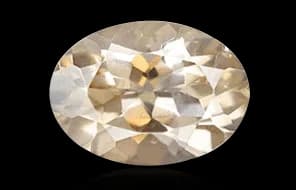
Peach Morganite
Peach Morganite is a graceful pink-to-orange-pink beryl prized for its soft pastel color, transparency and elegant appeal in contemporary jewelry.
Peach Morganite is the peach-to-orange-pink variety of beryl, the same mineral family that includes emerald and aquamarine. Its chemical composition is Be3Al2Si6O18, and traces of manganese give morganite its characteristic pink and peach colors. It crystallizes in the hexagonal system and has a vitreous luster, a refractive index of 1.583-1.590, a specific gravity of 2.80-2.91 and a Mohs hardness of 7.5-8. These properties make it a durable choice for many types of jewelry when protected from hard knocks and abrasive contact. Morganite is commonly found in pegmatites, where slow geological processes can produce exceptionally large crystals. Important sources include Brazil, Madagascar, Mozambique, Afghanistan, China, Russia and the United States. Madagascar played an important role in the modern history of the gem. Rose beryl was identified there in 1910, and gemologist George Kunz proposed the name morganite in honor of J.P. Morgan in December 1910. The mineral has since become established as a distinctive colored gemstone in its own right. Peach Morganite can display pleochroism, with subtle differences in color depending on viewing direction, so careful orientation during cutting can improve its appearance. Its color range includes peach, salmon, pink, orangy pink and purplish pink, while stronger and more saturated colors are generally rarer. Large crystals are possible, and large faceted stones are available in the market. Today, Peach Morganite is used in rings, earrings, pendants, bracelets and other fine jewelry, particularly designs that emphasize soft pastel color and clean contemporary styling. Buyers value it for its distinctive warm color, good transparency, relatively strong durability and ability to be fashioned into substantial center stones. When researching Peach Morganite meaning, it is best understood in aesthetic and symbolic terms rather than as a gemstone with scientifically established powers.
- Mineral Family
- Beryl
- Chemical Formula
- Be3Al2Si6O18
- Mohs Hardness
- 7.5 - 8
- Refractive Index
- 1.583 - 1.590
- Specific Gravity
- 2.80 - 2.91
- Cleavage
- Imperfect basal cleavage
- Crystal System
- Hexagonal
- Luster
- Vitreous
- Color Range
- Pink, Orange, Purple
When buying Peach Morganite online, begin with color because it is one of the most important factors affecting appearance and value. Attractive peach, salmon and orangy-pink tones are characteristic of the material, while stronger pink to purplish-pink colors can command greater interest and value. Clarity is also important. Faceted morganite is commonly eye-clean, although larger stones may reveal inclusions. A well-cut stone should have good symmetry, attractive proportions and lively brilliance. Because morganite is strongly pleochroic, the cutter must orient the rough carefully to display the most attractive color. Carat weight should be considered together with color, clarity and cut rather than by weight alone. Large morganite is available, but fine color in larger sizes can be especially desirable. Origin can add interest and provenance, but it should not automatically determine quality or price. Brazil and Madagascar are historically important sources, while notable material has also come from Mozambique, Afghanistan, China, Russia and the United States. Treatment disclosure is essential. Morganite is routinely heat treated to modify orange-pink material toward a purer pink, and the resulting color is generally stable under normal conditions. Untreated peach or salmon material can also be attractive and may appeal to collectors who specifically seek untreated stones. Natural morganite and laboratory-grown morganite are distinct categories. Synthetic morganite is produced, although not in large commercial quantities, so a reputable laboratory report can be useful when origin or natural status matters. A trusted colored-stone identification report can identify whether a stone is natural or laboratory-grown and disclose detectable treatments. Certification is particularly valuable for expensive stones, unusual sizes or stones marketed as rare or untreated. For authenticity, purchase from a reputable seller, request treatment and origin information where available, examine the stone under appropriate lighting and obtain an independent laboratory report when the purchase value justifies it. The final price of Peach Morganite depends on color strength, clarity, cut quality, carat weight, treatment status, origin, craftsmanship and market demand rather than a fixed price-per-carat formula.
Morganite is durable enough for many everyday jewelry applications, but its 7.5-8 Mohs hardness does not make it immune to scratches, chips or impact damage. Clean Peach Morganite with warm water, mild soap and a soft brush. Rinse thoroughly and dry with a soft cloth. Ultrasonic and steam cleaning may be suitable in some cases, but they should be avoided when the stone has significant fractures, liquid inclusions or certain treatments. Warm, soapy water is the safest general cleaning method. Store Peach Morganite separately from harder gemstones to reduce the risk of scratches, ideally in a soft pouch or a lined jewelry compartment. Avoid strong impacts, abrasive materials, harsh chemicals and prolonged exposure to high heat. Morganite can be attacked by hydrofluoric acid, so it should never come into contact with products containing this substance. For rings worn regularly, remove the jewelry during activities involving heavy impact, rough work or abrasive surfaces. Regular inspection of the setting is also sensible, particularly for larger center stones.
Peach Morganite is the peach-to-orange-pink variety of beryl, the same mineral family that includes emerald and aquamarine. Its chemical composition is Be3Al2Si6O18, and traces of manganese give morganite its characteristic pink and peach colors. It crystallizes in the hexagonal system and has a vitreous luster, a refractive index of 1.583-1.590, a specific gravity of 2.80-2.91 and a Mohs hardness of 7.5-8. These properties make it a durable choice for many types of jewelry when protected from hard knocks and abrasive contact. Morganite is commonly found in pegmatites, where slow geological processes can produce exceptionally large crystals. Important sources include Brazil, Madagascar, Mozambique, Afghanistan, China, Russia and the United States. Madagascar played an important role in the modern history of the gem. Rose beryl was identified there in 1910, and gemologist George Kunz proposed the name morganite in honor of J.P. Morgan in December 1910. The mineral has since become established as a distinctive colored gemstone in its own right. Peach Morganite can display pleochroism, with subtle differences in color depending on viewing direction, so careful orientation during cutting can improve its appearance. Its color range includes peach, salmon, pink, orangy pink and purplish pink, while stronger and more saturated colors are generally rarer. Large crystals are possible, and large faceted stones are available in the market. Today, Peach Morganite is used in rings, earrings, pendants, bracelets and other fine jewelry, particularly designs that emphasize soft pastel color and clean contemporary styling. Buyers value it for its distinctive warm color, good transparency, relatively strong durability and ability to be fashioned into substantial center stones. When researching Peach Morganite meaning, it is best understood in aesthetic and symbolic terms rather than as a gemstone with scientifically established powers.
- Mineral Family
- Beryl
- Chemical Formula
- Be3Al2Si6O18
- Mohs Hardness
- 7.5 - 8
- Refractive Index
- 1.583 - 1.590
- Specific Gravity
- 2.80 - 2.91
- Cleavage
- Imperfect basal cleavage
- Crystal System
- Hexagonal
- Luster
- Vitreous
- Color Range
- Pink, Orange, Purple
When buying Peach Morganite online, begin with color because it is one of the most important factors affecting appearance and value. Attractive peach, salmon and orangy-pink tones are characteristic of the material, while stronger pink to purplish-pink colors can command greater interest and value. Clarity is also important. Faceted morganite is commonly eye-clean, although larger stones may reveal inclusions. A well-cut stone should have good symmetry, attractive proportions and lively brilliance. Because morganite is strongly pleochroic, the cutter must orient the rough carefully to display the most attractive color. Carat weight should be considered together with color, clarity and cut rather than by weight alone. Large morganite is available, but fine color in larger sizes can be especially desirable. Origin can add interest and provenance, but it should not automatically determine quality or price. Brazil and Madagascar are historically important sources, while notable material has also come from Mozambique, Afghanistan, China, Russia and the United States. Treatment disclosure is essential. Morganite is routinely heat treated to modify orange-pink material toward a purer pink, and the resulting color is generally stable under normal conditions. Untreated peach or salmon material can also be attractive and may appeal to collectors who specifically seek untreated stones. Natural morganite and laboratory-grown morganite are distinct categories. Synthetic morganite is produced, although not in large commercial quantities, so a reputable laboratory report can be useful when origin or natural status matters. A trusted colored-stone identification report can identify whether a stone is natural or laboratory-grown and disclose detectable treatments. Certification is particularly valuable for expensive stones, unusual sizes or stones marketed as rare or untreated. For authenticity, purchase from a reputable seller, request treatment and origin information where available, examine the stone under appropriate lighting and obtain an independent laboratory report when the purchase value justifies it. The final price of Peach Morganite depends on color strength, clarity, cut quality, carat weight, treatment status, origin, craftsmanship and market demand rather than a fixed price-per-carat formula.
Morganite is durable enough for many everyday jewelry applications, but its 7.5-8 Mohs hardness does not make it immune to scratches, chips or impact damage. Clean Peach Morganite with warm water, mild soap and a soft brush. Rinse thoroughly and dry with a soft cloth. Ultrasonic and steam cleaning may be suitable in some cases, but they should be avoided when the stone has significant fractures, liquid inclusions or certain treatments. Warm, soapy water is the safest general cleaning method. Store Peach Morganite separately from harder gemstones to reduce the risk of scratches, ideally in a soft pouch or a lined jewelry compartment. Avoid strong impacts, abrasive materials, harsh chemicals and prolonged exposure to high heat. Morganite can be attacked by hydrofluoric acid, so it should never come into contact with products containing this substance. For rings worn regularly, remove the jewelry during activities involving heavy impact, rough work or abrasive surfaces. Regular inspection of the setting is also sensible, particularly for larger center stones.
Peach Morganite for Sale
No gems found
Try broadening your search or adjusting your filters.
Have a gem of your own? List it free - no fees