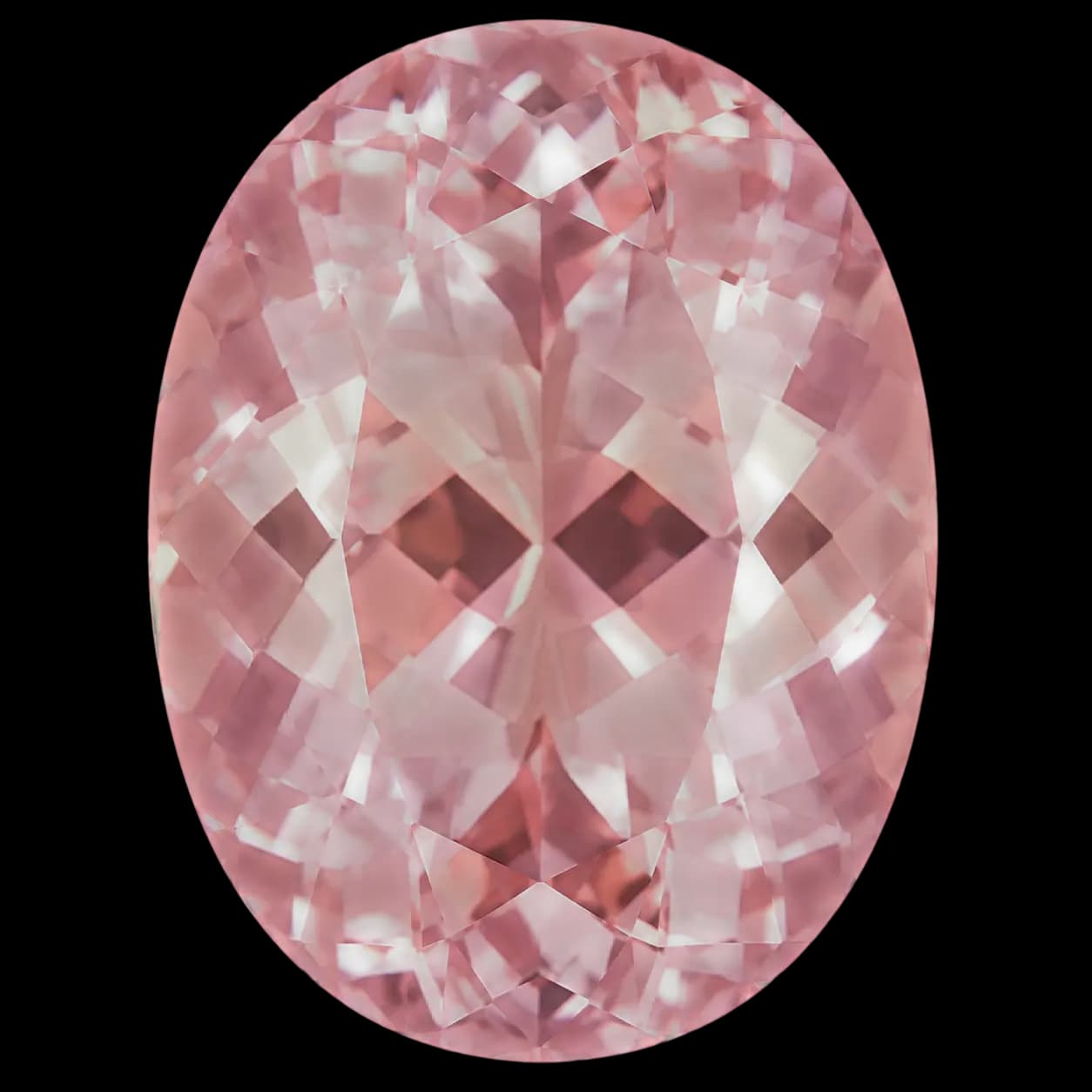
Morganite
Morganite is a delicate pink gemstone from the Beryl family, admired for its soft pastel colors, excellent durability, and elegant appeal in fine jewelry.
Morganite is a beautiful variety of Beryl, the same mineral family that includes Emerald and Aquamarine. Known for its charming pink to peach hues, this gemstone has become highly popular among jewelry designers and collectors seeking an elegant colored gemstone with excellent wearability.
Morganite forms in pegmatite deposits, where mineral-rich fluids allow large, well-formed crystals to develop over long geological periods. Its pink coloration is mainly caused by traces of manganese within the crystal structure.
The chemical composition of Morganite is beryllium aluminum silicate (Be3Al2(SiO3)6). It belongs to the hexagonal crystal system and typically displays a vitreous luster with transparent to translucent clarity. Morganite has a Mohs hardness of 7.5 to 8, making it suitable for many types of jewelry including rings, earrings, pendants, and bracelets.
Morganite is most commonly found in shades of soft pink, peach, salmon, and lilac-pink. Fine-quality stones with attractive saturation, excellent transparency, and balanced color are especially valued by gemstone buyers.
Important sources of Morganite include Brazil, Mozambique, Madagascar, Afghanistan, Namibia, and the United States. Some of the most admired Morganite specimens come from Brazil and Mozambique due to their attractive pink and peach tones.
Discovered in the early 20th century, Morganite was named in honor of American financier and gemstone collector J.P. Morgan, who supported mineral research and gemstone collections. Today, Morganite remains a favorite choice for modern jewelry because of its romantic appearance, durability, and availability in larger sizes.
Buyers appreciate Morganite gemstone for its gentle colors, affordability compared with many other fine gemstones, and ability to create sophisticated Morganite jewelry designs.
- Mineral Family
- Beryl
- Chemical Formula
- Be3Al2(SiO3)6
- Mohs Hardness
- 7.5 - 8
- Refractive Index
- 1.562 - 1.602
- Specific Gravity
- 2.71 - 2.90
- Cleavage
- Indistinct
- Crystal System
- Hexagonal
- Luster
- Vitreous
- Color Range
- Pink, Orange, Purple
Choosing a high-quality Morganite gemstone depends on several important factors including color, clarity, cut, carat weight, origin, treatments, and certification.
Color: Color is one of the most important factors affecting Morganite value. The most desirable stones usually display attractive pink, peach, or salmon tones with good saturation. Very pale stones may have lower value, while overly dark colors should be carefully evaluated for possible treatments.
Clarity: Morganite is commonly found with good transparency and fewer visible inclusions. Eye-clean gemstones with excellent clarity are preferred for fine jewelry pieces because they provide better brilliance and beauty.
Cut: A well-executed cut enhances Morganite's color and light reflection. Popular cuts include oval, cushion, round, pear, emerald, and radiant shapes. The best cut depends on the gemstone's natural shape and color distribution.
Carat Weight: Morganite often occurs in large crystals, so larger gemstones are widely available compared with many other colored gemstones. However, color quality and clarity generally have more influence on value than size alone.
Origin: Morganite from Brazil, Mozambique, Madagascar, and other notable mining regions may attract collector interest. However, gemstone quality is primarily determined by beauty and characteristics rather than origin alone.
Treatments: Many Morganite gemstones available in the market undergo heat treatment to improve or enhance color. Heat-treated Morganite is widely accepted in the jewelry industry when properly disclosed. Buyers seeking untreated stones should request treatment information before purchase.
Natural vs Lab-Grown Morganite: Natural Morganite forms through geological processes over millions of years. Lab-grown alternatives may offer similar chemical and physical properties but are created in controlled environments. Buyers should confirm whether a gemstone is natural or laboratory-created before purchasing.
Certification and Authenticity: A reputable gemstone certificate from a recognized gemological laboratory can provide information about authenticity, treatments, and gemstone characteristics. Certification helps buyers make informed decisions when purchasing valuable Morganite gemstones.
Price Factors: Morganite prices depend on color quality, clarity, cut, size, treatment status, and certification. Stronger pink hues with excellent transparency generally command higher prices than very pale stones.
Morganite is a durable gemstone suitable for regular jewelry use when handled properly. With a hardness of 7.5 to 8 on the Mohs scale, it can withstand everyday wear, although care should be taken to protect it from scratches and impacts.
Clean Morganite jewelry using warm water, mild soap, and a soft brush. Avoid harsh chemicals, ultrasonic cleaners, and sudden temperature changes, especially for treated stones.
Store Morganite jewelry separately from harder gemstones such as diamonds and sapphires to prevent surface scratches. Keeping each piece in a soft pouch or individual compartment is recommended.
Remove Morganite rings and bracelets before activities involving strong impacts, household chemicals, or heavy manual work. Proper care helps maintain the gemstone's brilliance and beauty for years.
Morganite is a beautiful variety of Beryl, the same mineral family that includes Emerald and Aquamarine. Known for its charming pink to peach hues, this gemstone has become highly popular among jewelry designers and collectors seeking an elegant colored gemstone with excellent wearability.
Morganite forms in pegmatite deposits, where mineral-rich fluids allow large, well-formed crystals to develop over long geological periods. Its pink coloration is mainly caused by traces of manganese within the crystal structure.
The chemical composition of Morganite is beryllium aluminum silicate (Be3Al2(SiO3)6). It belongs to the hexagonal crystal system and typically displays a vitreous luster with transparent to translucent clarity. Morganite has a Mohs hardness of 7.5 to 8, making it suitable for many types of jewelry including rings, earrings, pendants, and bracelets.
Morganite is most commonly found in shades of soft pink, peach, salmon, and lilac-pink. Fine-quality stones with attractive saturation, excellent transparency, and balanced color are especially valued by gemstone buyers.
Important sources of Morganite include Brazil, Mozambique, Madagascar, Afghanistan, Namibia, and the United States. Some of the most admired Morganite specimens come from Brazil and Mozambique due to their attractive pink and peach tones.
Discovered in the early 20th century, Morganite was named in honor of American financier and gemstone collector J.P. Morgan, who supported mineral research and gemstone collections. Today, Morganite remains a favorite choice for modern jewelry because of its romantic appearance, durability, and availability in larger sizes.
Buyers appreciate Morganite gemstone for its gentle colors, affordability compared with many other fine gemstones, and ability to create sophisticated Morganite jewelry designs.
- Mineral Family
- Beryl
- Chemical Formula
- Be3Al2(SiO3)6
- Mohs Hardness
- 7.5 - 8
- Refractive Index
- 1.562 - 1.602
- Specific Gravity
- 2.71 - 2.90
- Cleavage
- Indistinct
- Crystal System
- Hexagonal
- Luster
- Vitreous
- Color Range
- Pink, Orange, Purple
Choosing a high-quality Morganite gemstone depends on several important factors including color, clarity, cut, carat weight, origin, treatments, and certification.
Color: Color is one of the most important factors affecting Morganite value. The most desirable stones usually display attractive pink, peach, or salmon tones with good saturation. Very pale stones may have lower value, while overly dark colors should be carefully evaluated for possible treatments.
Clarity: Morganite is commonly found with good transparency and fewer visible inclusions. Eye-clean gemstones with excellent clarity are preferred for fine jewelry pieces because they provide better brilliance and beauty.
Cut: A well-executed cut enhances Morganite's color and light reflection. Popular cuts include oval, cushion, round, pear, emerald, and radiant shapes. The best cut depends on the gemstone's natural shape and color distribution.
Carat Weight: Morganite often occurs in large crystals, so larger gemstones are widely available compared with many other colored gemstones. However, color quality and clarity generally have more influence on value than size alone.
Origin: Morganite from Brazil, Mozambique, Madagascar, and other notable mining regions may attract collector interest. However, gemstone quality is primarily determined by beauty and characteristics rather than origin alone.
Treatments: Many Morganite gemstones available in the market undergo heat treatment to improve or enhance color. Heat-treated Morganite is widely accepted in the jewelry industry when properly disclosed. Buyers seeking untreated stones should request treatment information before purchase.
Natural vs Lab-Grown Morganite: Natural Morganite forms through geological processes over millions of years. Lab-grown alternatives may offer similar chemical and physical properties but are created in controlled environments. Buyers should confirm whether a gemstone is natural or laboratory-created before purchasing.
Certification and Authenticity: A reputable gemstone certificate from a recognized gemological laboratory can provide information about authenticity, treatments, and gemstone characteristics. Certification helps buyers make informed decisions when purchasing valuable Morganite gemstones.
Price Factors: Morganite prices depend on color quality, clarity, cut, size, treatment status, and certification. Stronger pink hues with excellent transparency generally command higher prices than very pale stones.
Morganite is a durable gemstone suitable for regular jewelry use when handled properly. With a hardness of 7.5 to 8 on the Mohs scale, it can withstand everyday wear, although care should be taken to protect it from scratches and impacts.
Clean Morganite jewelry using warm water, mild soap, and a soft brush. Avoid harsh chemicals, ultrasonic cleaners, and sudden temperature changes, especially for treated stones.
Store Morganite jewelry separately from harder gemstones such as diamonds and sapphires to prevent surface scratches. Keeping each piece in a soft pouch or individual compartment is recommended.
Remove Morganite rings and bracelets before activities involving strong impacts, household chemicals, or heavy manual work. Proper care helps maintain the gemstone's brilliance and beauty for years.
Morganite for Sale
No gems found
Try broadening your search or adjusting your filters.
Have a gem of your own? List it free - no fees