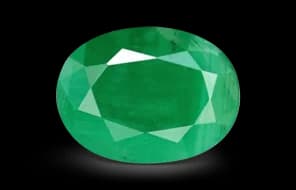
Indian Emerald
Indian Emerald is a natural green variety of beryl valued for its distinctive color, Indian origin, geological rarity, and appeal in fine jewelry and collections.
Indian Emerald refers to emerald-quality green beryl found in India, particularly in the Rajasthan emerald belt. Emerald is the green to bluish green variety of beryl, with the chemical formula Be₃Al₂Si₆O₁₈. It crystallizes in the hexagonal crystal system and has a Mohs hardness of 7.5-8, making it suitable for jewelry when handled with appropriate care. Its refractive index is typically around 1.577-1.583 and its specific gravity is about 2.72. The luster is vitreous, and cleavage is poor. Indian Emeralds can range from yellowish green through green to bluish green, although individual stones vary considerably in tone, saturation, transparency, and inclusion character. Color is one of the most important factors when evaluating emerald, with vivid, well-saturated green generally being especially desirable. Emerald deposits in India are notably associated with Rajasthan, where occurrences extend across the Ajmer-Rajsamand belt. Important localities include Rajgarh, Tikhi, and Kalaguman. Indian emerald occurrences have also been reported in Odisha and other parts of India. In Rajasthan, emerald mineralization is associated with geological zones involving pegmatites and schist, and the occurrences can be sporadic and variable. Historically, India has also developed a strong gemstone cutting and trading tradition, with Jaipur becoming an important center for processing and commerce in colored gemstones. Today, Indian Emerald is used in rings, earrings, pendants, bracelets, collector pieces, and other jewelry designs. Buyers value natural Indian Emerald for its green color, Indian geological provenance, individuality of inclusions, and potential affordability compared with exceptionally rare emeralds from some other major origins. As with emeralds from any locality, origin should be established by a qualified gemological laboratory when it is important to the purchase.
- Mineral Family
- Beryl
- Chemical Formula
- Be₃Al₂Si₆O₁₈
- Mohs Hardness
- 7.5 - 8
- Refractive Index
- 1.577 - 1.583
- Specific Gravity
- 2.72
- Cleavage
- Poor
- Crystal System
- Hexagonal
- Luster
- Vitreous
- Color Range
- Green
When buying an Indian Emerald gemstone, evaluate the stone as an individual gem rather than relying on origin alone. Color is a major value factor: look for attractive green to bluish green color with good saturation and a tone that is not excessively dark. Clarity is also important, although inclusions are common in natural emerald and should be assessed in relation to transparency, durability, and overall appearance rather than expecting diamond-like clarity. Cut should maximize color, brilliance, face-up appearance, and durability while minimizing the impact of fractures or inclusions. Carat weight affects price, and larger stones of attractive color and clarity can become increasingly scarce. Origin can add interest and value when independently documented, but an Indian origin should not automatically be interpreted as superior or inferior to another source. Treatments must be disclosed. Emeralds are commonly clarity enhanced, particularly with oils or other filling materials, and the extent and type of treatment can materially affect value and care requirements. Natural Indian Emerald and laboratory-grown synthetic emerald are different products: a natural stone formed in the earth should not be represented as synthetic, while a laboratory-grown emerald should be clearly disclosed as synthetic. Imitations and composite materials should also be distinguished from natural emerald. For significant purchases, request an independent gemological report confirming that the material is natural emerald and, where relevant, documenting detectable treatments and geographic origin. Authenticity should be assessed through professional gemological testing rather than appearance alone. Price depends on color, clarity, transparency, cut, carat weight, treatment, origin documentation, durability, and overall quality. A reliable seller should provide clear information about these factors and avoid making unsupported claims about origin or quality.
To care for Indian Emerald jewelry, clean the gemstone gently with lukewarm water, a soft cloth, and mild soap when appropriate. Avoid harsh chemicals, abrasive cleaners, steam cleaners, and ultrasonic cleaning unless a qualified professional has confirmed that the particular stone and its treatment can safely tolerate them. This is especially important because many emeralds contain fractures or have undergone clarity enhancement. Remove emerald jewelry before strenuous activities, household cleaning, gardening, or situations where the stone may receive a sharp impact. Store each piece separately in a soft-lined compartment or jewelry pouch to reduce scratching and accidental contact with harder materials. Avoid prolonged exposure to excessive heat or sudden temperature changes, particularly for heavily included or treated stones. Periodically inspect the setting and gemstone for loose prongs, chips, or damage, and have valuable pieces checked by a qualified jeweler or gemologist.
Indian Emerald refers to emerald-quality green beryl found in India, particularly in the Rajasthan emerald belt. Emerald is the green to bluish green variety of beryl, with the chemical formula Be₃Al₂Si₆O₁₈. It crystallizes in the hexagonal crystal system and has a Mohs hardness of 7.5-8, making it suitable for jewelry when handled with appropriate care. Its refractive index is typically around 1.577-1.583 and its specific gravity is about 2.72. The luster is vitreous, and cleavage is poor. Indian Emeralds can range from yellowish green through green to bluish green, although individual stones vary considerably in tone, saturation, transparency, and inclusion character. Color is one of the most important factors when evaluating emerald, with vivid, well-saturated green generally being especially desirable. Emerald deposits in India are notably associated with Rajasthan, where occurrences extend across the Ajmer-Rajsamand belt. Important localities include Rajgarh, Tikhi, and Kalaguman. Indian emerald occurrences have also been reported in Odisha and other parts of India. In Rajasthan, emerald mineralization is associated with geological zones involving pegmatites and schist, and the occurrences can be sporadic and variable. Historically, India has also developed a strong gemstone cutting and trading tradition, with Jaipur becoming an important center for processing and commerce in colored gemstones. Today, Indian Emerald is used in rings, earrings, pendants, bracelets, collector pieces, and other jewelry designs. Buyers value natural Indian Emerald for its green color, Indian geological provenance, individuality of inclusions, and potential affordability compared with exceptionally rare emeralds from some other major origins. As with emeralds from any locality, origin should be established by a qualified gemological laboratory when it is important to the purchase.
- Mineral Family
- Beryl
- Chemical Formula
- Be₃Al₂Si₆O₁₈
- Mohs Hardness
- 7.5 - 8
- Refractive Index
- 1.577 - 1.583
- Specific Gravity
- 2.72
- Cleavage
- Poor
- Crystal System
- Hexagonal
- Luster
- Vitreous
- Color Range
- Green
When buying an Indian Emerald gemstone, evaluate the stone as an individual gem rather than relying on origin alone. Color is a major value factor: look for attractive green to bluish green color with good saturation and a tone that is not excessively dark. Clarity is also important, although inclusions are common in natural emerald and should be assessed in relation to transparency, durability, and overall appearance rather than expecting diamond-like clarity. Cut should maximize color, brilliance, face-up appearance, and durability while minimizing the impact of fractures or inclusions. Carat weight affects price, and larger stones of attractive color and clarity can become increasingly scarce. Origin can add interest and value when independently documented, but an Indian origin should not automatically be interpreted as superior or inferior to another source. Treatments must be disclosed. Emeralds are commonly clarity enhanced, particularly with oils or other filling materials, and the extent and type of treatment can materially affect value and care requirements. Natural Indian Emerald and laboratory-grown synthetic emerald are different products: a natural stone formed in the earth should not be represented as synthetic, while a laboratory-grown emerald should be clearly disclosed as synthetic. Imitations and composite materials should also be distinguished from natural emerald. For significant purchases, request an independent gemological report confirming that the material is natural emerald and, where relevant, documenting detectable treatments and geographic origin. Authenticity should be assessed through professional gemological testing rather than appearance alone. Price depends on color, clarity, transparency, cut, carat weight, treatment, origin documentation, durability, and overall quality. A reliable seller should provide clear information about these factors and avoid making unsupported claims about origin or quality.
To care for Indian Emerald jewelry, clean the gemstone gently with lukewarm water, a soft cloth, and mild soap when appropriate. Avoid harsh chemicals, abrasive cleaners, steam cleaners, and ultrasonic cleaning unless a qualified professional has confirmed that the particular stone and its treatment can safely tolerate them. This is especially important because many emeralds contain fractures or have undergone clarity enhancement. Remove emerald jewelry before strenuous activities, household cleaning, gardening, or situations where the stone may receive a sharp impact. Store each piece separately in a soft-lined compartment or jewelry pouch to reduce scratching and accidental contact with harder materials. Avoid prolonged exposure to excessive heat or sudden temperature changes, particularly for heavily included or treated stones. Periodically inspect the setting and gemstone for loose prongs, chips, or damage, and have valuable pieces checked by a qualified jeweler or gemologist.
Indian Emerald for Sale
No gems found
Try broadening your search or adjusting your filters.
Have a gem of your own? List it free - no fees