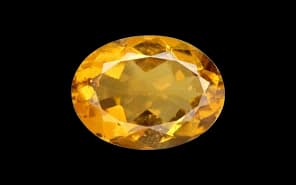
Heliodor
Heliodor is a luminous yellow to golden-yellow variety of beryl, prized for its warm color, durability, clarity, and distinctive appeal in fine jewelry.
Heliodor is the yellow to golden-yellow variety of beryl, a mineral family that also includes emerald, aquamarine, morganite, and goshenite. Its name comes from Greek words meaning “gift of the sun,” reflecting its characteristic warm golden appearance. Heliodor has the chemical formula Be3Al2Si6O18 and crystallizes in the hexagonal system. Its yellow coloration is primarily associated with iron incorporated into the beryl crystal structure. Heliodor typically has a Mohs hardness of 7.5 to 8, making it durable enough for many types of jewelry when handled appropriately. It has a vitreous luster, a refractive index generally within the beryl range, and specific gravity that varies with composition and inclusions. Colors range from pale yellow and golden yellow to greenish-yellow and orange-yellow, with attractive, well-saturated colors often preferred by collectors and jewelry buyers. Like other beryls, heliodor can form in pegmatitic environments and may occur as transparent, well-formed crystals suitable for faceting. Brazil is an important source, while heliodor and yellow beryl specimens have also been documented from countries including Madagascar, Ukraine, Namibia, and Zimbabwe. The Smithsonian National Museum of Natural History holds notable heliodor specimens from Brazil, including large faceted examples. In modern jewelry, Heliodor gemstone is commonly fashioned into oval, emerald, cushion, round, pear, and other traditional cuts for rings, earrings, pendants, and necklaces. Buyers value natural Heliodor for its sunny color, good durability, relative rarity compared with more common yellow gemstones, and its connection to the broader beryl family. When choosing natural Heliodor, transparent stones with attractive color and well-proportioned cuts can offer particularly strong visual appeal.
- Mineral Family
- Beryl
- Chemical Formula
- Be3Al2Si6O18
- Mohs Hardness
- 7.5 - 8
- Refractive Index
- 1.568 - 1.586
- Specific Gravity
- 2.66 - 2.80
- Cleavage
- Imperfect to indistinct basal cleavage
- Crystal System
- Hexagonal
- Luster
- Vitreous
- Color Range
- Yellow, Orange, Green
When buying Heliodor gemstone, evaluate color, clarity, cut, carat weight, origin, treatments, and documentation together rather than judging the stone by size alone. Color is usually the first consideration: attractive yellow, golden-yellow, orange-yellow, and greenish-yellow hues can all occur, while strong and evenly distributed color is generally desirable. Clarity is also important because transparent beryl can display its color and brilliance more effectively when distracting inclusions are limited. However, natural inclusions can provide useful evidence of natural origin and should not automatically be considered a defect. Cut determines how effectively the stone returns light and displays its color. Well-proportioned faceting with good symmetry and polish can significantly improve a Heliodor gemstone’s appearance. Carat weight affects price, but size should always be considered alongside color, clarity, cut, and overall beauty. Origin may influence desirability and price when a documented locality is associated with distinctive material, but origin should not be treated as a guarantee of quality. Treatment history should be disclosed by the seller. Some beryl can undergo treatments intended to alter color or appearance, so buyers seeking an untreated natural Heliodor should request clear treatment disclosure and, for valuable stones, an independent laboratory report. Natural and laboratory-grown materials should not be confused: a natural Heliodor formed in the earth is different from a laboratory-grown or synthetic material, even when their appearance is similar. Certification from a reputable independent gemological laboratory can help document whether the stone is natural, identify the gemstone species or variety, and disclose detectable treatments. Authenticity is best assessed through professional gemological testing rather than photographs alone. Price varies according to color quality, clarity, cut, carat weight, origin, treatment status, laboratory documentation, and market demand. For higher-value stones, compare the laboratory report with the seller’s description and ask for treatment information, return terms, and clear photographs or videos before purchasing.
Heliodor is reasonably durable for jewelry because beryl has a Mohs hardness of 7.5 to 8, but it should still be protected from hard knocks and scratches. Clean Heliodor with lukewarm water, mild soap, and a soft cloth or soft brush. Rinse thoroughly and dry with a clean, lint-free cloth. Avoid harsh chemicals, sudden temperature changes, and abrasive cleaning products. For valuable or treated stones, check with a professional jeweler or gemologist before using ultrasonic or steam cleaning. Store Heliodor separately from harder gemstones and avoid allowing pieces to rub against one another. A fabric-lined jewelry box or individual soft pouch is suitable for storage. Rings and other frequently worn pieces should be removed before strenuous activities, impact-prone work, or situations where chemicals may contact the gemstone. Regular professional inspection can help ensure that the stone and its setting remain secure.
Heliodor is the yellow to golden-yellow variety of beryl, a mineral family that also includes emerald, aquamarine, morganite, and goshenite. Its name comes from Greek words meaning “gift of the sun,” reflecting its characteristic warm golden appearance. Heliodor has the chemical formula Be3Al2Si6O18 and crystallizes in the hexagonal system. Its yellow coloration is primarily associated with iron incorporated into the beryl crystal structure. Heliodor typically has a Mohs hardness of 7.5 to 8, making it durable enough for many types of jewelry when handled appropriately. It has a vitreous luster, a refractive index generally within the beryl range, and specific gravity that varies with composition and inclusions. Colors range from pale yellow and golden yellow to greenish-yellow and orange-yellow, with attractive, well-saturated colors often preferred by collectors and jewelry buyers. Like other beryls, heliodor can form in pegmatitic environments and may occur as transparent, well-formed crystals suitable for faceting. Brazil is an important source, while heliodor and yellow beryl specimens have also been documented from countries including Madagascar, Ukraine, Namibia, and Zimbabwe. The Smithsonian National Museum of Natural History holds notable heliodor specimens from Brazil, including large faceted examples. In modern jewelry, Heliodor gemstone is commonly fashioned into oval, emerald, cushion, round, pear, and other traditional cuts for rings, earrings, pendants, and necklaces. Buyers value natural Heliodor for its sunny color, good durability, relative rarity compared with more common yellow gemstones, and its connection to the broader beryl family. When choosing natural Heliodor, transparent stones with attractive color and well-proportioned cuts can offer particularly strong visual appeal.
- Mineral Family
- Beryl
- Chemical Formula
- Be3Al2Si6O18
- Mohs Hardness
- 7.5 - 8
- Refractive Index
- 1.568 - 1.586
- Specific Gravity
- 2.66 - 2.80
- Cleavage
- Imperfect to indistinct basal cleavage
- Crystal System
- Hexagonal
- Luster
- Vitreous
- Color Range
- Yellow, Orange, Green
When buying Heliodor gemstone, evaluate color, clarity, cut, carat weight, origin, treatments, and documentation together rather than judging the stone by size alone. Color is usually the first consideration: attractive yellow, golden-yellow, orange-yellow, and greenish-yellow hues can all occur, while strong and evenly distributed color is generally desirable. Clarity is also important because transparent beryl can display its color and brilliance more effectively when distracting inclusions are limited. However, natural inclusions can provide useful evidence of natural origin and should not automatically be considered a defect. Cut determines how effectively the stone returns light and displays its color. Well-proportioned faceting with good symmetry and polish can significantly improve a Heliodor gemstone’s appearance. Carat weight affects price, but size should always be considered alongside color, clarity, cut, and overall beauty. Origin may influence desirability and price when a documented locality is associated with distinctive material, but origin should not be treated as a guarantee of quality. Treatment history should be disclosed by the seller. Some beryl can undergo treatments intended to alter color or appearance, so buyers seeking an untreated natural Heliodor should request clear treatment disclosure and, for valuable stones, an independent laboratory report. Natural and laboratory-grown materials should not be confused: a natural Heliodor formed in the earth is different from a laboratory-grown or synthetic material, even when their appearance is similar. Certification from a reputable independent gemological laboratory can help document whether the stone is natural, identify the gemstone species or variety, and disclose detectable treatments. Authenticity is best assessed through professional gemological testing rather than photographs alone. Price varies according to color quality, clarity, cut, carat weight, origin, treatment status, laboratory documentation, and market demand. For higher-value stones, compare the laboratory report with the seller’s description and ask for treatment information, return terms, and clear photographs or videos before purchasing.
Heliodor is reasonably durable for jewelry because beryl has a Mohs hardness of 7.5 to 8, but it should still be protected from hard knocks and scratches. Clean Heliodor with lukewarm water, mild soap, and a soft cloth or soft brush. Rinse thoroughly and dry with a clean, lint-free cloth. Avoid harsh chemicals, sudden temperature changes, and abrasive cleaning products. For valuable or treated stones, check with a professional jeweler or gemologist before using ultrasonic or steam cleaning. Store Heliodor separately from harder gemstones and avoid allowing pieces to rub against one another. A fabric-lined jewelry box or individual soft pouch is suitable for storage. Rings and other frequently worn pieces should be removed before strenuous activities, impact-prone work, or situations where chemicals may contact the gemstone. Regular professional inspection can help ensure that the stone and its setting remain secure.
Heliodor for Sale
No gems found
Try broadening your search or adjusting your filters.
Have a gem of your own? List it free - no fees