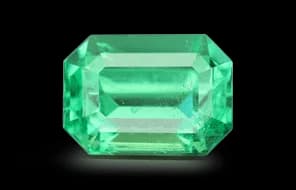
Colombian Emerald
Colombian Emerald is prized for its vivid green color, distinctive inclusions, and celebrated Colombian origin. Discover what makes natural Colombian Emerald gemstones exceptional for fine jewelry and collecting.
Colombian Emerald is the emerald variety associated with Colombia, one of the world’s most celebrated emerald-producing regions. Emerald is the green variety of beryl, a beryllium aluminum silicate mineral with the chemical formula Be3Al2Si6O18. Its green color is primarily related to trace chromium and vanadium.
Colombian emerald deposits are concentrated in the historic emerald belt of the Eastern Cordillera, particularly around important localities such as Muzo, Chivor, Coscuez, and surrounding mining areas. Unlike many major emerald deposits hosted by metamorphic or igneous-related environments, Colombian emeralds are characteristically associated with sedimentary black-shale formations and hydrothermal mineralizing fluids. This unusual geological setting contributes to the distinctive inclusion features for which Colombian emeralds are known.
The finest stones can display saturated green to slightly bluish green color, attractive transparency, and strong visual presence. Colombian emeralds are also famous for their internal gardens, or jardin, consisting of naturally occurring inclusions. Classic Colombian stones may contain jagged multiphase fluid inclusions with a gas bubble and cubic crystals. However, these inclusion characteristics should not be used alone to prove geographic origin because similar features can occur in emeralds from other deposits. Laboratory origin determination can combine microscopy, spectroscopy, and trace-element analysis.
Colombian emerald has a Mohs hardness of 7.5–8, a vitreous luster, a refractive index of approximately 1.577–1.583, and a specific gravity around 2.72. Emerald has indistinct cleavage and can be vulnerable to impact, particularly when inclusions or fractures are present. For this reason, protective jewelry settings are often preferable for rings and other pieces exposed to knocks.
Historically, Colombian emeralds were valued in the region long before modern international gem markets developed. During the Spanish colonial period, Colombian emeralds became highly prized in international trade, and mines such as Muzo and Chivor became internationally recognized sources. Today, Colombian Emerald jewelry includes rings, earrings, pendants, necklaces, and collector-quality loose gemstones.
Buyers value Colombian Emerald for the combination of saturated green color, distinctive natural character, geographic provenance, rarity of fine material, and long-standing importance in the colored-stone trade. A premium Colombian emerald does not need to be completely inclusion-free; attractive color, transparency, clarity, cut quality, and the nature and extent of treatment are considered together when assessing its quality.
- Mineral Family
- Beryl
- Chemical Formula
- Be3Al2Si6O18
- Mohs Hardness
- 7.5 - 8
- Refractive Index
- 1.577 - 1.583
- Specific Gravity
- 2.72
- Cleavage
- Indistinct on {0001}
- Crystal System
- Hexagonal
- Luster
- Vitreous
- Color Range
- Green
When buying Colombian Emerald online, evaluate the individual gemstone rather than assuming that every Colombian emerald is automatically exceptional. Colombian origin is important, but quality varies considerably between stones.
Color: Color is one of the most important value factors. Look for an attractive, well-saturated green with good distribution and pleasing tone. Slight bluish or yellowish modifiers can occur, but the overall appearance should be evaluated under neutral lighting.
Clarity: Natural emeralds commonly contain inclusions, and Colombian emeralds are famous for their jardin. Rather than demanding diamond-like clarity, examine whether inclusions materially reduce transparency, beauty, or durability. A highly transparent emerald with attractive inclusions can be particularly desirable.
Cut: A skilled cut should maximize color, light return, and face-up appearance while protecting the stone from damage. The classic emerald cut is common, but oval, cushion, pear, round, and other shapes are also available. Avoid poorly proportioned stones with excessive windowing or vulnerable edges.
Carat: Larger fine-quality Colombian emeralds are considerably rarer than smaller stones. As color, clarity, transparency, and cut remain strong while carat weight increases, price per carat can rise substantially.
Origin: A seller's statement that an emerald is Colombian is not equivalent to laboratory confirmation. If geographic origin is important to your purchase, request a report from a respected gemological laboratory that specifically provides origin determination. Muzo, Chivor, Coscuez, and other Colombian localities can produce stones with different visual and inclusion characteristics.
Treatments: Most natural emeralds encountered in the market have some degree of clarity enhancement. Cedar oil and other fracture-filling substances may be used to reduce the visibility of surface-reaching fractures. Treatment level can range from minor to significant, so ask for the treatment disclosure and laboratory report where available. Do not assume that 'natural' means 'untreated.'
Natural vs lab-grown: Natural Colombian Emerald formed in the earth can legitimately carry Colombian geographic origin. Laboratory-grown emerald may have essentially the same mineral composition but is created artificially and should be clearly disclosed as laboratory-grown; it should not be marketed as a natural Colombian-origin gemstone.
Certification: For a valuable stone, a laboratory report can document whether the material is natural emerald, identify detectable treatments, and, when requested and determinable, assess geographic origin. The report number should correspond to the actual stone being offered.
Authenticity: Buy from a seller who provides clear photographs or videos, treatment disclosure, weight and measurements, return terms, and appropriate documentation. Be cautious of listings that make exceptional origin or quality claims without supporting evidence.
Price factors: Colombian Emerald prices depend on color, tone, saturation, transparency, clarity, cut, carat weight, treatment level, provenance, laboratory documentation, and overall beauty. Geographic origin can influence market value, but origin alone does not guarantee a superior stone.
Colombian Emerald requires more careful handling than many harder gemstones. Clean emerald jewelry gently with lukewarm water, a mild soap, and a soft cloth or very soft brush. Rinse thoroughly and dry with a clean, lint-free cloth.
Avoid ultrasonic and steam cleaners unless a qualified professional has confirmed that the specific stone and its treatment can safely withstand them. Heat, sudden temperature changes, harsh chemicals, solvents, and prolonged exposure to strong cleaning agents can be especially problematic for treated or fractured emeralds.
Store Colombian Emerald jewelry separately from harder gemstones such as diamond to reduce scratching. A soft pouch or fabric-lined jewelry box is suitable. For rings and bracelets, remove the jewelry before sports, heavy manual work, household cleaning, or activities where the stone may receive a hard impact.
If the emerald has been clarity enhanced, periodic professional inspection is worthwhile. Ask a qualified jeweler or gemologist to check the setting and condition of the stone before using aggressive cleaning methods. With sensible handling and regular inspection, natural Colombian Emerald can remain a beautiful choice for fine jewelry for many years.
Colombian Emerald is the emerald variety associated with Colombia, one of the world’s most celebrated emerald-producing regions. Emerald is the green variety of beryl, a beryllium aluminum silicate mineral with the chemical formula Be3Al2Si6O18. Its green color is primarily related to trace chromium and vanadium.
Colombian emerald deposits are concentrated in the historic emerald belt of the Eastern Cordillera, particularly around important localities such as Muzo, Chivor, Coscuez, and surrounding mining areas. Unlike many major emerald deposits hosted by metamorphic or igneous-related environments, Colombian emeralds are characteristically associated with sedimentary black-shale formations and hydrothermal mineralizing fluids. This unusual geological setting contributes to the distinctive inclusion features for which Colombian emeralds are known.
The finest stones can display saturated green to slightly bluish green color, attractive transparency, and strong visual presence. Colombian emeralds are also famous for their internal gardens, or jardin, consisting of naturally occurring inclusions. Classic Colombian stones may contain jagged multiphase fluid inclusions with a gas bubble and cubic crystals. However, these inclusion characteristics should not be used alone to prove geographic origin because similar features can occur in emeralds from other deposits. Laboratory origin determination can combine microscopy, spectroscopy, and trace-element analysis.
Colombian emerald has a Mohs hardness of 7.5–8, a vitreous luster, a refractive index of approximately 1.577–1.583, and a specific gravity around 2.72. Emerald has indistinct cleavage and can be vulnerable to impact, particularly when inclusions or fractures are present. For this reason, protective jewelry settings are often preferable for rings and other pieces exposed to knocks.
Historically, Colombian emeralds were valued in the region long before modern international gem markets developed. During the Spanish colonial period, Colombian emeralds became highly prized in international trade, and mines such as Muzo and Chivor became internationally recognized sources. Today, Colombian Emerald jewelry includes rings, earrings, pendants, necklaces, and collector-quality loose gemstones.
Buyers value Colombian Emerald for the combination of saturated green color, distinctive natural character, geographic provenance, rarity of fine material, and long-standing importance in the colored-stone trade. A premium Colombian emerald does not need to be completely inclusion-free; attractive color, transparency, clarity, cut quality, and the nature and extent of treatment are considered together when assessing its quality.
- Mineral Family
- Beryl
- Chemical Formula
- Be3Al2Si6O18
- Mohs Hardness
- 7.5 - 8
- Refractive Index
- 1.577 - 1.583
- Specific Gravity
- 2.72
- Cleavage
- Indistinct on {0001}
- Crystal System
- Hexagonal
- Luster
- Vitreous
- Color Range
- Green
When buying Colombian Emerald online, evaluate the individual gemstone rather than assuming that every Colombian emerald is automatically exceptional. Colombian origin is important, but quality varies considerably between stones.
Color: Color is one of the most important value factors. Look for an attractive, well-saturated green with good distribution and pleasing tone. Slight bluish or yellowish modifiers can occur, but the overall appearance should be evaluated under neutral lighting.
Clarity: Natural emeralds commonly contain inclusions, and Colombian emeralds are famous for their jardin. Rather than demanding diamond-like clarity, examine whether inclusions materially reduce transparency, beauty, or durability. A highly transparent emerald with attractive inclusions can be particularly desirable.
Cut: A skilled cut should maximize color, light return, and face-up appearance while protecting the stone from damage. The classic emerald cut is common, but oval, cushion, pear, round, and other shapes are also available. Avoid poorly proportioned stones with excessive windowing or vulnerable edges.
Carat: Larger fine-quality Colombian emeralds are considerably rarer than smaller stones. As color, clarity, transparency, and cut remain strong while carat weight increases, price per carat can rise substantially.
Origin: A seller's statement that an emerald is Colombian is not equivalent to laboratory confirmation. If geographic origin is important to your purchase, request a report from a respected gemological laboratory that specifically provides origin determination. Muzo, Chivor, Coscuez, and other Colombian localities can produce stones with different visual and inclusion characteristics.
Treatments: Most natural emeralds encountered in the market have some degree of clarity enhancement. Cedar oil and other fracture-filling substances may be used to reduce the visibility of surface-reaching fractures. Treatment level can range from minor to significant, so ask for the treatment disclosure and laboratory report where available. Do not assume that 'natural' means 'untreated.'
Natural vs lab-grown: Natural Colombian Emerald formed in the earth can legitimately carry Colombian geographic origin. Laboratory-grown emerald may have essentially the same mineral composition but is created artificially and should be clearly disclosed as laboratory-grown; it should not be marketed as a natural Colombian-origin gemstone.
Certification: For a valuable stone, a laboratory report can document whether the material is natural emerald, identify detectable treatments, and, when requested and determinable, assess geographic origin. The report number should correspond to the actual stone being offered.
Authenticity: Buy from a seller who provides clear photographs or videos, treatment disclosure, weight and measurements, return terms, and appropriate documentation. Be cautious of listings that make exceptional origin or quality claims without supporting evidence.
Price factors: Colombian Emerald prices depend on color, tone, saturation, transparency, clarity, cut, carat weight, treatment level, provenance, laboratory documentation, and overall beauty. Geographic origin can influence market value, but origin alone does not guarantee a superior stone.
Colombian Emerald requires more careful handling than many harder gemstones. Clean emerald jewelry gently with lukewarm water, a mild soap, and a soft cloth or very soft brush. Rinse thoroughly and dry with a clean, lint-free cloth.
Avoid ultrasonic and steam cleaners unless a qualified professional has confirmed that the specific stone and its treatment can safely withstand them. Heat, sudden temperature changes, harsh chemicals, solvents, and prolonged exposure to strong cleaning agents can be especially problematic for treated or fractured emeralds.
Store Colombian Emerald jewelry separately from harder gemstones such as diamond to reduce scratching. A soft pouch or fabric-lined jewelry box is suitable. For rings and bracelets, remove the jewelry before sports, heavy manual work, household cleaning, or activities where the stone may receive a hard impact.
If the emerald has been clarity enhanced, periodic professional inspection is worthwhile. Ask a qualified jeweler or gemologist to check the setting and condition of the stone before using aggressive cleaning methods. With sensible handling and regular inspection, natural Colombian Emerald can remain a beautiful choice for fine jewelry for many years.
Colombian Emerald for Sale
No gems found
Try broadening your search or adjusting your filters.
Have a gem of your own? List it free - no fees