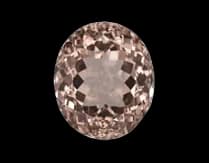
Brown Morganite
Brown morganite is a warm, sophisticated variety of beryl, prized for its soft earthy tones, excellent brilliance, and strong appeal in distinctive fine jewelry.
Brown morganite is a beryl gemstone, the same mineral family that includes emerald and aquamarine. Its brown to warm peachy-brown appearance is created primarily by trace coloring elements within the beryl crystal. Morganite forms in lithium- and cesium-rich granitic pegmatites, where crystals can develop slowly to exceptional size and clarity. Its chemical formula is Be3Al2Si6O18. Brown morganite has a Mohs hardness of 7.5-8, a vitreous luster, a refractive index of approximately 1.583-1.590, and a specific gravity of about 2.80-2.91. It crystallizes in the hexagonal system and generally has indistinct cleavage. Morganite is best known for pink and peach colors, while brown and brownish tones are less commonly encountered. Important morganite sources have included Brazil, Madagascar, Mozambique, Afghanistan, and the United States. The gemstone became established in the early 20th century and was named morganite in honor of financier and gem collector J. P. Morgan. Today, morganite is used in rings, earrings, pendants, bracelets, and other fine jewelry. Buyers value brown morganite for its distinctive color, transparency, relatively high durability, and attractive brilliance. Because color, clarity, treatment status, and origin can vary considerably, each stone should be evaluated individually.
- Mineral Family
- Beryl
- Chemical Formula
- Be3Al2Si6O18
- Mohs Hardness
- 7.5 - 8
- Refractive Index
- 1.583 - 1.590
- Specific Gravity
- 2.80 - 2.91
- Cleavage
- Indistinct
- Crystal System
- Hexagonal
- Luster
- Vitreous
- Color Range
- Orange, Pink
When buying brown morganite, start with color. Look for an attractive, even brown or brownish-peach tone with good saturation and lively appearance; unusually pale material may have less visual presence. Clarity is important because clean, transparent morganite can display excellent brilliance, although natural inclusions may occur. Cut should maximize light return and present the stone evenly, with well-proportioned faceting and good polish. Carat weight affects price, but larger morganite can be available in substantial sizes, so color and clarity should not be overlooked. Origin may add interest and documentation value, but it should not automatically be treated as a guarantee of quality. Ask whether the stone has been heated or otherwise treated, and request disclosure from the seller. Natural morganite is mined material, while laboratory-grown or synthetic beryl should be clearly identified if offered; do not assume every commercially available stone is natural. For valuable purchases, an independent gemological report can help confirm identity and disclose detectable treatments. Buy from a reputable seller, request clear photographs or video, verify dimensions and carat weight, and compare price based on the complete quality profile rather than color alone. The price of brown morganite depends on color, clarity, cut quality, size, origin, treatment, and documentation.
Morganite is reasonably durable for jewelry because of its 7.5-8 Mohs hardness, but it can still be scratched or damaged by harder materials and strong impacts. Clean brown morganite with warm water, a small amount of mild soap, and a soft brush or cloth, then rinse and dry carefully. Store each piece separately in a soft pouch or lined jewelry compartment to reduce scratching. Remove morganite jewelry before activities involving heavy impact, abrasive materials, or harsh household chemicals. Avoid sudden temperature changes and do not use aggressive cleaning methods unless a qualified jeweler or gemologist has confirmed they are appropriate for the specific stone and any treatment it may have received. Periodically check jewelry settings for looseness, especially in rings worn frequently.
Brown morganite is a beryl gemstone, the same mineral family that includes emerald and aquamarine. Its brown to warm peachy-brown appearance is created primarily by trace coloring elements within the beryl crystal. Morganite forms in lithium- and cesium-rich granitic pegmatites, where crystals can develop slowly to exceptional size and clarity. Its chemical formula is Be3Al2Si6O18. Brown morganite has a Mohs hardness of 7.5-8, a vitreous luster, a refractive index of approximately 1.583-1.590, and a specific gravity of about 2.80-2.91. It crystallizes in the hexagonal system and generally has indistinct cleavage. Morganite is best known for pink and peach colors, while brown and brownish tones are less commonly encountered. Important morganite sources have included Brazil, Madagascar, Mozambique, Afghanistan, and the United States. The gemstone became established in the early 20th century and was named morganite in honor of financier and gem collector J. P. Morgan. Today, morganite is used in rings, earrings, pendants, bracelets, and other fine jewelry. Buyers value brown morganite for its distinctive color, transparency, relatively high durability, and attractive brilliance. Because color, clarity, treatment status, and origin can vary considerably, each stone should be evaluated individually.
- Mineral Family
- Beryl
- Chemical Formula
- Be3Al2Si6O18
- Mohs Hardness
- 7.5 - 8
- Refractive Index
- 1.583 - 1.590
- Specific Gravity
- 2.80 - 2.91
- Cleavage
- Indistinct
- Crystal System
- Hexagonal
- Luster
- Vitreous
- Color Range
- Orange, Pink
When buying brown morganite, start with color. Look for an attractive, even brown or brownish-peach tone with good saturation and lively appearance; unusually pale material may have less visual presence. Clarity is important because clean, transparent morganite can display excellent brilliance, although natural inclusions may occur. Cut should maximize light return and present the stone evenly, with well-proportioned faceting and good polish. Carat weight affects price, but larger morganite can be available in substantial sizes, so color and clarity should not be overlooked. Origin may add interest and documentation value, but it should not automatically be treated as a guarantee of quality. Ask whether the stone has been heated or otherwise treated, and request disclosure from the seller. Natural morganite is mined material, while laboratory-grown or synthetic beryl should be clearly identified if offered; do not assume every commercially available stone is natural. For valuable purchases, an independent gemological report can help confirm identity and disclose detectable treatments. Buy from a reputable seller, request clear photographs or video, verify dimensions and carat weight, and compare price based on the complete quality profile rather than color alone. The price of brown morganite depends on color, clarity, cut quality, size, origin, treatment, and documentation.
Morganite is reasonably durable for jewelry because of its 7.5-8 Mohs hardness, but it can still be scratched or damaged by harder materials and strong impacts. Clean brown morganite with warm water, a small amount of mild soap, and a soft brush or cloth, then rinse and dry carefully. Store each piece separately in a soft pouch or lined jewelry compartment to reduce scratching. Remove morganite jewelry before activities involving heavy impact, abrasive materials, or harsh household chemicals. Avoid sudden temperature changes and do not use aggressive cleaning methods unless a qualified jeweler or gemologist has confirmed they are appropriate for the specific stone and any treatment it may have received. Periodically check jewelry settings for looseness, especially in rings worn frequently.
Brown Morganite for Sale
No gems found
Try broadening your search or adjusting your filters.
Have a gem of your own? List it free - no fees