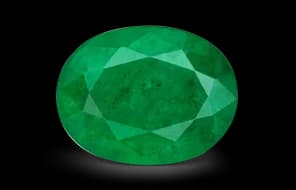
Brazilian Emerald
Brazilian Emerald is a distinctive green variety of beryl prized for its vibrant color, Brazilian origins, natural inclusions and elegant appeal in fine jewelry.
Brazilian Emerald refers to natural emerald from Brazil, rather than a separate mineral species. Emerald is the green to bluish-green gem variety of beryl, a beryllium aluminum silicate with the chemical formula Be₃Al₂Si₆O₁₈. Its green color is produced mainly by trace chromium and/or vanadium in the crystal structure. Emerald crystallizes in the hexagonal system, has a Mohs hardness of 7.5–8, a vitreous luster, and is generally characterized by refractive indices around 1.577–1.583 and a specific gravity near 2.72. Brazilian material can vary by deposit; documented examples include emerald from Goiás, Minas Gerais and Rio Grande do Norte. GIA has documented Fazenda Bonfim emeralds with attractive saturated bluish-green color, distinct to strong pleochroism and specific gravity of 2.72–2.74. Brazil has also produced notable emerald crystals and important deposits such as Santa Terezinha de Goiás and Belmont in Minas Gerais. Natural emeralds commonly contain fractures and mineral inclusions, often described collectively as jardin, and clarity characteristics should be evaluated as part of the stone rather than automatically treated as flaws. Brazilian Emerald is used in rings, earrings, pendants, bracelets and collector-quality loose gemstones. Buyers value it for its natural green color, Brazilian provenance, individuality and the range of qualities available. As with emeralds from any origin, the finest examples combine attractive saturated color, good transparency, attractive cutting and documented natural origin.
- Mineral Family
- Beryl
- Chemical Formula
- Be₃Al₂Si₆O₁₈
- Mohs Hardness
- 7.5 - 8
- Refractive Index
- 1.577 - 1.583
- Specific Gravity
- 2.72
- Cleavage
- Indistinct
- Crystal System
- Hexagonal
- Luster
- Vitreous
- Color Range
- Green
When buying Brazilian Emerald online, evaluate the stone as an individual natural emerald rather than assuming that Brazilian origin alone determines quality. Color is usually the most important value factor: attractive bluish green to pure green with vivid saturation and a tone that is not excessively dark is generally preferred. Clarity should be assessed carefully because inclusions and fractures are common in natural emerald; an exceptionally clean stone can command a significant premium. Cut should maximize color, transparency and visual appeal while protecting the relatively inclusion-sensitive material. Emeralds are commonly fashioned in step cuts, including the classic emerald cut, although oval, round, cushion and cabochon cuts are also available. Carat weight affects value, but larger stones are not automatically better; color, clarity, cut and overall appearance remain critical. Origin can add value when Brazilian provenance is established by a qualified laboratory, particularly for exceptional material. Treatments are important to disclose because emeralds are frequently clarity enhanced with oils or other substances. Ask whether a stone is untreated, oil treated, resin treated or otherwise enhanced, and whether the treatment has been documented. Natural Brazilian Emerald is mined material formed by geological processes, while laboratory-grown emerald is manufactured under controlled conditions and is not natural Brazilian material. Imitations and other green materials can also enter the market, so a reputable independent gemological report is the strongest way to document identity, natural status, treatments and, when offered, geographic origin. When comparing price, consider color quality, transparency, inclusions, cut, carat weight, treatment, origin documentation, laboratory certification and seller reputation rather than relying on origin or carat weight alone.
Care for Brazilian Emerald gently because emerald commonly contains fractures and may have been clarity enhanced. For routine cleaning, use lukewarm water, mild soap and a soft cloth or very soft brush. Rinse thoroughly and dry with a clean, soft cloth. Avoid harsh chemicals, steam cleaners and ultrasonic cleaners, especially when the stone has fractures or clarity-enhancement treatment, because heat, vibration or chemicals can damage the stone or affect the treatment. Store Brazilian Emerald separately from harder gemstones such as diamond to reduce scratching, preferably in a soft-lined compartment or jewelry pouch. Avoid prolonged exposure to strong heat and sudden temperature changes. For everyday wear, emerald rings should receive more protection from impacts than earrings or pendants, particularly when the stone has significant inclusions or surface-reaching fractures. Periodically have valuable Brazilian Emerald jewelry inspected by a qualified jeweler to check the setting and the condition of the stone.
Brazilian Emerald refers to natural emerald from Brazil, rather than a separate mineral species. Emerald is the green to bluish-green gem variety of beryl, a beryllium aluminum silicate with the chemical formula Be₃Al₂Si₆O₁₈. Its green color is produced mainly by trace chromium and/or vanadium in the crystal structure. Emerald crystallizes in the hexagonal system, has a Mohs hardness of 7.5–8, a vitreous luster, and is generally characterized by refractive indices around 1.577–1.583 and a specific gravity near 2.72. Brazilian material can vary by deposit; documented examples include emerald from Goiás, Minas Gerais and Rio Grande do Norte. GIA has documented Fazenda Bonfim emeralds with attractive saturated bluish-green color, distinct to strong pleochroism and specific gravity of 2.72–2.74. Brazil has also produced notable emerald crystals and important deposits such as Santa Terezinha de Goiás and Belmont in Minas Gerais. Natural emeralds commonly contain fractures and mineral inclusions, often described collectively as jardin, and clarity characteristics should be evaluated as part of the stone rather than automatically treated as flaws. Brazilian Emerald is used in rings, earrings, pendants, bracelets and collector-quality loose gemstones. Buyers value it for its natural green color, Brazilian provenance, individuality and the range of qualities available. As with emeralds from any origin, the finest examples combine attractive saturated color, good transparency, attractive cutting and documented natural origin.
- Mineral Family
- Beryl
- Chemical Formula
- Be₃Al₂Si₆O₁₈
- Mohs Hardness
- 7.5 - 8
- Refractive Index
- 1.577 - 1.583
- Specific Gravity
- 2.72
- Cleavage
- Indistinct
- Crystal System
- Hexagonal
- Luster
- Vitreous
- Color Range
- Green
When buying Brazilian Emerald online, evaluate the stone as an individual natural emerald rather than assuming that Brazilian origin alone determines quality. Color is usually the most important value factor: attractive bluish green to pure green with vivid saturation and a tone that is not excessively dark is generally preferred. Clarity should be assessed carefully because inclusions and fractures are common in natural emerald; an exceptionally clean stone can command a significant premium. Cut should maximize color, transparency and visual appeal while protecting the relatively inclusion-sensitive material. Emeralds are commonly fashioned in step cuts, including the classic emerald cut, although oval, round, cushion and cabochon cuts are also available. Carat weight affects value, but larger stones are not automatically better; color, clarity, cut and overall appearance remain critical. Origin can add value when Brazilian provenance is established by a qualified laboratory, particularly for exceptional material. Treatments are important to disclose because emeralds are frequently clarity enhanced with oils or other substances. Ask whether a stone is untreated, oil treated, resin treated or otherwise enhanced, and whether the treatment has been documented. Natural Brazilian Emerald is mined material formed by geological processes, while laboratory-grown emerald is manufactured under controlled conditions and is not natural Brazilian material. Imitations and other green materials can also enter the market, so a reputable independent gemological report is the strongest way to document identity, natural status, treatments and, when offered, geographic origin. When comparing price, consider color quality, transparency, inclusions, cut, carat weight, treatment, origin documentation, laboratory certification and seller reputation rather than relying on origin or carat weight alone.
Care for Brazilian Emerald gently because emerald commonly contains fractures and may have been clarity enhanced. For routine cleaning, use lukewarm water, mild soap and a soft cloth or very soft brush. Rinse thoroughly and dry with a clean, soft cloth. Avoid harsh chemicals, steam cleaners and ultrasonic cleaners, especially when the stone has fractures or clarity-enhancement treatment, because heat, vibration or chemicals can damage the stone or affect the treatment. Store Brazilian Emerald separately from harder gemstones such as diamond to reduce scratching, preferably in a soft-lined compartment or jewelry pouch. Avoid prolonged exposure to strong heat and sudden temperature changes. For everyday wear, emerald rings should receive more protection from impacts than earrings or pendants, particularly when the stone has significant inclusions or surface-reaching fractures. Periodically have valuable Brazilian Emerald jewelry inspected by a qualified jeweler to check the setting and the condition of the stone.
Brazilian Emerald for Sale
No gems found
Try broadening your search or adjusting your filters.
Have a gem of your own? List it free - no fees