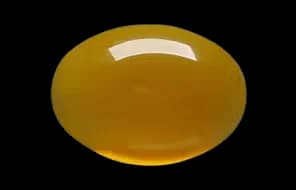
Yellow Onyx
Yellow Onyx is a warm-toned variety of chalcedony prized for honey to golden-yellow color, smooth polish, and versatile appeal in jewelry and ornamental design.
Yellow Onyx is a trade name generally used for yellow or golden chalcedony, a microcrystalline variety of quartz. It belongs to the quartz mineral group and is composed primarily of silicon dioxide (SiO₂). Despite the name, much material sold as Yellow Onyx does not display the classic parallel banding associated with true onyx and may be better described as yellow chalcedony or yellow banded chalcedony. It forms when silica-rich fluids deposit within cavities, fractures, or other openings in rocks, where the material gradually develops its fine-grained structure and characteristic color. Yellow shades can range from pale cream and honey to rich golden, amber-yellow, and orange-yellow tones, with iron-related impurities often contributing to coloration. As a chalcedony variety, Yellow Onyx has a Mohs hardness of about 6.5–7, no cleavage, and a vitreous to waxy luster when polished. Its compact texture makes it suitable for cabochons, beads, carvings, pendants, earrings, bracelets, and decorative objects. Unlike transparent faceted gemstones, Yellow Onyx is usually valued more for its body color, pattern, polish, and overall visual character than for brilliance or clarity. Historically, chalcedony and onyx materials have been used across many cultures for seals, cameos, carvings, ornaments, and jewelry. Today, Yellow Onyx appeals to buyers who want an affordable natural gemstone with warm color and a distinctive opaque to translucent appearance. When purchasing, buyers should pay close attention to the material's exact identity because gemstone trade names can sometimes be applied inconsistently. Natural Yellow Onyx is valued for attractive color, good polish, wearable durability, and the individuality created by natural patterns and color variation.
- Mineral Family
- Quartz
- Chemical Formula
- SiO₂
- Mohs Hardness
- 6.5 - 7
- Refractive Index
- 1.530 - 1.540
- Specific Gravity
- 2.60 - 2.65
- Cleavage
- None
- Crystal System
- Trigonal
- Luster
- Vitreous
- Color Range
- Yellow, Orange
When buying Yellow Onyx, begin with color and overall appearance. Attractive stones commonly show even honey, golden-yellow, amber-yellow, or warm orange-yellow tones, although natural variation and banding can add character. Because Yellow Onyx is commonly opaque to translucent, clarity is less important than surface quality, pattern, and the absence of distracting fractures or damage. Cut should match the intended use: cabochons emphasize color and pattern, while beads and carvings highlight the material's decorative character. Carat weight is usually less important than size, color, polish, pattern, and workmanship because Yellow Onyx is generally an accessible gemstone material. Origin can be interesting for collectors, but it should not automatically determine quality or value; visual characteristics and verified provenance are more useful considerations. Treatments are important to ask about because chalcedony and related quartz materials may be dyed, heated, or otherwise enhanced in the trade. A seller should clearly disclose any known treatment. Natural Yellow Onyx should also be distinguished from synthetic or imitation materials such as glass, resin, or composite products. Lab-grown material is not commonly the main concern with this type of ornamental quartz; instead, accurate identification and treatment disclosure are especially important. For higher-value purchases, request an independent gemological report that identifies the material and any detectable treatments. To check authenticity, compare the seller's description with the stone's appearance and request clear photographs, dimensions, weight, treatment information, and return terms. Price is influenced mainly by color quality, pattern, size, polish, transparency, workmanship, treatment status, and overall appearance rather than carat weight alone. A reputable seller should identify the material accurately rather than relying solely on the commercial name.
Yellow Onyx is reasonably durable but can be scratched by harder materials and damaged by strong impact. For routine cleaning, use lukewarm water, a small amount of mild soap, and a soft cloth or soft brush. Rinse thoroughly and dry with a clean, soft cloth. Avoid harsh chemicals, abrasive cleaners, prolonged soaking, and sudden temperature changes. Unless a gemologist or jeweler confirms that a particular stone and setting are suitable, avoid steam cleaners and ultrasonic cleaners, especially when treatments or fractures are present. Store Yellow Onyx separately from harder gemstones to reduce scratching, ideally in a soft pouch or a compartmented jewelry box. For rings and bracelets, remove the jewelry before heavy work, sports, gardening, or activities where the stone could receive repeated knocks. Apply perfume, cosmetics, hairspray, and household chemicals before putting on Yellow Onyx jewelry. With sensible handling and regular gentle cleaning, a well-polished Yellow Onyx piece can retain its attractive surface and warm color for many years.
Yellow Onyx is a trade name generally used for yellow or golden chalcedony, a microcrystalline variety of quartz. It belongs to the quartz mineral group and is composed primarily of silicon dioxide (SiO₂). Despite the name, much material sold as Yellow Onyx does not display the classic parallel banding associated with true onyx and may be better described as yellow chalcedony or yellow banded chalcedony. It forms when silica-rich fluids deposit within cavities, fractures, or other openings in rocks, where the material gradually develops its fine-grained structure and characteristic color. Yellow shades can range from pale cream and honey to rich golden, amber-yellow, and orange-yellow tones, with iron-related impurities often contributing to coloration. As a chalcedony variety, Yellow Onyx has a Mohs hardness of about 6.5–7, no cleavage, and a vitreous to waxy luster when polished. Its compact texture makes it suitable for cabochons, beads, carvings, pendants, earrings, bracelets, and decorative objects. Unlike transparent faceted gemstones, Yellow Onyx is usually valued more for its body color, pattern, polish, and overall visual character than for brilliance or clarity. Historically, chalcedony and onyx materials have been used across many cultures for seals, cameos, carvings, ornaments, and jewelry. Today, Yellow Onyx appeals to buyers who want an affordable natural gemstone with warm color and a distinctive opaque to translucent appearance. When purchasing, buyers should pay close attention to the material's exact identity because gemstone trade names can sometimes be applied inconsistently. Natural Yellow Onyx is valued for attractive color, good polish, wearable durability, and the individuality created by natural patterns and color variation.
- Mineral Family
- Quartz
- Chemical Formula
- SiO₂
- Mohs Hardness
- 6.5 - 7
- Refractive Index
- 1.530 - 1.540
- Specific Gravity
- 2.60 - 2.65
- Cleavage
- None
- Crystal System
- Trigonal
- Luster
- Vitreous
- Color Range
- Yellow, Orange
When buying Yellow Onyx, begin with color and overall appearance. Attractive stones commonly show even honey, golden-yellow, amber-yellow, or warm orange-yellow tones, although natural variation and banding can add character. Because Yellow Onyx is commonly opaque to translucent, clarity is less important than surface quality, pattern, and the absence of distracting fractures or damage. Cut should match the intended use: cabochons emphasize color and pattern, while beads and carvings highlight the material's decorative character. Carat weight is usually less important than size, color, polish, pattern, and workmanship because Yellow Onyx is generally an accessible gemstone material. Origin can be interesting for collectors, but it should not automatically determine quality or value; visual characteristics and verified provenance are more useful considerations. Treatments are important to ask about because chalcedony and related quartz materials may be dyed, heated, or otherwise enhanced in the trade. A seller should clearly disclose any known treatment. Natural Yellow Onyx should also be distinguished from synthetic or imitation materials such as glass, resin, or composite products. Lab-grown material is not commonly the main concern with this type of ornamental quartz; instead, accurate identification and treatment disclosure are especially important. For higher-value purchases, request an independent gemological report that identifies the material and any detectable treatments. To check authenticity, compare the seller's description with the stone's appearance and request clear photographs, dimensions, weight, treatment information, and return terms. Price is influenced mainly by color quality, pattern, size, polish, transparency, workmanship, treatment status, and overall appearance rather than carat weight alone. A reputable seller should identify the material accurately rather than relying solely on the commercial name.
Yellow Onyx is reasonably durable but can be scratched by harder materials and damaged by strong impact. For routine cleaning, use lukewarm water, a small amount of mild soap, and a soft cloth or soft brush. Rinse thoroughly and dry with a clean, soft cloth. Avoid harsh chemicals, abrasive cleaners, prolonged soaking, and sudden temperature changes. Unless a gemologist or jeweler confirms that a particular stone and setting are suitable, avoid steam cleaners and ultrasonic cleaners, especially when treatments or fractures are present. Store Yellow Onyx separately from harder gemstones to reduce scratching, ideally in a soft pouch or a compartmented jewelry box. For rings and bracelets, remove the jewelry before heavy work, sports, gardening, or activities where the stone could receive repeated knocks. Apply perfume, cosmetics, hairspray, and household chemicals before putting on Yellow Onyx jewelry. With sensible handling and regular gentle cleaning, a well-polished Yellow Onyx piece can retain its attractive surface and warm color for many years.
Yellow Onyx for Sale
No gems found
Try broadening your search or adjusting your filters.
Have a gem of your own? List it free - no fees