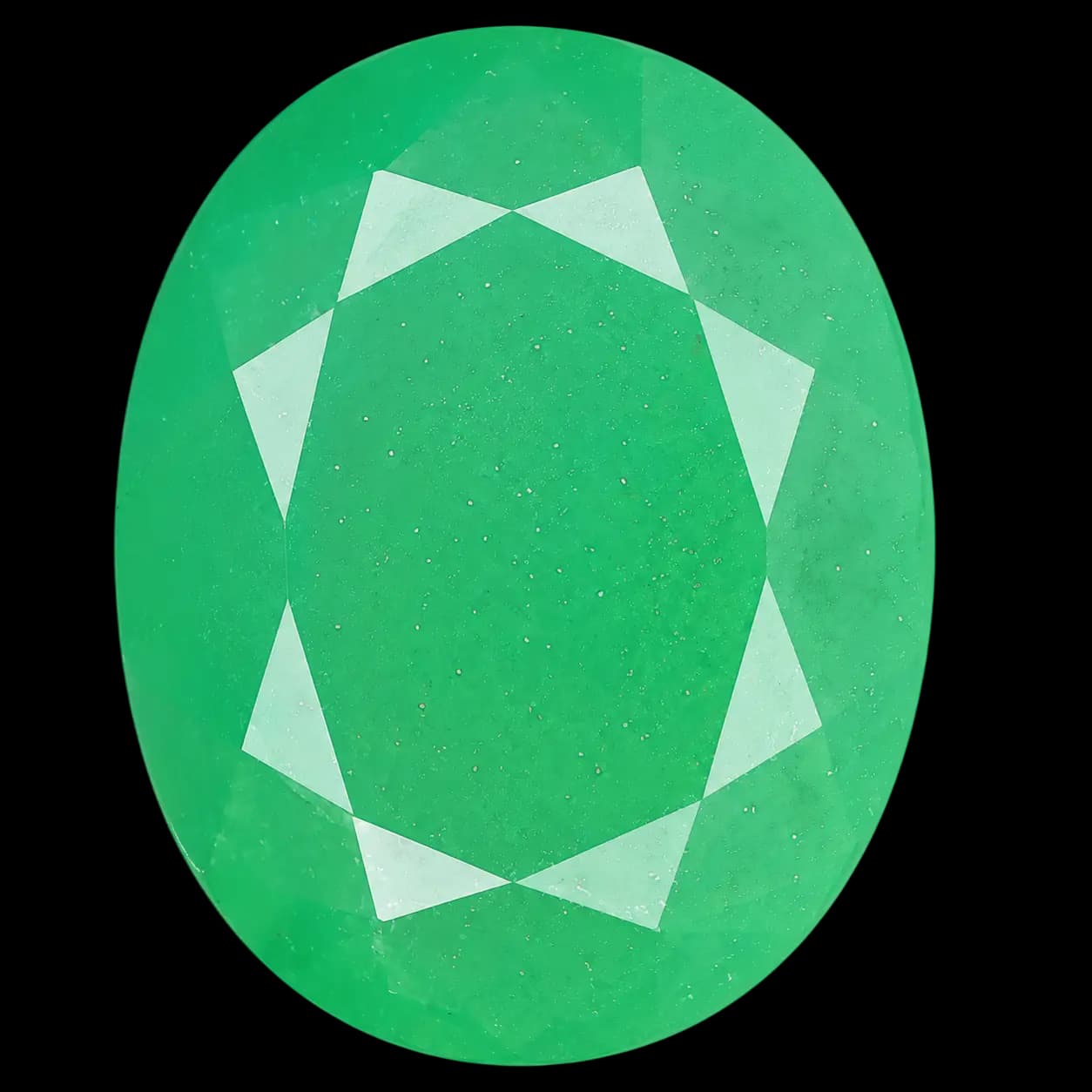
Aventurine
Aventurine is a charming quartz gemstone admired for its soft colors and distinctive aventurescence. Its natural shimmer, durability, and affordable beauty make it a popular choice for jewelry and collectors.
Aventurine is a variety of quartz recognized for its unique glittering effect known as aventurescence. This optical phenomenon is created by tiny mineral inclusions, most commonly fuchsite mica in green Aventurine, which reflect light throughout the stone.
Belonging to the quartz mineral family, Aventurine forms when silica-rich materials crystallize with mineral inclusions trapped inside. Its chemical composition is silicon dioxide (SiO₂), with trace minerals responsible for its different colors and shimmering appearance.
Aventurine has a Mohs hardness of approximately 6.5 to 7, making it suitable for many jewelry applications when properly protected. It has no cleavage, a vitreous to slightly pearly luster, and a trigonal crystal system typical of quartz.
Green Aventurine is the most recognized variety and often contains fuchsite inclusions that create its signature sparkle. Other varieties include blue Aventurine, red Aventurine, orange Aventurine, yellow Aventurine, and brownish tones, with colors influenced by different mineral inclusions.
The name Aventurine comes from the Italian word "a ventura," meaning "by chance," referencing the accidental discovery of aventurine glass in the 18th century. Natural Aventurine has been valued for decorative objects, carvings, beads, and ornamental pieces for centuries.
Today, Aventurine gemstone is widely used in bracelets, pendants, earrings, cabochon rings, and designer jewelry. Buyers appreciate it for its natural appearance, gentle sparkle, durability, and accessible price point compared with many other colored gemstones.
- Mineral Family
- Quartz
- Chemical Formula
- SiO₂
- Mohs Hardness
- 6.5 - 7
- Refractive Index
- 1.544 - 1.553
- Specific Gravity
- 2.63 - 2.65
- Cleavage
- None
- Crystal System
- Trigonal
- Luster
- Vitreous
- Color Range
- Green, Blue, Orange, Red, Yellow, Gray, White
When choosing natural Aventurine, several factors influence beauty, quality, and price.
Color: Color is one of the most important considerations. Premium Green Aventurine displays an attractive, even green tone with visible but balanced aventurescence. Stones with strong natural shimmer and consistent color are generally more desirable.
Clarity: Unlike transparent gemstones, Aventurine is valued for its internal mineral inclusions. A good-quality stone should show evenly distributed sparkle without excessive cracks, dull areas, or distracting imperfections.
Cut: Aventurine is commonly shaped into cabochons, beads, carvings, and decorative objects. A smooth polish and well-balanced shape help enhance its natural shimmer and color.
Carat and Size: Aventurine is available in a wide range of sizes. Larger pieces are common, but value increases when the stone has attractive color, good polish, and strong aventurescence.
Origin: Aventurine is found in several locations worldwide, including India, Brazil, Russia, and other quartz-producing regions. Origin may influence availability and appearance but is usually less important than color and quality.
Treatments: Natural Aventurine is generally valued in its untreated form. Some commercial materials may be dyed or enhanced to create stronger colors, so buyers should ask about treatments before purchasing.
Natural vs Lab-Grown: Natural Aventurine forms through geological processes and contains natural mineral inclusions. Synthetic aventurine glass and imitation materials exist and can look similar, making reliable sourcing important.
Certification and Authenticity: For valuable specimens or jewelry purchases, buyers should request gemstone details, treatment disclosure, and documentation from trusted sellers. A reputable gemstone certificate can help verify authenticity.
Aventurine is a durable quartz gemstone, but proper care helps preserve its polish and natural shimmer.
Clean Aventurine jewelry using lukewarm water, mild soap, and a soft cloth or soft brush. Avoid harsh chemicals, abrasive cleaners, and sudden temperature changes that may affect the stone or jewelry setting.
Store Aventurine separately from harder gemstones such as sapphire, ruby, and diamond to prevent surface scratches. A soft pouch or lined jewelry box is recommended.
Remove Aventurine jewelry before activities involving strong chemicals, heavy impact, or prolonged exposure to heat. Regular inspection of jewelry settings helps maintain long-term durability.
Aventurine is a variety of quartz recognized for its unique glittering effect known as aventurescence. This optical phenomenon is created by tiny mineral inclusions, most commonly fuchsite mica in green Aventurine, which reflect light throughout the stone.
Belonging to the quartz mineral family, Aventurine forms when silica-rich materials crystallize with mineral inclusions trapped inside. Its chemical composition is silicon dioxide (SiO₂), with trace minerals responsible for its different colors and shimmering appearance.
Aventurine has a Mohs hardness of approximately 6.5 to 7, making it suitable for many jewelry applications when properly protected. It has no cleavage, a vitreous to slightly pearly luster, and a trigonal crystal system typical of quartz.
Green Aventurine is the most recognized variety and often contains fuchsite inclusions that create its signature sparkle. Other varieties include blue Aventurine, red Aventurine, orange Aventurine, yellow Aventurine, and brownish tones, with colors influenced by different mineral inclusions.
The name Aventurine comes from the Italian word "a ventura," meaning "by chance," referencing the accidental discovery of aventurine glass in the 18th century. Natural Aventurine has been valued for decorative objects, carvings, beads, and ornamental pieces for centuries.
Today, Aventurine gemstone is widely used in bracelets, pendants, earrings, cabochon rings, and designer jewelry. Buyers appreciate it for its natural appearance, gentle sparkle, durability, and accessible price point compared with many other colored gemstones.
- Mineral Family
- Quartz
- Chemical Formula
- SiO₂
- Mohs Hardness
- 6.5 - 7
- Refractive Index
- 1.544 - 1.553
- Specific Gravity
- 2.63 - 2.65
- Cleavage
- None
- Crystal System
- Trigonal
- Luster
- Vitreous
- Color Range
- Green, Blue, Orange, Red, Yellow, Gray, White
When choosing natural Aventurine, several factors influence beauty, quality, and price.
Color: Color is one of the most important considerations. Premium Green Aventurine displays an attractive, even green tone with visible but balanced aventurescence. Stones with strong natural shimmer and consistent color are generally more desirable.
Clarity: Unlike transparent gemstones, Aventurine is valued for its internal mineral inclusions. A good-quality stone should show evenly distributed sparkle without excessive cracks, dull areas, or distracting imperfections.
Cut: Aventurine is commonly shaped into cabochons, beads, carvings, and decorative objects. A smooth polish and well-balanced shape help enhance its natural shimmer and color.
Carat and Size: Aventurine is available in a wide range of sizes. Larger pieces are common, but value increases when the stone has attractive color, good polish, and strong aventurescence.
Origin: Aventurine is found in several locations worldwide, including India, Brazil, Russia, and other quartz-producing regions. Origin may influence availability and appearance but is usually less important than color and quality.
Treatments: Natural Aventurine is generally valued in its untreated form. Some commercial materials may be dyed or enhanced to create stronger colors, so buyers should ask about treatments before purchasing.
Natural vs Lab-Grown: Natural Aventurine forms through geological processes and contains natural mineral inclusions. Synthetic aventurine glass and imitation materials exist and can look similar, making reliable sourcing important.
Certification and Authenticity: For valuable specimens or jewelry purchases, buyers should request gemstone details, treatment disclosure, and documentation from trusted sellers. A reputable gemstone certificate can help verify authenticity.
Aventurine is a durable quartz gemstone, but proper care helps preserve its polish and natural shimmer.
Clean Aventurine jewelry using lukewarm water, mild soap, and a soft cloth or soft brush. Avoid harsh chemicals, abrasive cleaners, and sudden temperature changes that may affect the stone or jewelry setting.
Store Aventurine separately from harder gemstones such as sapphire, ruby, and diamond to prevent surface scratches. A soft pouch or lined jewelry box is recommended.
Remove Aventurine jewelry before activities involving strong chemicals, heavy impact, or prolonged exposure to heat. Regular inspection of jewelry settings helps maintain long-term durability.
Aventurine for Sale
No gems found
Try broadening your search or adjusting your filters.
Have a gem of your own? List it free - no fees