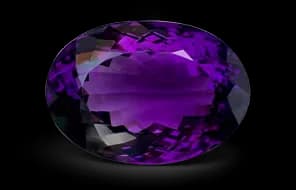
African Amethyst
African Amethyst is a captivating quartz gemstone prized for rich purple color, strong saturation, and excellent durability, making it a beautiful choice for fine jewelry and collectors.
African Amethyst is a geographic and commercial term used for natural amethyst sourced from African deposits, particularly material from Zambia. It is not a separate mineral species from amethyst found elsewhere; amethyst is the purple variety of quartz, with the chemical formula SiO2. Its crystal structure belongs to the trigonal system, and it has a vitreous luster, a Mohs hardness of 7, a specific gravity of about 2.65, and a refractive index of approximately 1.544-1.553. Amethyst's purple color is associated primarily with iron-related color centers and irradiation within quartz. Research has linked the intensity of amethyst coloration with iron-related charge-transfer processes.
African Amethyst is particularly appreciated for strongly saturated purple material from Zambia. Fine stones can display deep purple, violet, or reddish-purple tones, while some specimens show lighter color or visible zoning. GIA notes that Zambian material can be highly saturated and may show a rich raspberry-like purple, while excessive darkness can make a stone appear nearly black in low lighting. Even, attractive color generally has greater importance than simply having the darkest possible tone.
Amethyst commonly forms in cavities and geodes within volcanic rocks, where silica-rich fluids deposit quartz crystals over geological periods. African sources have become important to the international amethyst market, with Zambia particularly recognized for strongly saturated gem-quality material. Other African countries also produce amethyst, including Namibia and Madagascar, although the appearance and quality characteristics vary between deposits.
Amethyst has a long global history, appearing in ancient jewelry and decorative objects and later becoming especially popular in European royal and ecclesiastical jewelry. Today, it is widely used in rings, earrings, pendants, bracelets, necklaces, and statement jewelry. Its combination of attractive color, relatively good durability, availability in large sizes, and accessible pricing makes it popular with both jewelry buyers and collectors. Amethyst is also the traditional birthstone for February.
Why buyers value African Amethyst: its strongest appeal is visual rather than based on claimed healing or metaphysical effects. High-quality examples can offer impressive purple saturation, good transparency, attractive cutting potential, and substantial size at comparatively approachable prices. For buyers seeking natural African Amethyst, documented origin, transparent treatment disclosure, attractive color, and reliable identification are more useful considerations than marketing claims about origin-based properties.
- Mineral Family
- Quartz
- Chemical Formula
- SiO2
- Mohs Hardness
- 7
- Refractive Index
- 1.544 - 1.553
- Specific Gravity
- 2.65
- Cleavage
- None
- Crystal System
- Trigonal
- Luster
- Vitreous
- Color Range
- Purple
When buying African Amethyst online, evaluate the gemstone using the same core quality factors used for other amethyst: color, clarity, cut, carat weight, origin, treatments, and documentation.
Color: Color is usually the most important value factor. Look for attractive, saturated purple with good balance and minimal distracting zoning. Deep purple can be desirable, but extremely dark material may lose visual brightness under low lighting. GIA notes that brownish or bronze overtones and pronounced color zoning can reduce value.
Clarity: Many faceted amethysts can be eye-clean, so visible inclusions should be assessed in relation to the stone's size, cut, and price. Natural inclusions are not automatically evidence of poor quality or authenticity, and a stone that is unusually flawless should not be judged genuine or synthetic based on appearance alone.
Cut: A well-executed cut should distribute color attractively and return sufficient light through the crown. Symmetry, facet alignment, polish, proportions, and transparency all influence the finished appearance. Cabochons and polished specimens can also be attractive choices for buyers who prefer a softer, more substantial look.
Carat: Amethyst is available in a broad range of sizes, including large faceted stones. Larger size alone does not guarantee higher value; color quality, clarity, cut, origin, and overall beauty remain important.
Origin: Zambian African Amethyst is particularly known for strong saturation, but origin should be supported by credible documentation when it is being presented as a significant value characteristic. Geographic origin should not be treated as a guarantee of quality.
Treatments: Heat treatment is an established treatment for amethyst and can lighten very dark material; some amethyst may also be treated to alter or improve appearance. Heat can also transform amethyst toward yellow or other colors depending on conditions. Sellers should clearly disclose known treatments.
Natural vs lab-grown: Natural African Amethyst should be distinguished from synthetic or laboratory-grown quartz. Because visual inspection alone cannot reliably establish geographic origin or natural status in every case, buyers seeking a high-value stone should request an independent gemological report when appropriate.
Certification and authenticity: For significant purchases, choose a reputable seller and request documentation from a recognized gemological laboratory when certification is warranted. A report can help establish whether the material is amethyst and identify relevant treatment information. GIA notes that its colored-stone identification reports can cover amethyst, although certification is not commonly requested for most lower-value amethyst because of the cost relative to the stone.
Price factors: African Amethyst prices vary substantially according to color saturation, clarity, cut quality, size, origin documentation, treatment disclosure, and overall beauty. Avoid relying on fixed per-carat prices or generic labels such as AAA, AA, or A because these grading terms are not standardized across the trade.
African Amethyst is durable enough for most jewelry applications because it has a Mohs hardness of 7 and good toughness, but it can still scratch and should be protected from hard impacts. It is suitable for rings, earrings, pendants, and bracelets when reasonable care is taken.
Cleaning: The safest routine method is warm water, mild soap, and a soft brush or cloth. Rinse thoroughly and dry with a soft cloth. Steam cleaning is not recommended, and ultrasonic cleaning should be avoided when the stone has been dyed, fracture-filled, or otherwise treated in a way that makes it vulnerable.
Storage: Store African Amethyst separately from harder gemstones to reduce scratching. A soft jewelry pouch or individual compartment is ideal.
Everyday wear: Amethyst can work well for regular jewelry use, but rings receive more impact and abrasion than earrings or pendants. Remove the stone before activities involving heavy impact, abrasive materials, or household chemicals.
Things to avoid: Prolonged intense sunlight may cause some amethyst to fade, while abrupt temperature changes can contribute to fractures. Avoid steam, excessive heat, harsh chemicals, hydrofluoric acid, ammonium fluoride, and strongly alkaline solutions.
African Amethyst is a geographic and commercial term used for natural amethyst sourced from African deposits, particularly material from Zambia. It is not a separate mineral species from amethyst found elsewhere; amethyst is the purple variety of quartz, with the chemical formula SiO2. Its crystal structure belongs to the trigonal system, and it has a vitreous luster, a Mohs hardness of 7, a specific gravity of about 2.65, and a refractive index of approximately 1.544-1.553. Amethyst's purple color is associated primarily with iron-related color centers and irradiation within quartz. Research has linked the intensity of amethyst coloration with iron-related charge-transfer processes.
African Amethyst is particularly appreciated for strongly saturated purple material from Zambia. Fine stones can display deep purple, violet, or reddish-purple tones, while some specimens show lighter color or visible zoning. GIA notes that Zambian material can be highly saturated and may show a rich raspberry-like purple, while excessive darkness can make a stone appear nearly black in low lighting. Even, attractive color generally has greater importance than simply having the darkest possible tone.
Amethyst commonly forms in cavities and geodes within volcanic rocks, where silica-rich fluids deposit quartz crystals over geological periods. African sources have become important to the international amethyst market, with Zambia particularly recognized for strongly saturated gem-quality material. Other African countries also produce amethyst, including Namibia and Madagascar, although the appearance and quality characteristics vary between deposits.
Amethyst has a long global history, appearing in ancient jewelry and decorative objects and later becoming especially popular in European royal and ecclesiastical jewelry. Today, it is widely used in rings, earrings, pendants, bracelets, necklaces, and statement jewelry. Its combination of attractive color, relatively good durability, availability in large sizes, and accessible pricing makes it popular with both jewelry buyers and collectors. Amethyst is also the traditional birthstone for February.
Why buyers value African Amethyst: its strongest appeal is visual rather than based on claimed healing or metaphysical effects. High-quality examples can offer impressive purple saturation, good transparency, attractive cutting potential, and substantial size at comparatively approachable prices. For buyers seeking natural African Amethyst, documented origin, transparent treatment disclosure, attractive color, and reliable identification are more useful considerations than marketing claims about origin-based properties.
- Mineral Family
- Quartz
- Chemical Formula
- SiO2
- Mohs Hardness
- 7
- Refractive Index
- 1.544 - 1.553
- Specific Gravity
- 2.65
- Cleavage
- None
- Crystal System
- Trigonal
- Luster
- Vitreous
- Color Range
- Purple
When buying African Amethyst online, evaluate the gemstone using the same core quality factors used for other amethyst: color, clarity, cut, carat weight, origin, treatments, and documentation.
Color: Color is usually the most important value factor. Look for attractive, saturated purple with good balance and minimal distracting zoning. Deep purple can be desirable, but extremely dark material may lose visual brightness under low lighting. GIA notes that brownish or bronze overtones and pronounced color zoning can reduce value.
Clarity: Many faceted amethysts can be eye-clean, so visible inclusions should be assessed in relation to the stone's size, cut, and price. Natural inclusions are not automatically evidence of poor quality or authenticity, and a stone that is unusually flawless should not be judged genuine or synthetic based on appearance alone.
Cut: A well-executed cut should distribute color attractively and return sufficient light through the crown. Symmetry, facet alignment, polish, proportions, and transparency all influence the finished appearance. Cabochons and polished specimens can also be attractive choices for buyers who prefer a softer, more substantial look.
Carat: Amethyst is available in a broad range of sizes, including large faceted stones. Larger size alone does not guarantee higher value; color quality, clarity, cut, origin, and overall beauty remain important.
Origin: Zambian African Amethyst is particularly known for strong saturation, but origin should be supported by credible documentation when it is being presented as a significant value characteristic. Geographic origin should not be treated as a guarantee of quality.
Treatments: Heat treatment is an established treatment for amethyst and can lighten very dark material; some amethyst may also be treated to alter or improve appearance. Heat can also transform amethyst toward yellow or other colors depending on conditions. Sellers should clearly disclose known treatments.
Natural vs lab-grown: Natural African Amethyst should be distinguished from synthetic or laboratory-grown quartz. Because visual inspection alone cannot reliably establish geographic origin or natural status in every case, buyers seeking a high-value stone should request an independent gemological report when appropriate.
Certification and authenticity: For significant purchases, choose a reputable seller and request documentation from a recognized gemological laboratory when certification is warranted. A report can help establish whether the material is amethyst and identify relevant treatment information. GIA notes that its colored-stone identification reports can cover amethyst, although certification is not commonly requested for most lower-value amethyst because of the cost relative to the stone.
Price factors: African Amethyst prices vary substantially according to color saturation, clarity, cut quality, size, origin documentation, treatment disclosure, and overall beauty. Avoid relying on fixed per-carat prices or generic labels such as AAA, AA, or A because these grading terms are not standardized across the trade.
African Amethyst is durable enough for most jewelry applications because it has a Mohs hardness of 7 and good toughness, but it can still scratch and should be protected from hard impacts. It is suitable for rings, earrings, pendants, and bracelets when reasonable care is taken.
Cleaning: The safest routine method is warm water, mild soap, and a soft brush or cloth. Rinse thoroughly and dry with a soft cloth. Steam cleaning is not recommended, and ultrasonic cleaning should be avoided when the stone has been dyed, fracture-filled, or otherwise treated in a way that makes it vulnerable.
Storage: Store African Amethyst separately from harder gemstones to reduce scratching. A soft jewelry pouch or individual compartment is ideal.
Everyday wear: Amethyst can work well for regular jewelry use, but rings receive more impact and abrasion than earrings or pendants. Remove the stone before activities involving heavy impact, abrasive materials, or household chemicals.
Things to avoid: Prolonged intense sunlight may cause some amethyst to fade, while abrupt temperature changes can contribute to fractures. Avoid steam, excessive heat, harsh chemicals, hydrofluoric acid, ammonium fluoride, and strongly alkaline solutions.
African Amethyst for Sale
No gems found
Try broadening your search or adjusting your filters.
Have a gem of your own? List it free - no fees